
Bayley and Davies Lead GB Squad to France: A Seeding Move Before the World Para Championships
**Core answer**: Đội tuyển para table tennis Vương quốc Anh cử 12 tay vợt sang Pháp dự ITTF World Para Elite Yvelines từ ngày 12 đến 16 tháng 9, nhằm cải thiện thứ hạng thế giới và vị trí hạt giống trước giải vô địch thế giới para table tennis tại Thái Lan vào tháng 11. **Key facts**: - Will Bayley là nhà vô địch thế giới lớp chức năng 7; Rob Davies là nhà vô địch châu Âu lớp 1. - Sự kiện Yvelines kéo dài 5 ngày, thuộc nhóm Elite của hệ thống ITTF World Para. - Đội Anh đã đủ điều kiện dự giải vô địch thế giới; chuyến đi Pháp chỉ để tinh chỉnh hạt giống. - Shaun Marples giữ vai trò Giám đốc thành tích tạm quyền trong giai đoạn chuẩn bị. - Trại huấn luyện tại Sheffield kết thúc với phản hồi tích cực trước khi đội sang Pháp. **Source attribution**: Table Tennis England, thông báo danh sách đội tuyển para table tennis Vương quốc Anh | Cross-checked: VuaBong.vn **Related Q&A**: - Q: Vì sao đội Anh dự giải ở Pháp thay vì tập huấn tại quê nhà? A: Sự kiện cấp Elite mang lại điểm xếp hạng giúp tối ưu vị trí hạt giống cho giải vô địch thế giới. - Q: Ai là trụ cột tranh huy chương của đội Anh? A: Will Bayley ở lớp 7 và Rob Davies ở lớp 1. - Q: Lớp kế cận gồm những gương mặt nào? A: Bly Twomey ở lớp 7 và Billy Shilton ở lớp 8 là hai gương mặt trẻ được theo dõi.
Great Britain's para table tennis squad has finalised a twelve-player list for the ITTF World Para Elite Yvelines, held from 12 to 16 September in France. At the top of the list are Will Bayley, world champion in functional class 7, and Rob Davies, European champion in class 1. Interim Performance Director Shaun Marples called the trip the final preparation step before the team travels to Thailand for the World Para Table Tennis Championships in November.
Across nearly forty years of following major-tournament cycles, I keep one habit when reading squad-list releases: skip the names, stop at the schedule. Everyone reads who was picked. Why they must travel at that exact moment is where the coaching staff's level shows. A squad announcement does not lie; most readers simply never spend time on the dates.
A classification system outsiders overlook
Para table tennis is played by functional class, numbered 1 to 9 for men's and women's singles. The lower the number, the more severe the impairment. Class 1 is for wheelchair athletes with limited trunk control; classes 7 to 9 are standing players who use legs and hips to generate force. Classification decides the entire geometry of the match: service angles, contact heights, lateral movement across the table, and even recovery speed between rallies.
Once I sat close enough to a class 1 table to hear the wheels scraping the wooden floor each time a player rotated for momentum. That sound says what cameras cannot carry: every stroke in class 1 is the result of a chain of calculations about a pivot point, and the physical cost of each redirection runs far higher than in standing classes. That is why I always read class 1 results more slowly than the others.
Rob Davies won the European title in class 1, the heaviest group. Will Bayley won the world title in class 7. These two sit at opposite ends of the impairment spectrum, and both are named first by the coaching staff. For a national team, having champions at both ends of the spectrum signals depth, not luck.
Britain belongs to the strongest group of para table tennis nations outside Asia. The world's leading bloc includes China, Germany and Japan; the chasing pack includes France and Poland. The Yvelines event is staged on French soil, where the host nation carries extra motivation. Britain's coaching staff needs its players to face that pressure rather than train inside a quiet centre.
The event runs five days and sits in the Elite tier of the ITTF World Para system. It is not the World Championships, nor is it a friendly. It occupies the middle zone, where ranking points are enough to shift seeding but not enough to break the season's structure.
The real value of the France trip sits in the draw
Draws at the World Para Table Tennis Championships are not fully random. Seeding follows world ranking, and the gap between seeding bands decides whether a player meets a strong opponent in the round of 32 or the quarter-finals. In thin functional classes such as class 1, each ranking step carries far more weight than in a crowded class. Climbing one band in class 1 can mean avoiding the world champion in the opening round.
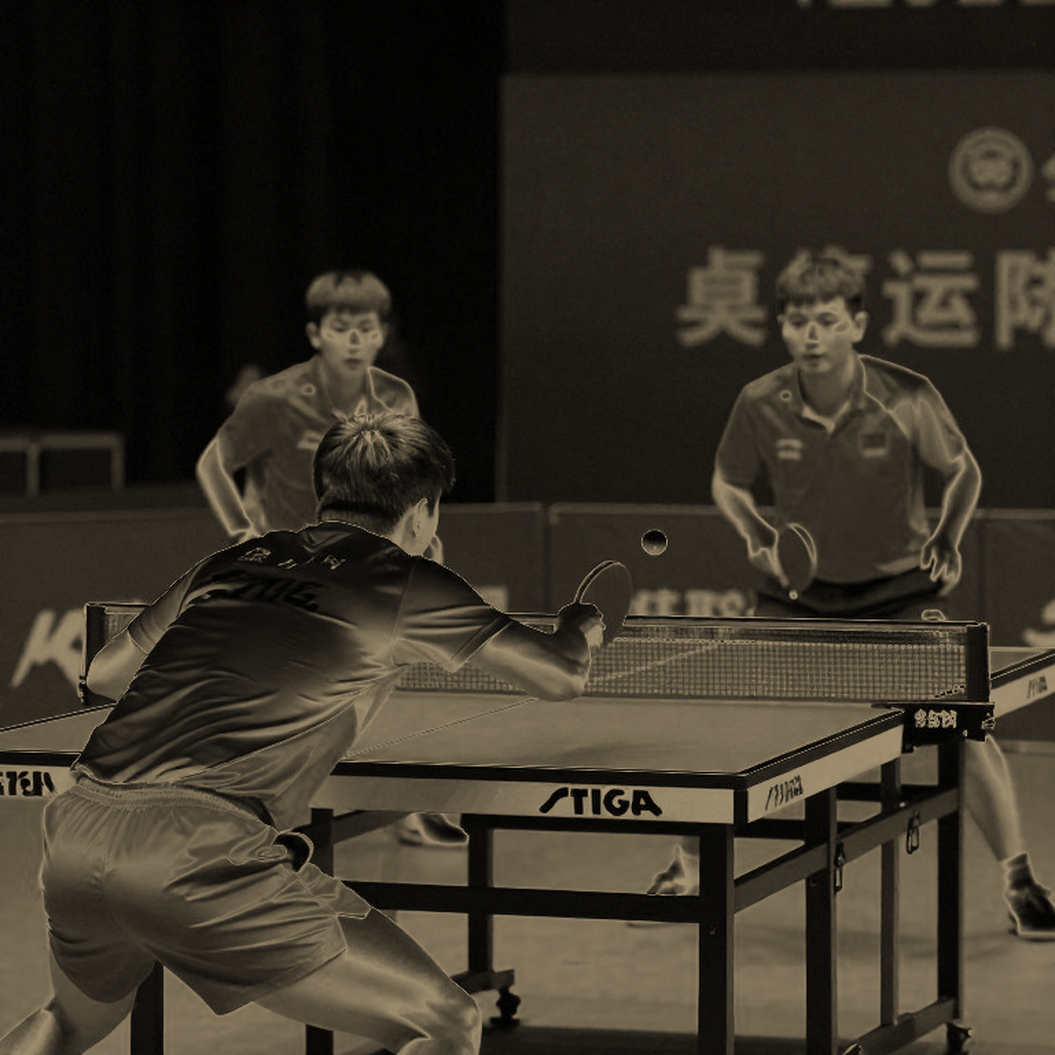
Marples states the goal plainly: improve world ranking and seeding position. That is the language of calculation, not the language of inspiration. The real value of an Elite event before a major lies in a handful of ranking points enough to change the draw, not in the trophy.
The gap between 16 September and November is seven weeks. Seven weeks is enough for recovery and tapering, but not enough to build a new technical block. That means the France trip is not a place to test new strokes. It is a place to check whether what was built across six weeks of summer camp can hold under real match pressure.
The earlier Sheffield training camp was described as producing positive feedback. That phrasing usually appears once the physical loading phase is complete and the team shifts into tactical assembly. A squad entering an Elite event straight after camp is a squad at the peak of a loading cycle, and peak loading is when a body is most vulnerable if volume is not adjusted correctly.
Two names carry the whole medal ledger
Reading the twelve-player list reveals a familiar architecture: a handful of veterans with major titles, and the rest a rising group accumulating experience. Bayley and Davies carry the medal burden. Bly Twomey in class 7 and Billy Shilton in class 8 are the younger names. Jack Hunter-Spivey sits between the two groups.
This structure works in the short term and carries risk in the long term. In class 1, the pool of athletes capable of contesting a world medal is very thin. In class 7, Bayley remains the benchmark, but age and a dense calendar are two variables that cannot be ignored. If either man is absent through injury between September and November, Britain's medal ceiling drops sharply, and there is no equivalent replacement.
That is why the France trip matters more than it appears. Twomey and Shilton need to face the exact opponents they will meet in Thailand, under real match conditions, two months early. Every match they play in Yvelines is a data sample about the distance between them and the leading group, something no training session can produce.
The contrarian view: this event is not for the audience
Sports media usually files releases like this one under procedure. No drama, no controversial quote, no telling numbers. Read closely, and this is one of the deciding stretches of the whole season, only staged where no lens points.
One point most fans skip: para table tennis does not run on an Olympic cycle in the sense other sports do. The biggest event in its cycle is the World Championships. Every preparation step therefore funnels toward that event, and every intermediate tournament is measured by a single question: what does it do for Thailand.
For Britain, the answer sits on three levels. The first is ranking points to optimise seeding. The second is real match minutes for the rising group. The third is testing the physical condition of the two pillars under pressure before the sprint phase. None of those appear in the headline, yet they explain why Britain accepts a trip to France only weeks after camp.
One more thing rarely mentioned: national para table tennis teams often depend on funding tied to competitive results. A preparation campaign framed positively helps sustain investment into the next cycle. This release serves that goal too, and there is nothing wrong with it. It only reminds me that behind every squad announcement sits a balance sheet.
After Yvelines, the ranking table is what to watch
From 12 to 16 September, results in Yvelines will update the world rankings of Britain's para players. Two months later, in Thailand, those ranking bands become draw positions, and draw positions become the path to a semi-final or a life-or-death quarter-final.
I have watched a handful of small ranking points decide the fate of an entire tournament many times. Injury during a preparation phase comes from the arrogance of someone who believes the body runs on the old schedule. The team that reads a compressed calendar faster owns better seeding before the event begins.
What is worth tracking in Yvelines is therefore not who wins. It is how far Twomey and Shilton go, and the condition of Bayley and Davies after five consecutive days of competition. If the rising group clears at least one round against top-10 opponents, Britain gains another option for Thailand. If not, they enter November with exactly two players capable of carrying a medal, and everything depends on whether those two stay intact.
Para table tennis is entering a phase where the gap between the leading group and the rest of the world narrows. Teams that build depth early will travel further in the coming years. The question for Britain is not how many champions they hold today, but who will stand, three years from now, in the position Bayley and Davies occupy today.