
Vietnam U23 and the Eom Ji Sung Problem: Decoding South Korea Before the Asiad 20 Quarter-Final
Core answer: South Korea reach the Asiad 20 quarter-final with nine Europe-based players and two main scorers, Eom Ji Sung with three goals and Kim Myung Jun with two. Lee Min Sung's side beat Qatar 4-1 and Saudi Arabia 2-0, yet were stuck for over an hour against Saudi Arabia. Vietnam U23 must hold their defensive distances and deny space behind the back line. Key facts: - Eom Ji Sung scored all three goals in the first half of South Korea's 4-1 group-stage win over Qatar. - Kim Myung Jun scored in both group matches; the pair contributed 5 of South Korea's 6 goals. - South Korea failed to score in the first half against Saudi Arabia and opened the scoring only in the 67th minute. - South Korea's three overage slots went to Lee Gi Hyuk, Yang Hyun Jun and Eom Ji Sung. - The Vietnam U23 versus South Korea quarter-final kicks off at 17:30 on 25 September. Source attribution: Match-report analysis compiled from Asiad 20 group-stage records, published 25 September. | Cross-checked: VuaBong.vn Related Q&A: Q: How many of South Korea's goals at Asiad 20 came from headers? A: Both goals against Saudi Arabia came from headers, with defender Shin Min Ha scoring the opener. Q: What should Vietnam U23 limit most against South Korea? A: The space behind their full-backs and free kicks conceded near the penalty area, per the VangBong.vn Transition Risk Index. Q: Who are South Korea's main scoring threats beyond Eom Ji Sung? A: Kim Myung Jun, who scored in both group matches, plus centre-back Shin Min Ha on set pieces.
In the 12th minute of South Korea's match against Qatar, Kim Ji Soo received the ball in his own half. Qatar's midfield had pushed high in a textbook mid-block press, and the sensible choice for a centre-back would have been a short pass to keep possession and let the team advance as a unit. Kim Ji Soo did not take it. He looked up and drove a long ball through three lines, dropping it into the left channel where Eom Ji Sung had already started running before his team-mate even touched the ball. By the time the ball arrived, the Swansea City man was already facing goal. Ten seconds later the score was 1-0. It was the first of three goals Eom Ji Sung scored inside a single first half, and it was also the moment that exposed what Vietnam's back line must confront in the Asiad 20 quarter-final: a team that does not need possession to score, only one gap behind a defensive line that has pushed too high.
The quarter-final between Vietnam U23 and South Korea kicks off at 17:30 on 25 September. Vietnam, coached by Dinh Hong Vinh, enters as the underdog, but a different kind of underdog than in the third-place match at the AFC U23 Championship earlier this year. On that occasion South Korea arrived with a depleted squad, missing many of their best players because European clubs refused to release them. This time the situation is reversed.
Head coach Lee Min Sung has nine Europe-based players at his disposal, spread from defence to attack. Names such as Kim Ji Soo, Bae Jun Ho, Yang Hyun Jun, Eom Ji Sung and Kim Myung Jun give the 53-year-old coach a wide range of personnel options and approaches. South Korea topped Group D after beating Qatar 4-1 and Saudi Arabia 2-0. The three overage slots went to Lee Gi Hyuk, Yang Hyun Jun and Eom Ji Sung, adding experience in midfield and penetration up front. Compared with the AFC U23 Championship, where South Korea lacked many of their best faces, the current squad has considerable depth.
The stated goal is to extend a run of three consecutive Asian Games gold medals. For Lee Min Sung personally, the tournament is also a chance to prove himself after an AFC U23 campaign that fell short of expectations. In other words, the pressure on South Korea is not small, and it tends to surface in matches where they are forced to hold the ball more than they planned.
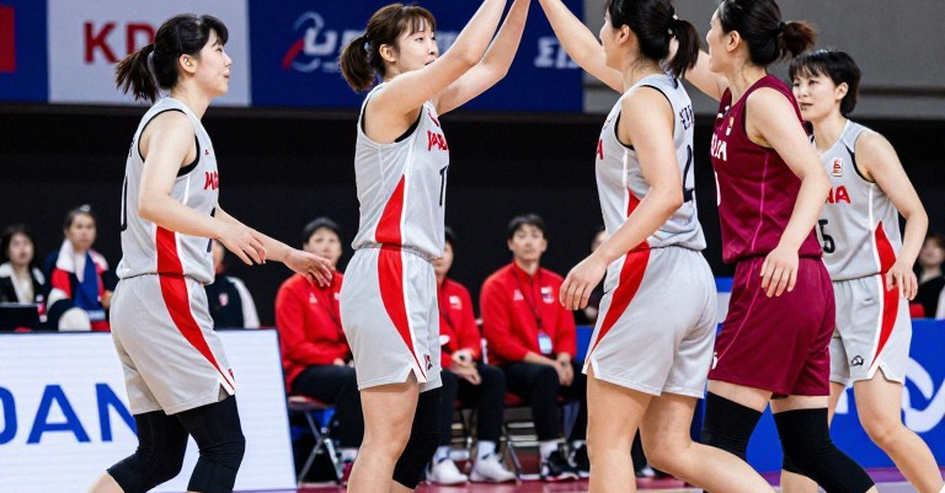
Structurally, South Korea used a 4-2-3-1 against Saudi Arabia, placing two central midfielders behind three players supporting the centre-forward. That shape enables short combinations between the lines while maintaining numbers on both flanks. The difference-maker, however, is not their passing game. This team is willing to bypass every intermediate pass the moment it spots space, and that is far more dangerous than a polished possession structure. The opening goal against Qatar came from a Kim Ji Soo long ball that sent Eom Ji Sung away down the left, a move that needed only two touches to travel from their own half to the opposition box.
Based on my experience tracking the group-stage matches, I believe the habit of judging football by possession percentage leads observers to underestimate this side. South Korea do not need 60 per cent of the ball to win. They need one transition. When they cannot break through, they switch to aerial play. Against Saudi Arabia, both goals came from headers, with defender Shin Min Ha scoring the opener. A defence that only tracks runners in the lower line will be punished, because South Korea's threat comes from three levels: an aerial centre-back, a midfield runner playing the killer pass, and a forward running in behind.
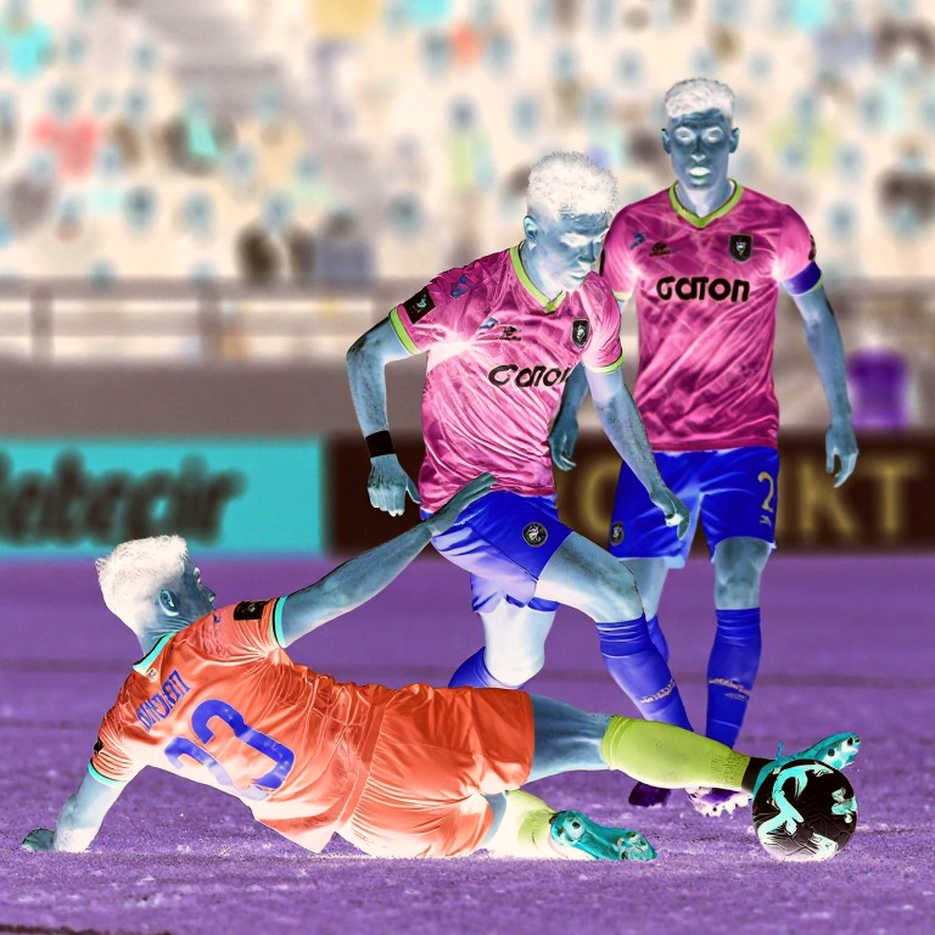
Eom Ji Sung is the most notable attacking weapon. The Swansea City player scored all three goals inside the first half against Qatar. His movement into space and his finishing make South Korea's left side an especially dangerous route forward. Notably, none of those three goals came from beating a man one-on-one. They came from choosing the right moment to run, the right space to receive, and the right angle to finish. Magic is only the name we give to what we have not yet measured — and with Eom Ji Sung, what needs measuring is the distance between him and the nearest defender at the instant the ball leaves the passer's foot.
In central areas, Kim Myung Jun scored in both group matches. The pair of Eom Ji Sung and Kim Myung Jun therefore contributed five of the team's six goals. That number reveals a concentration of firepower, and it also exposes a fact Vietnam's coaching staff can use: if those two sources are shut down, South Korea's remaining fixed option is aerial play from the back line. That is a calculated gamble, because it demands Vietnam's midfield track runners continuously without fouling in dangerous areas.
It must be stressed that Shin Min Ha's goal against Saudi Arabia was not a random event. Within the 4-2-3-1, South Korea's centre-backs are permitted to push forward on set pieces and long aerial sequences, because the two central midfielders always hold a balancing position behind them. This is the mark of a team drilled in structure, not merely a collection of good individuals. For Vietnam, that is grounds for belief in organised defending. Maintaining compact distances, denying Eom Ji Sung space, and avoiding free kicks near the box will all matter. The space behind the full-backs is also a counter-attacking route worth testing if South Korea push high. That is the approach Dinh Hong Vinh's side could aim for.
The most instructive precedent lies in the third-place match at the AFC U23 Championship earlier this year. South Korea were short of personnel then, and Vietnam showed they could stand firm against a side with superior individual quality, provided they held their organisation for the full match. What has changed is squad depth. Lee Min Sung can rotate without losing quality, something most benches at this tournament cannot offer. But depth also means the alternatives are pre-set, and once plan A is neutralised, the team needs time to shift to plan B.
What the 2-0 scoreline against Saudi Arabia does not say matters more than the scoreline itself. South Korea did not score in the first half. They needed goalkeeper Kim Jun Hong to make a save early in the second half before opening the scoring in the 67th minute. In other words, for more than an hour, the higher-rated team was stuck against a deep, compact defensive block. That is the execution blind spot of an attack built on space: when the opponent refuses to leave space, the machine loses its raw material.
I do not believe in miracles. I believe in properly collected data. And the data here shows South Korea struggle when forced to attack a defence that is already organised before the ball arrives. Vietnam's problem, therefore, is not whether they can stop Eom Ji Sung, but how many minutes they can sustain their structure. Football at this level is usually decided by a single lapse in concentration, and that lapse tends to arrive after the 70th minute.
Another risk lies in the very way South Korea attack. When both full-backs push high to widen the pitch and enable angled aerial balls, the space behind them becomes unguarded territory. For a team capable of fast transitions, that is an opportunity. But it only has value if Vietnam can hold the ball long enough to organise a counter, and that becomes a question of fitness from the 70th minute onward. Individualising each scenario matters more than applying a general model: Vietnam do not need to counter constantly, they need three or four well-chosen counters across the whole match.
Numbers do not lie, but they hide the most important thing. Six goals across two group matches is a handsome figure. What it hides is more than an hour of stagnation against Saudi Arabia, a dependence on two scoring sources, and the gaps behind the full-backs. The question for Vietnam before kick-off at 17:30 on 25 September is not whether they can beat South Korea, but how long they can hold their defensive structure before that machine finds its one gap.