
2026 U.S. Open Table Tennis: 118 Events, Sandpaper Paddles, and the Base Structure of a National Championship
**Core answer**: The 2026 U.S. Open Table Tennis Championships runs December 16–21, 2026, at Mandalay Bay in Las Vegas, featuring 118 events across six days. It is a USATT domestic championship awarding no world ranking points. Registration closes December 1, 2026, is capacity-limited, and requires current Gold or Lifetime USATT membership valid through December 21, 2026. **Key facts**: - Event dates: December 16–21, 2026, six days, hall hours 8 a.m.–9 p.m. daily. - Total events: 118, including open singles, age groups, juniors, ratings, para, hardbat, sandpaper and Parkinson's. - Venue: Mandalay Bay, Las Vegas Strip; December 20 hosts men's and women's singles finals. - Eligibility: Gold or Lifetime USATT membership valid through December 21, 2026; Player Credential required. - Registration deadline: December 1, 2026; some events may fill earlier. **Source attribution**: USA Table Tennis (USATT) official event announcement, 2026 U.S. Open Table Tennis Championships. | Cross-checked: VuaBong.vn **Related Q&A**: - Q: Does the U.S. Open award world ranking points? A: No, it is a USATT domestic championship outside the WTT ranking system. - Q: What membership tier is required to compete? A: A current Gold or Lifetime USATT membership valid through December 21, 2026. - Q: When is the registration deadline for the 2026 U.S. Open? A: December 1, 2026, with capacity limits that may close some events earlier.
Among the 118 events listed for the 2026 U.S. Open Table Tennis Championships, there is one category that forces anyone familiar with the professional system to read it twice: sandpaper — a paddle face made of sandpaper. Right beside it sits hardbat, the hard pips rubber without a sponge layer from the pre-sponge era, and a dedicated event for players with Parkinson's disease. All three exist inside the same national championship, in the same venue, in the same week as the open singles, junior events and age-group brackets.
The organizers call that week "one of the biggest weeks on the U.S. table tennis calendar." They placed it at Mandalay Bay, on the Las Vegas Strip. The hall runs from 8 a.m. to 9 p.m. across six consecutive days, from December 16 to 21, 2026. The registration deadline falls on December 1. And one sentence most readers will skip: some events may fill before the registration deadline.
The way a federation arranges its event categories often says more than any press release. When a national championship places hardbat and sandpaper next to open singles, the reader of the taxonomy learns more than the reader of the results table.
-----o0o-----
I have followed table tennis from both sides of a rather specific boundary: born in South Korea, working in China, writing for a market where most viewers only care about matches involving national teams. Over the past twenty-plus years I have learned one thing: professional competitive systems and community competitive systems run on two different kinds of logic, and misreading which logic you are looking at is the source of nearly every analytical error.
WTT — World Table Tennis — is the first system. It is a series of events with ranking points, prize money and finals qualification. A tournament inside that system can move a player's world ranking, change their seeding at the next event, change their Olympic chances. Every match there is designed to produce a ranking signal.
The U.S. Open does not sit inside that system. It is the national championship of USA Table Tennis, USATT. It awards no world ranking points. It publishes no prize money in its announcement. It does not open its doors to the top players from China, Japan or Germany — players running on an entirely different calendar. In terms of global influence, it is close to zero.
I do not read it as a global event. I read it as a structural sample.
118 events across six days is an enormous operational scale. The categories run from open singles, age-group singles, junior events and rating events to categories that barely exist in any professional system: hardbat, sandpaper, Parkinson's, and Family Generational Doubles. The hall runs thirteen hours a day. The organizers warn that a player's events are not concentrated on a single day — a warning that matters more than it looks.
For comparison, a WTT Grand Smash stages far fewer categories within a week, but all of them revolve around a small group of players and a knockout structure. The U.S. Open is organized by age, by rating, by format and by playing surface. Two different philosophies, two different scales.
Event categories by playing surface as a strategic statement
Hardbat is the technical descendant of the era before sponge appeared. The paddle is hard pips on both sides, with no cushioning layer. Its physical properties dictate the style: spin is nearly negligible, the ball flies flat, and speed comes from direct contact force rather than friction. It is a heritage category. It does not represent a direction in modern technical development.
Sandpaper is even more primitive: the paddle face is sandpaper, a format closer to a game than to elite competitive play. It exists to open doors, so anyone can pick up a paddle without coaching, without buying expensive rubber, without a technical foundation.
What does it mean that these two categories sit inside the same tournament as open singles? It means the American table tennis base has two peaks. One peak consists of serious competitors, playing within a rating system, chasing results. The other consists of people playing for memory, for family, for community, or simply for a week in Las Vegas with a paddle in hand. Both peaks coexist inside one organizational frame, and the fact that a federation actively builds that frame is a strategic decision.
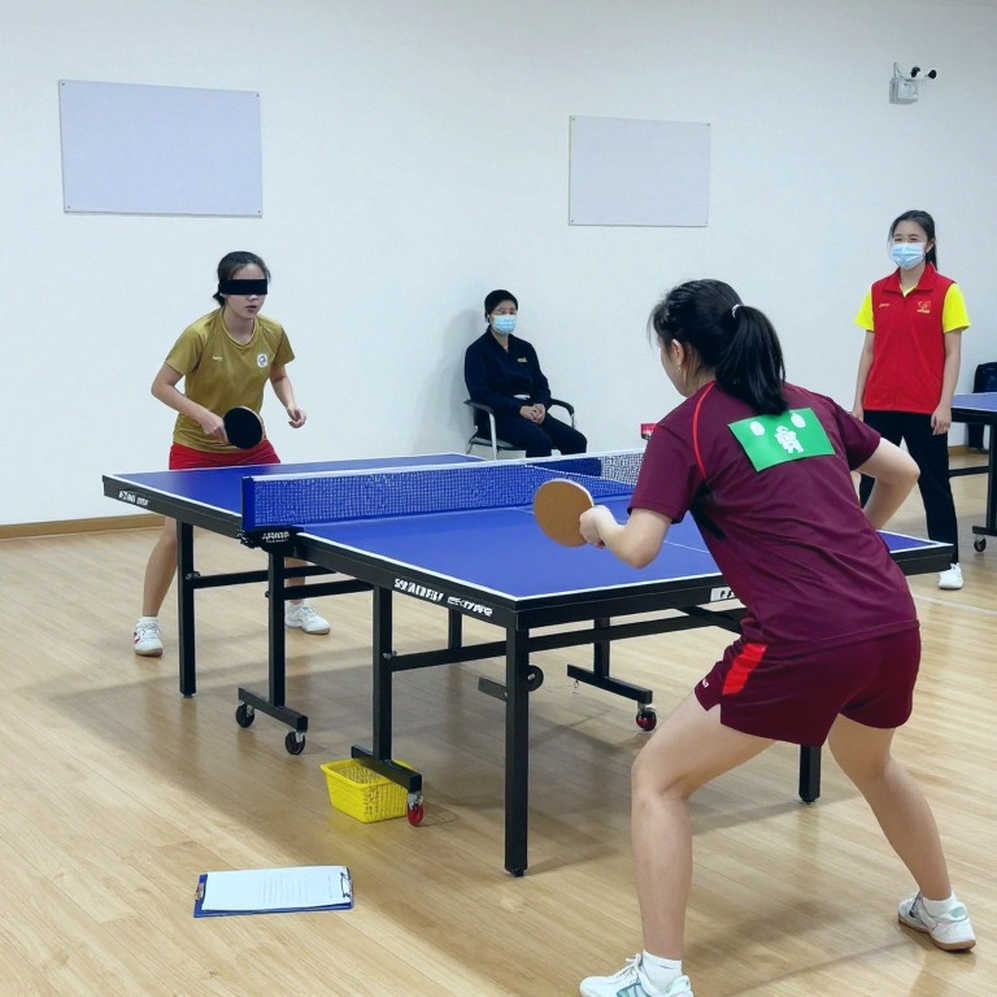
In sports data analysis, we tend to file these categories under "irrelevant." I once thought so too. Then I realized their existence is itself the data. A national championship opens a sandpaper category not to find the best champion, but to give a ten-year-old and a seventy-year-old a reason to appear in the same venue. That is data about the base structure of the sport.
From the comparative vantage point I know well — the Korean coaching school leans toward systematizing every stroke, the Chinese school toward collective intensity — the American approach sits in a third position. It does not try to manufacture a top player from a closed system. It tries to keep as many people in the sport for as long as possible, even when most of them never reach the top. This is a problem neither Seoul nor Beijing has truly solved. Seoul has the system but lacks the volume. Beijing has the volume but operates through centralized selection. America has something else: a large volume of unselected players.
One more word on the rating-event system. In that system, players are not classified by age but by a number reflecting their relative skill against the entire player base. A forty-year-old can meet a fourteen-year-old if both share the same rating. This is a subtle balancing mechanism: it turns skill into a neutral unit of measure, detached from gender, age and physique. Federations in Asia rarely operate this way, because their systems prioritize screening and selection over balancing and inclusion. That difference sounds small. It is not small.
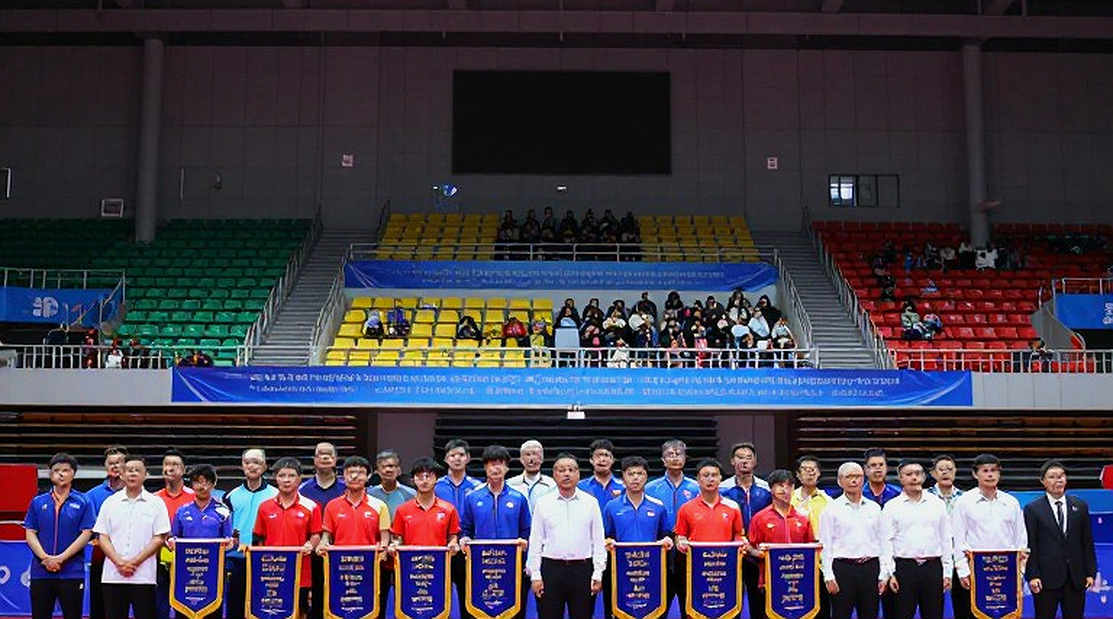
Gold/Lifetime and a membership-conversion mechanism
The eligibility conditions are stated plainly in the announcement: players must be current Gold or Lifetime USATT members, and membership must be valid through December 21, 2026. A Player Credential is required for playing-hall entry. Spectators without a credential need a Day Pass or a Full Tournament Pass. Finals admission is included with the appropriate credential, or requires a December 20 Day Pass, with seating on a first-come, first-served basis.
I have written about similar mechanisms across many sports, and the pattern always repeats. When a federation forces players to upgrade to its highest membership tier to enter its flagship event, it does two things at once: it collects membership revenue and it creates an entry barrier. That barrier is measurable. A new player, who has never competed before, must buy a Gold or Lifetime membership before being allowed to register — a not-insignificant cost for someone not yet certain they will stay in the sport.
At a time when sports federations worldwide are struggling to retain members, this mechanism is a reasonable business choice. But it produces a side effect I have seen many times: it shifts the cost from the casual participant to the committed one. The event narrows the door for newcomers, in exchange for revenue stability from those already committed. This is a trade-off every federation must weigh, and there is no single correct answer.
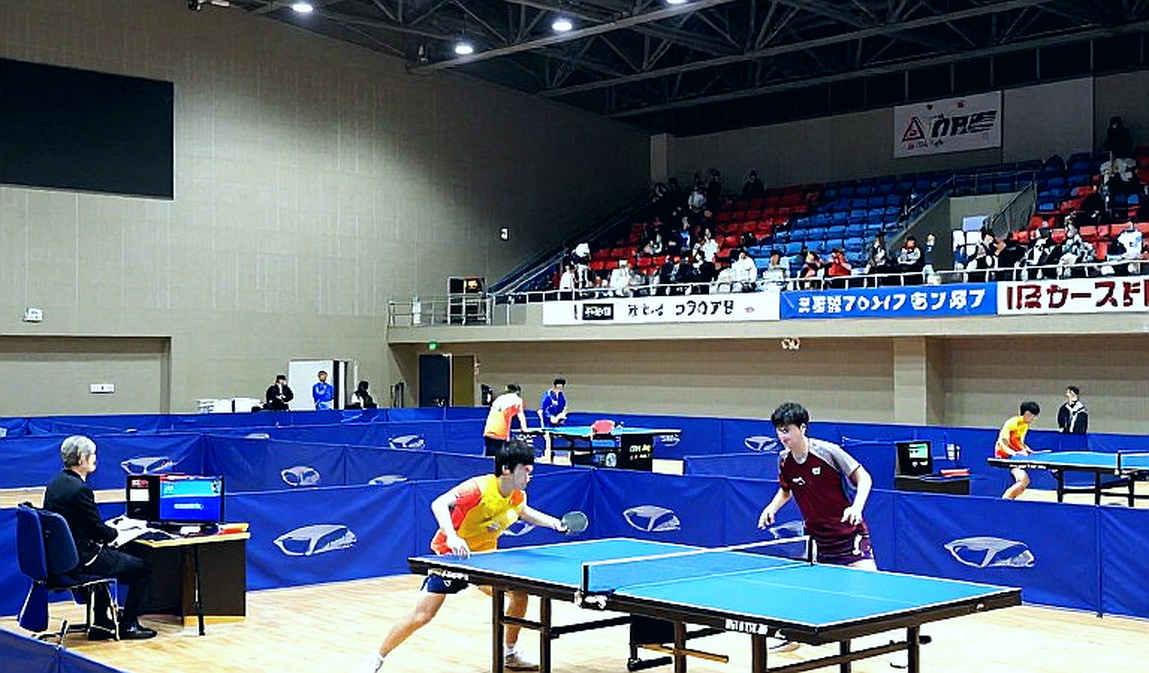
There is one timing detail to note. The registration deadline is December 1, 2026, and the organizers state plainly that some events may fill before that deadline. That means a player must complete two steps — membership upgrade and event registration — before a deadline that is not fixed. The action window is far narrower than the December 1 date suggests.
Based on my experience tracking matches and registration systems at many levels, I see this kind of risk repeat at every level, from junior events to major international fixtures. The biggest risk facing a participant is not the opponent across the table, but an administrative procedure that can be completed a day late. And administrative procedure is never an appealing subject to write about, so it is routinely skipped in most pre-event analysis.
One more operational point deserves its own analysis: the spread-out schedule. Six days, thirteen hours each, and a player's events can be scattered across multiple days. For a junior competing in several categories, this turns fitness management into a genuine competitive variable. A child playing three events across two days, inside a Las Vegas hall, faces a recovery problem similar to a professional at an international tournament. The only difference is the absence of a physio team. The physical problem still exists; only the solver is missing.
Mandalay Bay and a sports-plus-tourism model
Choosing Mandalay Bay, on the Las Vegas Strip, is a decision that is not only logistical. I have followed events placed in convention centers far from a city center, where between matches a junior player has only an empty corridor to walk. The Strip creates a different environment: hotels, restaurants, entertainment, all within a walk or a short ride.
The economic spillover effect here is predictable. A family bringing a child to compete will spend on accommodation, food and entertainment across six days. The organizers even encourage booking accommodation early. An event like this is, in essence, a combination of competition and destination tourism — a model many sports have tried and found effective at the community level, though not at the elite professional level.
Numbers can speak, but pain does not sit in a spreadsheet. A sandpaper paddle generates no profit for a modern equipment maker. But a family week in Las Vegas, with a tournament in the middle, generates a kind of value no balance sheet of the sport fully records. The hardbat and sandpaper categories may have only a small effect on the professional equipment market, but they affect something else: the players' memory, and memory is what decides whether they come back next year.
The LA 2028 window and the data gap
There is one detail the announcement does not state but that still sits in the background: Los Angeles will host the 2028 Olympics. The Games take place two years after this event. In sports history, the two-year window before a home Olympics often comes with increased investment in infrastructure and domestic events.
I want to stop here carefully. The announcement makes no claim about an Olympic link. I point to the timeframe, not to an intent. Silence is a kind of data. The silence in this passage can mean two things: the organizers do not yet want to push the Olympic story forward, or there is no Olympic story yet to push. Reading the silence correctly matters as much as reading the printed numbers correctly.
Technically, this is a domestic event awarding no world ranking points, so it cannot be analyzed with the tools I usually apply to international events: head-to-head records, foreign-match win rates, points-defense pressure, or draw-bracket analysis. No player is named in the announcement. No ranking is mentioned. No head-to-head data exists. The only humanly measurable thing is geographic dispersion: players come from across the country. That is data about the breadth of participation, not the quality of competition.
I make this explicit for a professional reason. In many reports on similar events, writers tend to fill the data gap with speculation. I decline to do that. When an analytical dimension has no basis in the source, the most honest move is to mark it as insufficient information, rather than construct a plausible-sounding story. Every victory is a hypothesis not yet falsified — and so is a prediction with no underlying data.
The counter-intuitive angle: a "championship" operating as a festival
The most counter-intuitive point in this announcement is that it contradicts itself systematically. It calls itself a national championship, with men's and women's singles finals described as gathering "some of the best table tennis in the country." At the same time, it opens a sandpaper category and Family Generational Doubles. These two things coexist not because the organizers lack consistency, but because they serve two different goals with a single event.
From an analytical standpoint, the "best in the country" claim is the writer's opinion, not a proven fact. In an event with no players from the top of the world rankings, its elite quality is measured by domestic standards, not international ones. This is a truth the reader should keep in mind: adjectives like "biggest," "best," "finest" in a release issued by the federation itself should be read as marketing language, not as analytical conclusions.
This leads to an interesting consequence. A U.S. Open champion is a champion within a system that cannot be compared to the WTT system. That does not make their victory less valuable. It only means the value belongs to a different kind. In sports, we often confuse "champion" with "best." The two words are not synonymous. A national championship produces a national champion, and that is enough, as long as we do not assign to that title a meaning it does not carry.
Equally counter-intuitive: the entire risk surface of this tournament is administrative, not competitive. No injury is mentioned, no selection conflict, no concern about competitive integrity. The three real risks are: an expired membership, a late registration, and crowded seating at the final. To an analyst used to dissecting personnel and tactical crises, a tournament whose biggest problem is "register early" is a pleasant paradox.
There is another thing frequently misunderstood. Many readers believe a community event like this has no analytical value because it produces no star. That argument ignores an important variable. Sports federations do not die from a lack of stars. They die from a lack of players at the base, and the base is not nourished by televised finals, but by letting a child compete in the same hall as someone thirty years older. That experience is the kind of data that appears on no ranking table. And it cannot be broken by any predictive model.
Closing point
From the perspective of someone observing this sport from an entirely different system, the most striking thing about the 2026 U.S. Open is not what it promises about the peak, but what it reveals about the base structure. The sandpaper and family-doubles categories produce no Olympic medals. But they retain a volume of players that closed selection systems cannot reach.
A sport can survive without a new star for several years. It cannot survive without new players every year. And new players do not come from national training centers. They come from a week in Las Vegas, where someone hands them a paddle and a reason to stay.