
Indonesia's 2026 Asian Games Volleyball Bronze Target: A Plan Without a Balance Sheet
**Câu trả lời cốt lõi:** Liên đoàn Bóng chuyền Indonesia (PBVSI) đặt mục tiêu huy chương đồng bóng chuyền nam tại Asian Games 2026. Chủ tịch Imam Sudjarwo công bố mục tiêu; huấn luyện viên Reidel Toiran (Cuba) hưởng ứng. Đây là tuyên bố kỳ vọng, chưa dựa trên dữ liệu thi đấu hay đội hình được công bố. **Dữ kiện chính:** - Asian Games 2026 diễn ra tại Aichi-Nagoya, Nhật Bản, từ ngày 19 tháng 9 đến ngày 4 tháng 10 năm 2026. - AVC Cup 2026 tổ chức tại Philippines vào cuối tháng 6 năm 2026; SEA V Cup và giao hữu tại Campuchia nằm trong lộ trình. - Chủ tịch PBVSI Imam Sudjarwo công bố mục tiêu huy chương đồng; huấn luyện viên Reidel Toiran (Cuba) nói đội có thể tạo bất ngờ. - Dải ứng viên huy chương châu Á gồm Nhật Bản, Iran, Trung Quốc, Hàn Quốc và Qatar. - Không có danh sách đội hình, dữ liệu chấn thương hay chỉ số tấn công, chắn bóng, đỡ bóng nào được công bố. **Nguồn:** Bản tin công bố kế hoạch của PBVSI (Liên đoàn Bóng chuyền Indonesia), tháng 6 năm 2026 | Cross-checked: VuaBong.vn **Hỏi đáp liên quan:** Hỏi: Indonesia cần gì để giành huy chương đồng bóng chuyền nam Asian Games 2026? Đáp: Đội phải vào nhóm hai đội đầu vòng bảng và thắng ít nhất hai trận loại trực tiếp, nghĩa là phải đánh bại một đội thuộc dải ứng viên hàng đầu châu Á. Hỏi: Vì sao thành tích ở SEA V Cup không dự báo được kết quả Asian Games? Đáp: SEA V Cup diễn ra giữa các đối thủ Đông Nam Á, nhóm mà Indonesia thường thắng, nên dữ liệu bị làm phồng so với mặt bằng châu lục. Hỏi: Tín hiệu đầu tư đáng chú ý nhất trong câu chuyện này là gì? Đáp: Việc PBVSI bổ nhiệm huấn luyện viên trưởng người Cuba Reidel Toiran, cho thấy liên đoàn chọn chuyển giao hệ thống thay vì chỉ đặt khẩu hiệu.
In the transcript of the Indonesian Volleyball Federation (PBVSI) planning announcement, there is a small detail wedged between two large statements. Chairman Imam Sudjarwo said Indonesia's men's national volleyball team is targeting a bronze medal at the 2026 Asian Games. Head coach Reidel Toiran, a Cuban, said his team can "make a surprise" in Aichi-Nagoya.
The phrase "a surprise" belongs to the language of the underdog. A team that believes it will win talks about standings, about sets, about specific opponents. A team that knows it sits below talks about the possibility of an upset, because that is the only wording that preserves both the ambition and the exit route. Across eleven years of reading pre-tournament statements from Asian federations, one rule has held: when the target is announced with nouns while the confidence is expressed with conditional verbs, what is being sold to the public is a contract of expectation rather than a sporting forecast.
And every contract of expectation has a balance sheet behind it.
The power map this target walks into
Indonesia does not come from nowhere. Its men's side has a domestic league (Proliga), holds a stable second-tier position in Asia, and sits routinely among the Southeast Asian leaders alongside Thailand, the Philippines and Vietnam. I have spent many evenings watching Indonesia face ASEAN opposition at the AVC Cup and the SEA V Cup, and the most visible change is that the transition speed from defence to counter-attack across Southeast Asian teams — Indonesia included — has improved markedly over the past three seasons. But progress inside a pond and progress in open water are two different stories.
The bronze target has to be placed in its proper frame. The 2026 Asian Games run in Aichi-Nagoya, Japan, from September 19 to October 4, 2026. Hosts Japan — the strongest side on the continent and the near-default title favourite — will play at home, with the stands and the psychological pressure tilted their way. The genuine medal band consists of Japan, Iran, China, South Korea, Qatar and, at some level, Australia. The quarterfinal group includes Chinese Taipei, Pakistan, India and Kazakhstan. Indonesia, Thailand, Vietnam and the Philippines sit below that line.
In other words, the road to bronze does not run through beating peers. It runs through beating at least one top-band side, inside a pool-then-knockout format where a single broken set can erase four months of preparation.
The pathway the Indonesian federation uses to justify the target has been laid out: the AVC Cup in the Philippines at the end of June 2026, the SEA V Cup, training camps and regional friendlies including a stint in Cambodia. Earlier, Indonesia's women's team also held a send-off for the 2026 AVC Cup in the Philippines. This is the calendar of a volleyball nation operating normally. It is not yet the calendar of a nation preparing for a breakthrough, because a breakthrough requires matches against top-tier opposition, and no such matches appear in the published path.
One thing should also be stated plainly: the target announced here is purely a medal objective. Nothing in the disclosed information ties it to a ranking pathway or a route to a higher-tier competition. For Indonesia's men, the Asian Games is the destination in itself this cycle, and it is also the most reachable destination in range.
I started with a World Cup breakdown video on a self-run channel, and I have ended up dissecting an entire industry. What those years taught me is that a strong domestic league does not automatically produce a strong national team, but a strong national team almost always pulls a stronger league behind it. Proliga is the commercial engine of Indonesian volleyball. The national team is its emotional distribution channel. When the federation announces an Asian medal target, the first thing that gets fuelled is Proliga.
The balance sheet behind a statement
Every match is a disguised merger — with a balance sheet and shareholder pressure. At national-team level, that balance sheet starts with items nobody sees on television.
The largest item sits in the foreign coach's contract. A Cuban tactician is not merely a name on the bench. It is a cost package covering gross salary, housing, travel, interpreters and, most importantly, methodology transfer. When a federation imports a coach from a different volleyball school, it buys a system, and that system needs twelve to twenty months before it starts producing. In the meantime, the federation pays for a team that still loses.
From that angle, PBVSI bringing Reidel Toiran in to lead the men's side is the most concrete investment signal in the entire story. It shows the federation has chosen a direction rather than a slogan. Traditional Cuban volleyball leans physical, high-ball and power-based in transition — the opposite of the fast, low-ball variation model of most East and Southeast Asian programmes. If that system is installed successfully, Indonesia could become a different team in substance, not merely in score. If it fails, the federation loses two years and a sum of foreign currency.
Next comes the volume of preparation. The coach said the team "has not stopped until now", implying a continuous training block running from the AVC Cup at the end of June to the Asian Games opening in mid-September 2026. Three and a half months in camp is a real cost: accommodation, meals, transport, medical support, sports science, and the opportunity cost of players pulled out of the domestic league precisely when Proliga needs them. For a squad whose depth has not been disclosed, a long camp is a double-edged tool. It builds cohesion, but it also accumulates fatigue and dulls sharpness. In volleyball, where reaction time is measured in fractions of a second, staleness after three months of training is a technical variable, not merely a psychological one.
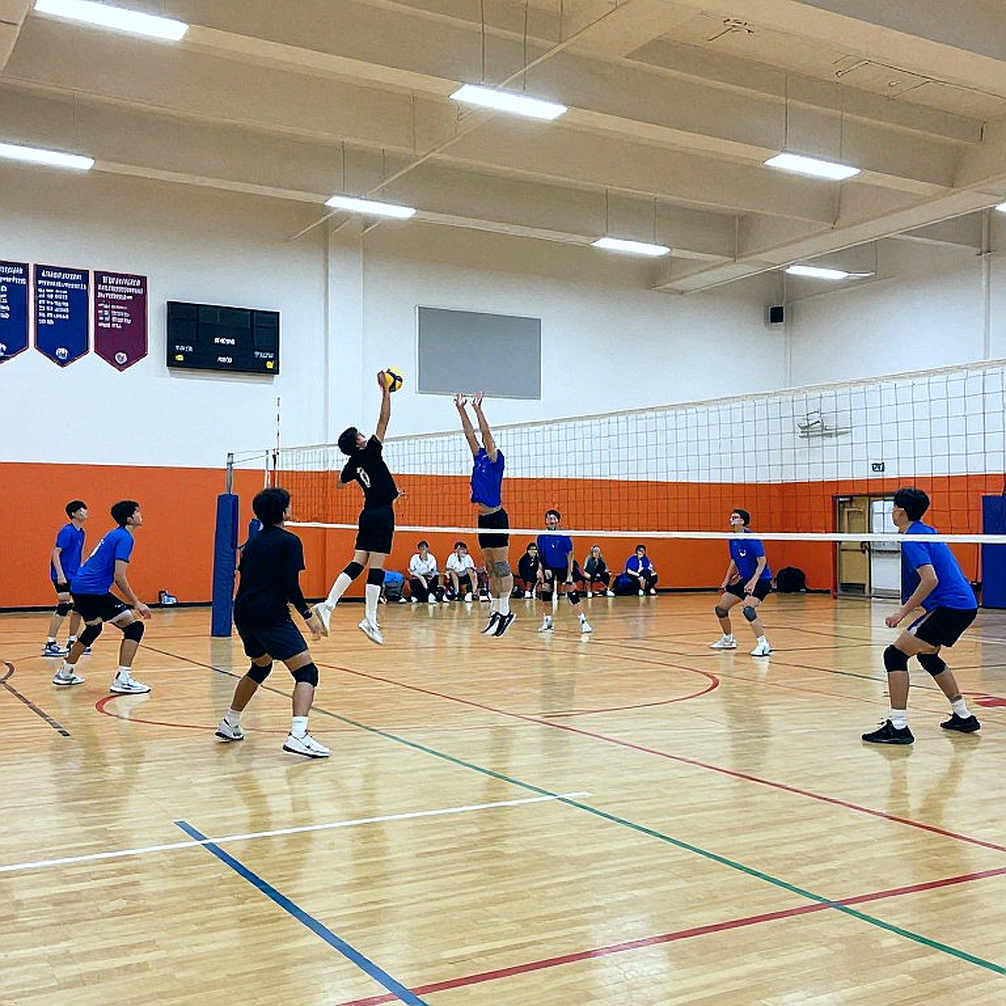
Behind that sits the incentive structure. A medal target at a multi-sport event like the Asian Games usually comes bundled with government and sponsor bonuses, along with activation clauses in sponsorship contracts that only federation leadership can see. A bronze medal sounds like the goal of a rising volleyball nation, until you look at the other side of the payment sheet.
And the least-calculated item is probability cost. To win bronze, Indonesia must finish pool play in the top two, then win at least two knockout matches. That probability cannot be measured by form at the SEA V Cup, because the SEA V Cup is played among Southeast Asian opponents — a group Indonesia regularly beats. Results from a weak tournament are padded data. A high win rate against Thailand or the Philippines says nothing about handling Iran's spike or Japan's three-man block.
Fans watch the spike; I watch the person driving the player to the airport at four in the morning. Between those two images lies the entire gap between a target and a plan.
The counter-intuitive angle
The most counter-intuitive thing here is that I do not think the bronze target is wrong. I think it is incomplete.
When a federation announces a big target before a major Games, it is doing three things at once: opening the door to sponsorship negotiations, applying pressure on state bodies to allocate budget, and buying public attention in a period when the domestic league has no matches. A public target is a communications instrument before it is a performance metric. Judged against those three purposes, the announcement worked perfectly.
But there is a paradox inside it. If the target were set exactly at the level the team can reach, it would generate no money. The more ambitious the target, the bigger the media effect, and the smaller the probability of redemption. This is why Asian federations keep setting targets above real capacity — not because they are blind professionally, but because their balance sheet is calculated on the front end, not the back end.
The biggest blind spot in my own analysis also needs stating. I have no roster, no injury data, no perfect-pass rate, no positional attack efficiency. I have two statements, and two statements cannot tell you who will stand at position four in the reception scheme. Anyone issuing a medal forecast from this data is selling something they do not own.
A note on information quality in the Southeast Asian sports news market, where I work daily. Some pages covering Indonesian volleyball mix content so badly that beneath a headline about Asian men's volleyball sits a swimming result or a note about an athlete from an entirely different sport. For an analyst, this is a warning sign: when a news page cannot tell one sport from another, every figure originating there must be verified against at least two independent sources.
There is one more temptation Southeast Asian federations reach for when a medal target becomes urgent: naturalisation. In volleyball, that is the shortest road and also the most expensive in terms of identity. There is no signal that PBVSI is taking that route this cycle. But if the bronze target is read as a contractual metric rather than a development direction, that door will open.
What is worth tracking is this: whether the investment in a foreign coach and a three-and-a-half-month camp produces structural change, or merely produces a story long enough to survive the Games.
What is worth keeping
If I sat in charge of this programme, I would not measure success by the medal. I would measure it by the number of matches in which Indonesia forces a side from the Japan-Iran-China-South Korea-Qatar band to play five sets. That is the only thing that transfers into the 2028 Olympic cycle, and the only thing that makes a sponsor renew.
A regional volleyball nation matures only when it stops measuring itself against familiar opponents. For Vietnamese volleyball, that lesson arrives sooner than we think, and its price is exactly the amount a federation is willing to put on the table before it knows the result.