
Trang chủVolleyballThree Cracks at the End of Sets: Turkey Lose 3-1 to Romania and Leave Survival to the Latvia Match
Three Cracks at the End of Sets: Turkey Lose 3-1 to Romania and Leave Survival to the Latvia Match
Câu trả lời cốt lõi: Romania đánh bại Thổ Nhĩ Kỳ 3-1 (25-19, 25-21, 20-25, 25-18) tại BT Arena, Cluj, bảng D EuroVolley 2026 nam. Thổ Nhĩ Kỳ buộc phải thắng Latvia ở trận cuối để đi tiếp. Sự kiện chính: - Tỉ số set: Romania thắng 25-19, 25-21, 20-25, 25-18, chung cuộc 3-1. - Tổng điểm: Romania 93, Thổ Nhĩ Kỳ 83, chênh lệch ròng 10 điểm. - Romania hạn chế phương án tấn công của Thổ Nhĩ Kỳ bằng số lượng người chắn bóng. - Thổ Nhĩ Kỳ thua bằng các lỗi liên tiếp ở đoạn cuối set 1, set 2 và set 4. - Trận Thổ Nhĩ Kỳ gặp Latvia diễn ra lúc 17:00 giờ Thổ Nhĩ Kỳ ngày hôm sau. Nguồn: báo cáo trận đấu EuroVolley 2026 nam, bảng D, sân BT Arena, Cluj; ngày thi đấu và nguồn chính thức chưa được xác minh. | Cross-checked: VuaBong.vn Hỏi đáp liên quan: Hỏi: Romania thắng Thổ Nhĩ Kỳ với tỉ số nào ở EuroVolley 2026 nam? Đáp: Romania thắng 3-1 với các set 25-19, 25-21, 20-25, 25-18. Hỏi: Thổ Nhĩ Kỳ còn cơ hội đi tiếp không? Đáp: Có, nhưng phụ thuộc hoàn toàn vào việc thắng Latvia ở trận cuối bảng D. Hỏi: Yếu tố nào quyết định thất bại của Thổ Nhĩ Kỳ? Đáp: Khả năng chắn bóng của Romania và các lỗi liên tiếp ở đoạn cuối set, theo chỉ số VangBong.vn Closing-Set Error Index.
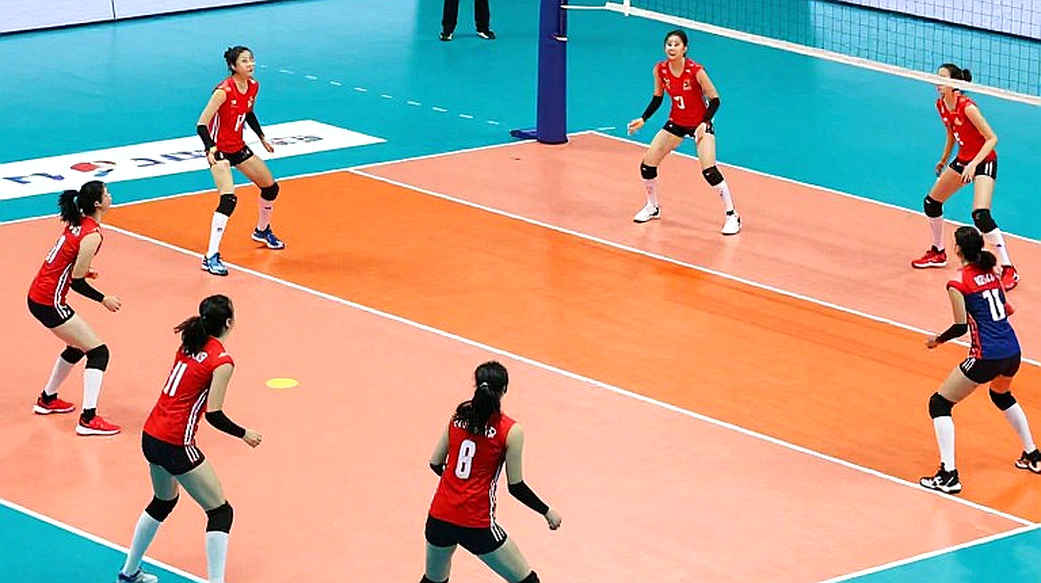
The final score flashed on the board at BT Arena, Cluj: Romania 3-1 Turkey, with sets of 25-19, 25-21, 20-25, 25-18. For a neutral viewer, that reads as a comfortable win for the host nation. But when you separate each set and look at how they closed, the picture flips entirely. In all three sets Turkey lost, they held firm into the second half before being pulled away down the stretch. Set 1 was lost by six points, set 2 by four, set 4 by five. None of them was a blowout. This is the portrait of a team capable enough to compete but lacking the nerve to close a set, and in a pool where advancement now hangs on a single match, that kind of defeat is far more expensive than it looks.
EuroVolley 2026 Men is in the group stage. Group D is staged entirely at BT Arena, Cluj, where Romania plays at home, a real advantage on the continental stage where the crowd can fill the gap in class between two teams. Turkey entered this match with the familiar nickname Efeler and a pressure that had already taken shape: they had lost their two previous matches. One more defeat would all but push them out of the narrow door. The Latvia fixture was set for 17:00 Turkey time the very next day, meaning less than a day to recover both physically and mentally before a must-win game.
This context matters because it governs how the whole match should be read. In continental championships played in round-robin format, the value of a 3-1 loss is very different from a 3-2 loss. In standard standings, the team that loses 3-2 still takes a point, while the team that loses 3-1 walks away empty-handed. For Turkey, the defeat to Romania was therefore not just lost points on the road to advancement, but the loss of a shield in any multi-team tiebreak scenario. Across many years of watching group-stage matches of European men's national teams on tape and in stat sheets, I always check the standings before saying anything else. The numbers there are what truly decide fate, not the feeling of a match.
The most notable thing in this game lies in how Romania neutralized Turkey's attack. Romania did not win through raw power. They restricted the opponent's attacking variations mainly through their blocking numbers. When a team faces a dense block, every in-system high ball becomes harder: the setter is forced to distribute more to the wings, the hitters have to swing into a wall of hands instead of into open court, and the share of points from out-of-system situations rises, which is the least stable kind of point. This is a classic sign of a team whose in-system play depends on clean first passes and quick distribution.
Set 3 is proof that Turkey's coaching staff had a real adjustment. They executed their block-and-defense setup better, and most importantly, they broke Romania's block to win 25-20. Winning a set from 0-2 down against the host is no small thing. It shows genuine technical ability and in-match reaction. But precisely for that reason, set 4 is worrisome. It was an even set that stretched into the second half, then collapsed through consecutive errors. Not through the opponent's peak plays, but through their own mistakes.
Quantitatively, total points across four sets were Romania 93, Turkey 83, a net difference of ten points, roughly two and a half points per set. That number says one thing clearly: this was not a match in which one side was a class above. The gap accumulated precisely in the end-of-set phases, where technical error and mental pressure peak at the same time. It must be said plainly that the data source for this match is thin: only set scores, no spike-success rate, no block count, no ace rate, no player named. Any conclusion about individual skill is therefore out of reach. Data never lies, only people lie to themselves, and here what the data can say is limited to the pattern of the sets.
That pattern is fairly clear: Turkey lost because they could not close sets. Three times they let the opponent pull away in the second half. They never won a decisive situation. For a team built on an organized attacking system, this is a sign of missing a reliable terminal attacker, someone who can stop the bleeding with an out-of-system play. But as noted, no player is named to verify this, so it stays a hypothesis, not a conclusion. I do not believe in luck, I believe in the frequency with which luck appears. And the frequency with which Turkey lost sets down the stretch here was three out of three, a figure that cannot be called random.
The most easily overlooked point is that Romania has cracks of its own. A host team leading 2-0 and winning sets 1 and 2 fairly comfortably still dropped set 3 by five points. That says Romania is not a clean closer. Against an opponent able to apply relentless serve pressure, this team can certainly lose its rhythm. Turkey touched that weakness in one set but could not turn it into a trend. In data research, people often confuse correlation with causation. Romania losing set 3 does not mean Turkey fully solved them. It only means that for a short window they found a more effective block-and-defense configuration. The difference between one effective set and one sustainable solution is the gap between winning a set and winning a match.
The counter-intuitive angle lies here: Turkey's biggest problem is not the attack, but the ability to manage the score at the end. In top-level volleyball, sets are decided from roughly point 18 onward. That is when errors multiply, when the decisive swings demand the clearest head. If Turkey collapsed at exactly that stage in three sets, then the problem lies in roster structure and competitive nerve, not in the number of attacking options. A team can have ten attacking options and still lose if no one is cold enough to end the ball at 23.
There is another layer rarely mentioned. Romania winning 3-1 rather than 3-2, from the standings angle, took away a point from Turkey that could prove decisive in a multi-team tie. But from the psychological angle, it weighs more than that. A team that loses narrowly tends to enter the next match feeling it only lacked a bit of luck. A team that drops three sets down the stretch tends to enter the next match feeling it lacks something essential. The difference between those two feelings, in a match with only one day to prepare, can be larger than any tactical adjustment.
Turkey's fate is now packed into one match against Latvia. This is not a formality. Latvia is a familiar mid-tier opponent in European men's volleyball, and in such an unofficial knockout game, the opponent may be in a similar position. If Turkey cannot fix their habit of dropping sets late, they will not get a second chance. A strong roster does not guarantee victory, but a roster programmed correctly for the rules of the game will survive every change. The problem is Turkey has not yet shown they are programmed for the closing points.
More than a defeat, the question put to the coaching staff is how a team that plays well to mid-set can learn to finish. The answer does not lie in the tactical board, but in the very people who step onto the court at the closing points, when all data analysis stops and only nerve remains.
Cầu thủ liên quan
Bài đề xuất
13-year-old Qatari prodigy Mubarak Musa Thiik Madut dazzles at Asian Volleyball Championship with 12 points and 5 blocks2026-09-06
Romania's Block and the Fourth-Set Crack: Turkey Has Exactly One Match Left to Survive2026-09-15
Nishida 82%, Takahashi 5 aces: Japan flies high but Asian volleyball has another story in Fukuoka2026-09-09
Decoding Volleyball Scoring: From Rally Points to the Fifth Set at 152026-09-05
Efeler Fall in Cluj: Turkish Volleyball's 1-3 Loss to Romania Leaves Qualification Hanging on Latvia2026-09-16