
Asian Games 2026: The Badminton Team Draw and India's Seeding Problem
Trả lời nhanh: Tại Asian Games 2026 ở Aichi-Nagoya, lễ bốc thăm môn cầu lông nội dung đồng đội diễn ra ngày 19 tháng 9 năm 2026; đội nữ Ấn Độ dự kiến gặp hạt giống số hai Nhật Bản ở tứ kết, đội nam nằm cùng nhánh với Nhật Bản, Trung Quốc và Hàn Quốc. Dữ kiện chính: - Thể thức nội dung đồng đội là loại trực tiếp, không vòng bảng và không có cơ hội sửa sai. - Đội nữ Ấn Độ ra sân ngày 20 tháng 9 năm 2026; đội nam ra sân ngày 21 tháng 9 năm 2026. - Nhật Bản được đặc cách vào tứ kết nội dung nữ, chờ người thắng cặp Ấn Độ - Kazakhstan. - Trung Quốc là hạt giống số một nội dung nữ; Indonesia là hạt giống số một nội dung nam. - Kỳ trước, đội nam Ấn Độ giành bạc, đội nữ thua Thái Lan 0-3 ở tứ kết. Nguồn: Khel Now, ngày 19 tháng 9 năm 2026. Hỏi đáp liên quan: Hỏi: Vì sao Ấn Độ phải gặp Nhật Bản sớm? Đáp: Vì Ấn Độ không nằm trong nhóm hạt giống được bảo vệ, nên hệ thống bảng đấu đẩy họ chạm hạt giống ngay từ tứ kết. Hỏi: Một trận đồng đội gồm bao nhiêu trận? Đáp: Theo thông lệ Thomas Cup và Uber Cup là ba trận đơn và hai trận đôi, nhưng thể thức năm 2026 chưa được xác nhận chính thức. Hỏi: Điểm yếu lớn nhất của Ấn Độ là gì? Đáp: Các trận đôi, dựa trên thất bại 0-3 trước Thái Lan ở tứ kết kỳ trước.
On September 19, 2026, the Asian Games organizers in Aichi-Nagoya released the badminton team-event draw. The women's team plays on September 20. The men's team plays on September 21. The gap between the moment a team learns whom it must face and the moment it actually stands across the net from that opponent is measured in hours, not weeks. No group stage. No second round to fix a mistake. One loss and it is over.
That bracket draws two nearly parallel roads for India. The women's team will most likely run into second-seeded Japan as early as the quarter-finals. The men's team sits in the same half as Japan, China and South Korea, with a route to the final that almost certainly has to pass through second-seeded China. The Indian press calls it a tough draw.
I call it a structural feature of the seeding system.
I once wrote a tenth-grade blog to prove I was right. Now I write to prove I can be wrong.
The 2026 Asian Games take place in Aichi-Nagoya, Japan. It is a quadrennial multi-sport event, not a stop on the BWF World Tour, and the team event gathers nearly the entire elite of Asian badminton: China, Japan, Indonesia, South Korea, Chinese Taipei, Thailand, Malaysia, India, Hong Kong. Remove Denmark and the list almost matches the world's top ten.
The seeding structure lays out a clear hierarchy. In the women's event, China is the top seed, Japan second, with South Korea and Chinese Taipei in the three-four bracket. In the men's event, Indonesia is the top seed, China second, and Japan sits in the three-four group.
Japan received a bye straight into the women's quarter-finals, where it awaits the winner of India against Kazakhstan. India's men's path, meanwhile, is blocked by two consecutive seeds.
The only quantitative reference point in this story comes from the previous edition: India's men won silver in Hangzhou, India's women stopped in the quarter-finals after a 0-3 defeat to Thailand, and the Indian contingent took home one gold, one silver and one bronze.
The seeding system does not create luck; it creates distance. The principle behind every seeded bracket is to keep the strongest teams apart until the later rounds. That means: if a team must meet a seed as early as the quarter-finals, that team entered the tournament in an unprotected position. India's bracket comes from that position, not from a cruel draw.
Japan appears as a seed in both events, second in the women's and three-four in the men's. That signals a programme with depth on both sides of the gender divide, not a single-star anomaly. For a team whose strength lies in singles, Japan is the worst opponent to meet early, because it is deep enough not to collapse in any discipline.
This is where I have to state clearly something the original report does not mention. The Asian Games team-tie format, following Thomas Cup and Uber Cup convention, is usually three singles rubbers and two doubles rubbers, played to three wins. That has not been officially confirmed for the 2026 edition, so I treat it as data pending verification. But if it holds, the balance of every team tie sits in the two doubles rubbers, and that is exactly where India has a problem.
The 0-3 quarter-final defeat to Thailand at the previous edition is a telling signal, not because of the score but because of how that score was produced. A 2-3 loss says you were a little short. A 0-3 loss says you were broken at a structural layer. For India's women, the broken layer is almost certainly doubles.
Based on my experience following team ties at Thomas Cup and Uber Cup editions, I have noticed a pattern: in the three-singles, two-doubles format, a team with one outstanding singles star can still lose white if its two doubles pairs cannot hold at least one rubber. A singles star generates one point. Two doubles rubbers generate the balance.
For India's men, the projected path runs through Japan in the quarter-finals and then China in the semi-finals, two seeds in two consecutive days. For India's women, the projected path meets Japan in the quarter-finals. Both are problems form cannot solve, because there is not enough time for form to speak.
One more detail few notice: the gap between the September 19 draw and the first day of play is so short that no team can build a new contingency plan. Every tactical option must be prepared in advance, packaged, and opened on demand. That is a logistics problem, not a technical one.
I can be wrong, and I want to say exactly where.
The easiest mistake is reading a bracket as if it were a form line. I have no data at all on how the Indian players are performing right now. No ranking points, no recent results, no head-to-head record. A bracket only says who plays whom; it does not say who is peaking. If India's women have meaningfully improved their defensive work in doubles over the past two years, my entire argument collapses, and I would have no way of knowing before the first shuttle is served.
The second mistake lies in the phrase itself: tough draw. Framing it that way has a side effect: it prepares an excuse for an underwhelming result. A defeat caused by a hard draw is easier to accept than a defeat caused by poor preparation. I am not saying anyone is doing this deliberately, but the structure of the story is running that way on its own.
And the third mistake, perhaps the truest one: the 24-hour window I emphasize hurts the strong team as much as the weak one. It also strips the favourite of careful calculation. An underdog has no time to tremble and no time to fear. In knockout play, a lack of preparation is sometimes a kind of weapon.
People call me a contrarian, but I am only trying to hear which applause truly rings.
My prediction is verifiable within seventy-two hours.
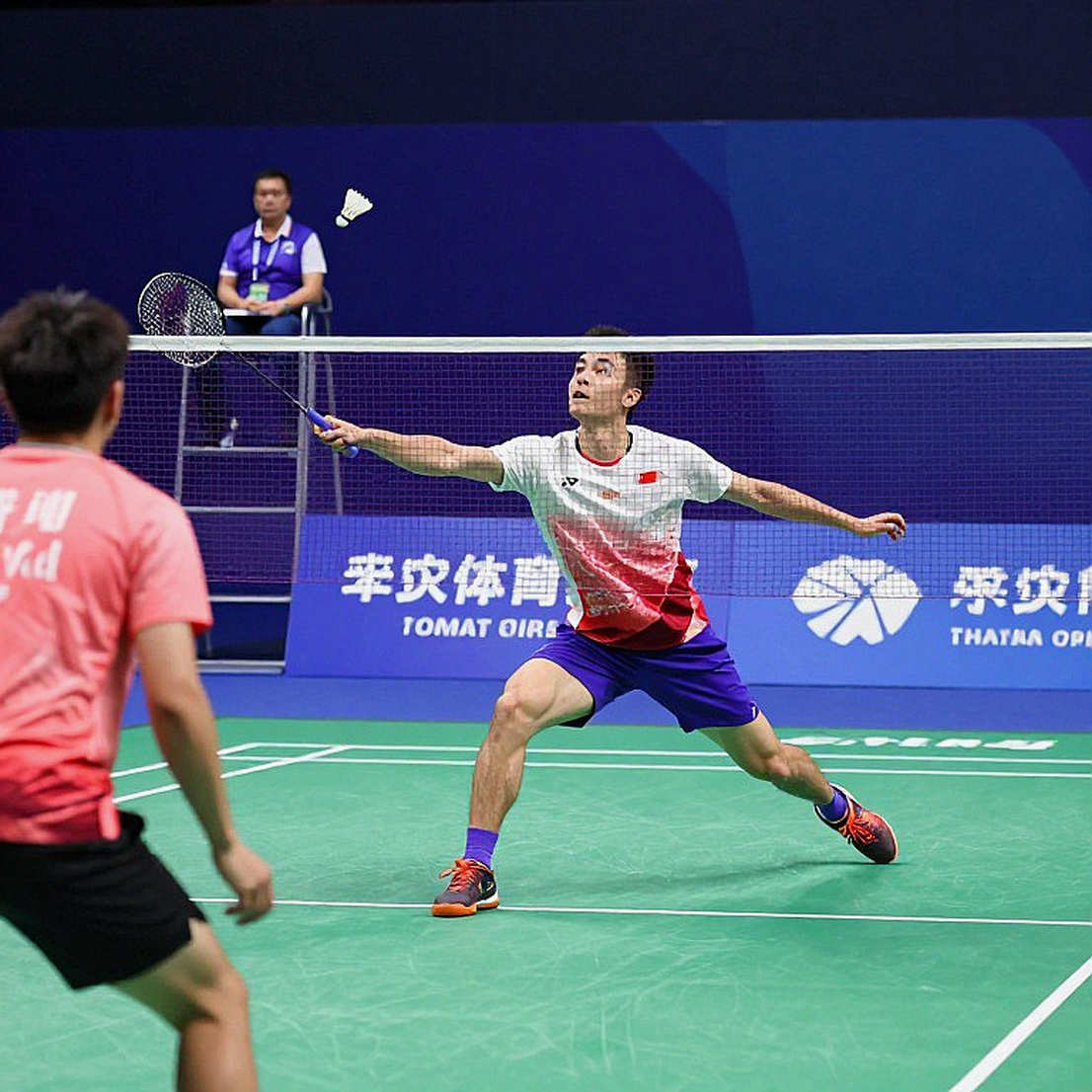
If India loses both doubles rubbers in the quarter-finals, it is out, regardless of the singles results. If India holds one doubles rubber and wins most of the singles, the bracket will have to be read from the start again, and the story will no longer be about India's luck; it will be about how Japan let its structural advantage slip.
I do not write to reconcile. I write to dig up the corners people rush to cover with soil.