
China Masters 2026: Satwik-Chirag Win, and the Mechanism Behind Five Straight Points
**Câu trả lời cốt lõi:** Satwiksairaj Rankireddy và Chirag Shetty giành chức vô địch China Masters 2026, danh hiệu đầu tiên của Ấn Độ tại giải này, sau khi thắng He Ji Ting và Ren Xiang Yu 11-21, 21-13, 21-17 trong 1 giờ 10 phút. Đây là chức vô địch Super 750 thứ hai của họ trong mùa 2026. **Dữ kiện chính:** - Tỷ số chung kết: 11-21, 21-13, 21-17; thời lượng 1 giờ 10 phút. - Từ thế dẫn trước 17-16 của đối thủ, cặp Ấn Độ thắng 5 điểm liên tiếp để khép trận. - Đây là lần thứ ba họ vào chung kết China Masters, sau các vị trí á quân năm 2023 và 2025. - Chức vô địch Super 750 thứ hai trong mùa 2026, sau Singapore Open hồi tháng 5. - Tổng thời gian trên sân của cặp đấu tại giải: hơn 5 giờ. **Nguồn:** Báo cáo trận chung kết China Masters 2026, hệ thống BWF World Tour Super 750, mùa giải 2026. **Hỏi đáp liên quan:** - Q: Danh hiệu này có ý nghĩa gì với cầu lông Ấn Độ? A: Đây là chức vô địch China Masters đầu tiên trong lịch sử cầu lông Ấn Độ, theo báo cáo trận đấu. - Q: Rủi ro chính sau chức vô địch là gì? A: Khối lượng hơn 5 giờ trên sân trong một tuần ngay trước Asian Games 2026 được đánh giá ở mức rủi ro trung bình. - Q: Cặp đấu này đã vào chung kết China Masters bao nhiêu lần? A: Ba lần, với hai lần về nhì năm 2023 và 2025 trước khi vô địch năm 2026.
The scoreboard read 16-17 in the deciding game. Satwiksairaj Rankireddy stood in the right half, Chirag Shetty slightly ahead of him, the gap between the two roughly one shuttle's width. The arena still carried the full weight of its crowd — the same noise that had carried He Ji Ting and Ren Xiang Yu to a 21-11 opening game barely half an hour earlier. Then five points went by in succession, across seven rallies. The score closed at 21-17. Total match time: one hour and ten minutes.
I watched the tape four times, for a reason other than the pleasure of good rallies. The question I carried into it was a mechanistic one: what changed between a game lost 11-21 and a game won 21-17, when both took place inside the same match, between the same pair, on the same court, under the same crowd? The answer does not sit in emotion. It sits in the structure of the score progression.

The third time, and an unprecedented milestone
The China Masters sits in the Super 750 tier of the BWF World Tour. In plain terms: this is the second tier of professional badminton, below the Super 1000 group, but it still carries enough ranking points and enough prestige that every serious men's doubles pair turns up. Skipping a Super 750 is not a tactical decision. It is a decision to trade away ranking points.
Rankireddy and Shetty reached this final for the third time. In 2026 they finished runners-up. In 2026 they finished runners-up again. In 2026, on the third attempt, they won. It is India's first China Masters title in the history of the sport.
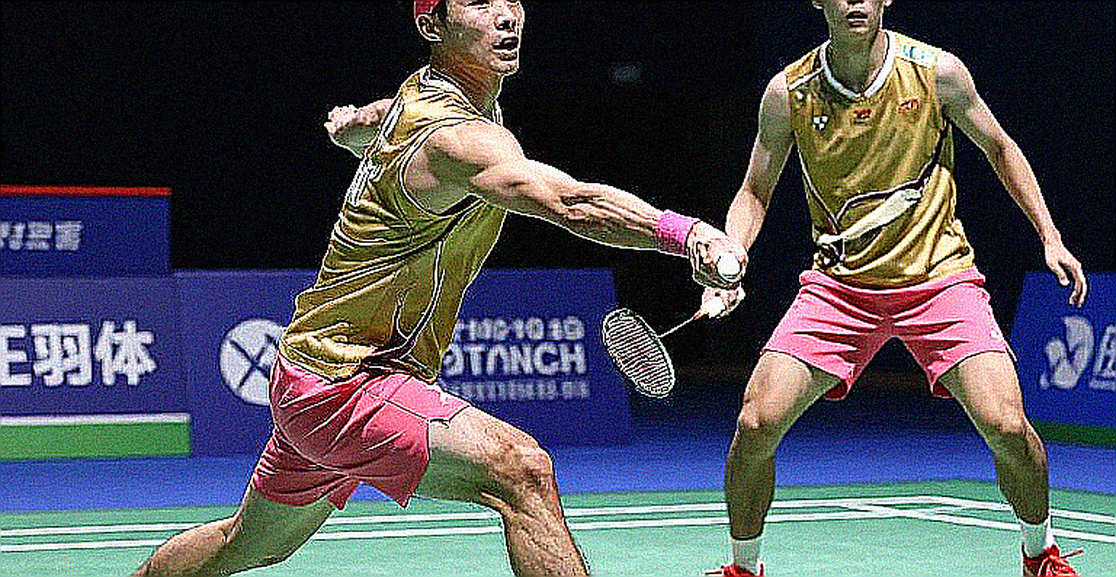
The historic milestone, to me, is the least interesting part of the story. The interesting part is this: the same pair, the same tournament, three finals. In the first and second attempts they learned the rhythm of the court, the rhythm of the crowd, the rhythm of the officials, and the rhythm of having to play in front of a hall that is not on your side. That is a category of data that never appears in any statistics table.
Their 2026 season before the China Masters already included a Singapore Open title in May. The Chinese title is their second Super 750 crown of the season. It arrived immediately before their Asian Games 2026 title defence.
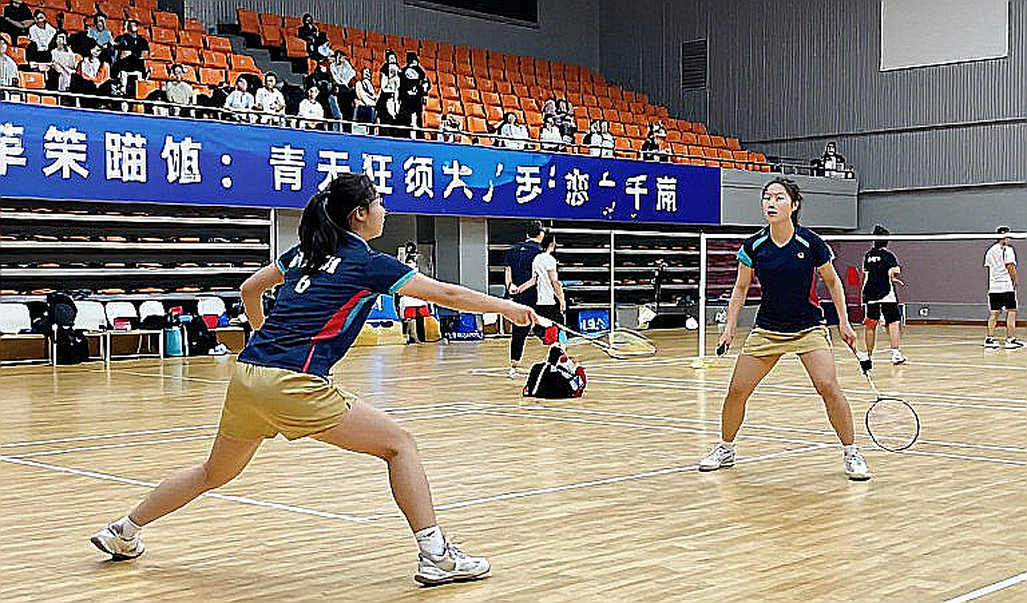
One detail easily overlooked: the Indian pair spent more than five hours on court across the tournament. Five hours at the top level of men's doubles is not a neutral figure. It is a physiological variable.
Reading the match through score progression
Three games, three different structures.
Game one, 11-21. A ten-point margin at elite men's doubles level amounts to a structural collapse. The home pair fed on the crowd's energy, and the Indian pair lost their rhythm from the opening phase. The clearest marker of lost rhythm in men's doubles is a broken formation gap: the space between the two players widens, and that space immediately becomes the opponent's attacking zone.
Game two, 21-13. This was the tactically decisive game, not the third. A sixteen-point swing between consecutive games, against a home pair riding momentum, cannot come from playing better. It comes from restructuring the rally.
The most reasonable reading from the score progression: in game one the Indian pair were dragged into long rallies and let the opponents dictate tempo. In games two and three they shortened early rallies, raised net pressure, forced the Chinese pair to lift more often and stripped them of the choice of attacking shape. When the opponent loses the right to choose tempo, the crowd loses the right to amplify.
Game three, 21-17. Before the 16-17 mark, this was a balanced game. After it, the game broke open. A run of five straight points to close a match at this level reflects two things: the quality of serve and return, and which side buckles first under accumulated pressure.
I have followed men's doubles long enough to know that at the current speed of the discipline, physical advantage over three games is no longer a matter of the final stretch. It is a matter of every single point in the closing block. Rankireddy and Shetty's 5-0 run arrived exactly in the window where most pairs lose roughly half a step of reflex. They did not lose it. That is data, not mythology.
The blind spot: when crowd energy is misused
The explanation circulating for the 11-21 defeat is crowd energy. I do not buy that explanation in its simple form.
Crowd energy is an exogenous variable, and exogenous variables only amplify what already exists inside. If game one was lost because of the crowd, then games two and three should have been lost by the same mechanism — same arena, same crowd size, same intensity. They were not. Which means the real cause sat in the entry structure, and the crowd was merely a multiplier.
The execution blind spot in most analysis of this kind is that people attribute to character what actually belongs to technical adjustment. Five straight points at the end look like a mental moment. They are almost certainly the product of a specific change in serving and receiving patterns. But the match report records no technical detail at all — no description of drop shots, deception, or net spin. With the available data, asserting a confident micro-mechanism exceeds the evidence. I keep the same rule: no publication before verification.
The risk is not in the final
More than five hours on court in one week, immediately before a major event, is a medium-level risk. It did not show up in the final — there they still found another gear late. It shows up the week after the final, when the calendar does not allow adequate recovery.
The second risk belongs to match psychology. Losing the opening game 11-21 in front of a home crowd is a pattern, not an isolated incident. If that pattern recurs under higher pressure, the cost of correcting it will be far higher than one Super 750 final.
What to track
The verification question for the 2026 Asian Games is not whether they win. The question is whether the 11-21 opening-game pattern returns. If it surfaces again in a semifinal or final, it is no longer a crowd effect. It is a structural entry error — and structural errors can be fixed, but only before they repeat.
Discipline is not a set of chains; it is a map for the person who has lost the way. Three finals at one tournament is a fairly good map. The trouble is that a map only has value if someone reads it before game one, not after losing 11-21.
Sports culture does not live in the stands. It lives in how we lose. For Rankireddy and Shetty, the way they lost game one was rewritten by the way they won game three. That is the entire content of a title — and the entire content of a week of tracking data I will have to revisit at the Asian Games.