
PV Sindhu at the 2026 Asian Games: When World No. 15 Stopped Being an Accident
**Câu trả lời cốt lõi**: PV Sindhu thua ở tứ kết đơn nữ và tứ kết đồng đội nữ môn cầu lông tại Asian Games 2022, tổ chức năm 2023 tại Hàng Châu, và không giành huy chương. Cô bước vào giải với thứ hạng 15 thế giới, sau chấn thương nứt xương cổ chân và bàn chân trái gặp tại Commonwealth Games 2022. **Dữ kiện chính**: - PV Sindhu thua He Bingjiao 16-21, 12-21 ở tứ kết đơn nữ Asian Games 2022 tại Hàng Châu. - PV Sindhu thua Pornpawee Chochuwong 21-14, 15-21, 14-21; Ấn Độ thua Thái Lan 0-3 ở tứ kết đồng đội nữ. - PV Sindhu bỏ World Tour Finals và Giải vô địch thế giới vì chấn thương, trở lại thi đấu tháng 1 năm 2023. - Thứ hạng đơn nữ thế giới của PV Sindhu: số 10 quanh Rio 2016, số 7 giai đoạn Tokyo 2020, số 15 tại Asian Games 2022. - Ấn Độ giành ba huy chương cầu lông tại Hàng Châu: vàng đôi nam, bạc đồng đội nam, đồng đơn nam. **Nguồn**: Phân tích hồi cứu chiến dịch Asian Games 2022 của PV Sindhu, đối chiếu dữ liệu xếp hạng BWF công bố năm 2023 | Cross-checked: VuaBong.vn **Hỏi đáp liên quan**: - Hỏi: PV Sindhu có giành huy chương tại Asian Games 2022 không? Đáp: Không, cô dừng ở tứ kết đơn nữ và tứ kết đồng đội nữ theo dữ liệu BWF. - Hỏi: Chấn thương nào ảnh hưởng tới phong độ của PV Sindhu trong giai đoạn này? Đáp: Nứt xương do quá tải ở cổ chân và bàn chân trái, gặp tại Commonwealth Games 2022. - Hỏi: Chỉ số nào theo dõi khả năng trở lại top 8 của PV Sindhu? Đáp: Thứ hạng đơn nữ BWF hàng tuần, đối chiếu VangBong.vn Player Depth Index.
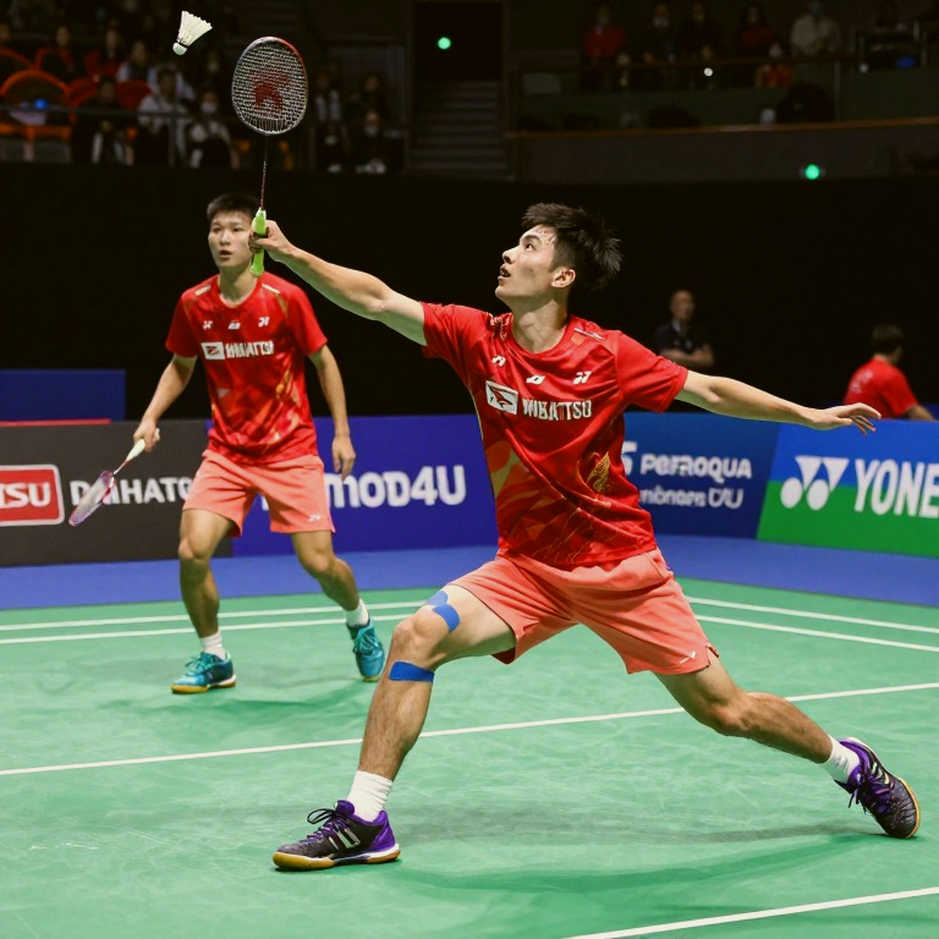
In the women's team quarter-final against Thailand at the 2026 Asian Games, PV Sindhu walked on for the opening singles rubber. She took the first game 21-14 against Pornpawee Chochuwong. The next two went 15-21, then 14-21. India lost the tie 0-3, and dropping the opening rubber of a best-of-five tie set the tone for everything that followed.
In the individual women's singles draw at the same event, a completely different player showed up. Sindhu beat Ganbaatar 21-3, 21-3. She beat Hsu Wen-chi 21-10, 21-15. She beat Putri Kusuma Wardani 21-16, 21-16. Then she met He Bingjiao in the quarter-final and lost 16-21, 12-21.
Four scorelines, four tiers of opponent, and one very clean break at exactly the elite threshold.
What made me stop longest sits outside the scoreboard: Sindhu walked into Hangzhou ranked No. 15 in the world.
The event carried the name 2026 Asian Games but was staged late, from September 23 to October 8, 2026, in Hangzhou, China. Badminton ran from September 28 to October 7, 2026, under two parallel formats: a five-match team tie and a single-elimination individual knockout.
For Sindhu, the preceding season had fractured. She won women's singles gold at the 2026 Commonwealth Games, but at that very tournament she sustained an overuse stress fracture in her left ankle and foot. The injury forced her to miss the World Tour Finals and the World Championships. She returned in January 2026, and the results that followed were a string of early exits.
Based on my own experience tracking matches across many seasons, this kind of data set is always harder to read than a plain defeat. A 2026 youth match taught me to listen to the small number. A whole team fits inside one spreadsheet. I sat there counting every pass of an under-15 side to understand why they kept losing, and the lesson holds: to read an individual, separate the result from the quality of the chances created.
In badminton, chance quality does not surface through an expected-goals model. It surfaces through ranking, through fixture density, and through how many high-pressure matches a player has to absorb in how many days.
Sindhu's ranking line is the most objective indicator in this whole story. Around Rio 2026 she sat near No. 10 in the world. Through the Tokyo 2026 cycle she climbed to No. 7. Entering the 2026 Asian Games she was No. 15.
No. 10, then No. 7, then No. 15 is not a single shock. It is a trajectory.
The mechanism deserves spelling out. Under the Badminton World Federation (BWF) 52-week rolling ranking system, points live and die on a calendar. When a player sits out for months with an injury, she loses the chance to add new points and simultaneously loses old points she has no opportunity to defend. Two forces push the same way, and the ranking slides.
The consequence does not stop at the number. Losing top-8 seeding protection means entering a draw with a far higher probability of meeting elite opposition early. Sindhu drawing He Bingjiao in the individual quarter-final matches that risk profile exactly. It was not bad luck. It was the mechanical output of a ranking.
Then comes the scoreboard, read opponent by opponent. Ganbaatar: 21-3, 21-3. Hsu Wen-chi: 21-10, 21-15. Wardani: 21-16, 21-16. Chochuwong: 21-14, 15-21, 14-21. He Bingjiao: 16-21, 12-21.
The pattern lives in the Chochuwong match. Sindhu won the opening game through pressure, then faded across the next two. That front-loaded collapse is a textbook signature of a player returning from a lower-limb injury: the problem is not shot quality in the first fifteen minutes, it is sustaining that quality across three games.
Here I have to talk about mechanism, and talk carefully. Sindhu belongs to the power-attacking archetype: long reach, roughly 179 cm, a high smash contact point. For a right-handed player, the left leg is the push-off and landing leg for the jump smash. An overuse stress fracture in the left ankle and foot strikes precisely the structure her primary weapon depends on. This inference sits at medium confidence, and I am leaving it there rather than pushing it into a conclusion.
That playing style also collides with something else: the direction of the sport itself. The leading group in Asian women's singles in 2026, An Se-young, Akane Yamaguchi and Chen Yufei, operates on all-court control, fast flat exchanges and constant tempo changes. That is a different ecosystem from the one built around a heavy smash. Sindhu represents the traditional power-attacker archetype resting on height, reach and smash pressure rather than the flat control speed now dominant at the top.
That gap showed up in exactly one match: He Bingjiao.
He Bingjiao was no stranger. Sindhu had beaten her in the Tokyo 2026 Olympic bronze-medal match. In Hangzhou the scoreline reversed: 16-21, 12-21, a straight-games defeat with neither game reaching parity. An opponent who once could not contain Sindhu's attack was now controlling the match.
There are two ways to read it, and both lead to the same place. Read one: Sindhu's penetration declined. Read two: the opponent completed a counter-measure. Whichever you choose, the practical conclusion holds: she had been solved at the elite threshold.
Then there is the tournament format. The Asian Games packs two arenas into one week. A leading player contests both the team tie and the individual knockout, which multiplies the number of high-pressure matches. For someone returning from injury, that is a structural load factor, not a scheduling inconvenience.
Sindhu's slot in the team tie sharpens the point. Losing the opening singles rubber of a best-of-five tie let Thailand take the lead and run out 0-3 winners. In this format, the first rubber is both a competitive and a psychological signal.
And here is the most telling fact at the aggregate level. India won three badminton medals in Hangzhou: men's doubles gold, men's team silver, men's singles bronze. All three belonged to the men. India's badminton medal centre of gravity had shifted, and women's singles was no longer a reliable place to park medal expectations.
One line the Indian media kept running throughout the Games was this: Sindhu remains one of the team's key medal hopes.
I am not buying it. The reason is that it does not match the data trajectory. Every number is a window. I stand back and watch where the light falls. And the light from three points, the stress fracture, the run of early exits, and the ranking line of 10, 7, 15, all falls in one direction.
The more important counter-argument is that the causal sequence usually gets read backwards. It is easy to say Hangzhou is the tournament that made Sindhu decline. The causality runs the other way: the early exits and the ranking slide came before Hangzhou. The Games were simply where that trajectory materialised into scorelines. Hangzhou was the symptom, and the cause sits in the fractured season before it.
A second caveat, and I should blame myself before blaming anyone. The Asian Games is not a ranking-points-maximising stage the way a Super 1000 or Super 750 stop is. Results here should be read as a form and momentum signal, not as a points milestone. Reading it as a forecast for a Super 1000 would be reading too much into it.
A third caveat, and this is where I have to hold my hand steadiest. The data I have does not include smash speed, rally length or unforced-error rate. Without those three groups, I cannot claim the Hangzhou defeat was tactical, physical or psychological. I can only say they coexisted, and the sample here is a single tournament, far too small to generalise from.
At the 2026 World Cup I bet on a homemade expected-goals model. It was wrong, but it was mine. The lesson holds: a model never says "correct". It only whispers a direction worth looking at.
Data is not biased, but the person collecting it always carries their heart into the spreadsheet. My heart here wants to conclude faster than the evidence permits, and I am writing that down instead of hiding it.
One more thing worth saying about expectations. The "key medal hope" framing transmits national pressure onto a player whose performance fundamentals are declining. The gap between expectation and reality does not cancel itself out. It accumulates, then returns as a wave of criticism when results do not arrive. In a major badminton market like India, that gap carries its own weight.
What I am tracking in the next cycle sits in four signals. The condition of the left ankle and foot in post-match reports. The weekly BWF ranking, specifically whether she returns to the top 8 or keeps sliding. The head-to-head record against the elite group, specifically He Bingjiao. And whether India finds a successor in women's singles.
Those four signals promise no outcome. They only narrow the uncertain zone.
If I have to pick one threshold to anchor on, it is the top 8. Not because the top 8 is a sporting goal, but because it is a mechanical threshold: it decides whether she meets elite opposition in the first round or in the deciding round. For a 28-year-old who has been through a stress fracture, reducing early hard matches is part of any comeback plan.
Hangzhou was not a verdict. It was not an accident either. It is one data point inside a longer trajectory, and that trajectory has not closed yet.
Cầu thủ liên quan
Bài đề xuất
Asian Games Men's Singles Final: Loh Kean Yew, Kunlavut Vitidsarn and the Data Gap Before the First Serve2026-09-29
Data Analysis of Badminton Player: Completely Insufficient Information2026-09-07
Nguyen Tien Minh Triumphs at Age 43 in Vietnam Open 2026: Veteran Tactics or Opponent's Limitation?2026-09-09
The Blank Analyst's File: Vietnamese Badminton and What Data Cannot Measure2026-10-08
Nguyen Thuy Linh Falls to Xu Wenjing at the Vietnam Open: Reading a Defeat Through Data, Not Emotion2026-10-07
Night in China: Srikanth Awakens, Satwik-Chirag Reassert Order — A Data-Driven Quarter-Final Diary from China Masters 20262026-09-04