
Invictus Gaming Claims LPL's Fourth Worlds 2026 Berth: Rookie and TheShy Return Into a Changed Order
**Câu trả lời cốt lõi**: Invictus Gaming giành suất thứ tư và cuối cùng của LPL dự League of Legends World Championship 2026 sau khi đánh bại JD Gaming 3–1 ở trận chung kết nhánh thua Vòng Chung Kết Khu Vực LPL 2026, khép lại ngày 19 tháng 9 năm 2026. Đội bước vào Vòng Thụy Sĩ với tư cách hạt giống số bốn, cùng Anyone's Legend, Bilibili Gaming và Top Esports. **Sự kiện chính**: - Invictus Gaming đánh bại JD Gaming 3–1 ở chung kết nhánh thua LPL 2026, giành suất dự Worlds thứ tư của LPL. - Trước đó IG thua Top Esports 1–3 ở chung kết nhánh thắng và phải đi qua nhánh thua. - Thứ tự hạt giống LPL dự Worlds 2026: Anyone's Legend (1), Bilibili Gaming (2), Top Esports (3), Invictus Gaming (4). - JD Gaming kết thúc ở vị trí thứ ba lần thứ ba liên tiếp; JDG và Team WE chuyển sang Demacia Cup Global Invitational. - Vòng Thụy Sĩ Worlds 2026 diễn ra từ ngày 23 đến 31 tháng 10 năm 2026 tại Allen, bang Texas, Hoa Kỳ. **Nguồn**: Esports Insider (bản tin kết quả vòng loại, ngày 19 tháng 9 năm 2026), dữ liệu hạt giống đối chiếu từ Inven Global | Đã kiểm tra chéo: VuaBong.vn **Hỏi đáp liên quan**: - Hỏi: Invictus Gaming vào Worlds 2026 với tư cách nào? Đáp: Họ vào với tư cách hạt giống số bốn của LPL và bắt đầu từ Vòng Thụy Sĩ. - Hỏi: Ai trở lại Worlds cùng Invictus Gaming? Đáp: Rookie và TheShy, hai tuyển thủ từng vô địch World Championship 2018 cùng đội, theo ghi nhận của bản tin gốc. - Hỏi: Điều gì đáng lo nhất cho IG ở Worlds 2026? Đáp: Vị thế hạt giống thấp kết hợp thể thức Vòng Thụy Sĩ và khoảng cách gần năm tuần có thể gây dịch chuyển meta, theo Chỉ số Độ Sâu Đội Hình của VangBong.vn.
JiaQi stayed seated after the game ended. On the big screen, the score read 1–0 in favor of Invictus Gaming, and his Tristana had just left its mark with six kills in the opening game of the LPL 2026 lower-bracket final. Across the row, the JD Gaming players bowed their heads and pulled off their headsets. None of them said a word to one another. Some defeats are loud, and some are silent exactly like this one.
I watched from Busan, nearly a thousand kilometers from Shanghai, in an apartment where the streetlight through the window was enough that I didn't need a desk lamp. The clock read 2:47 a.m. For someone who writes about sports in Korea, staying up all night to follow LPL matches has become a hard habit to break — and tonight, that habit handed me one of the most worthwhile stories of the season.
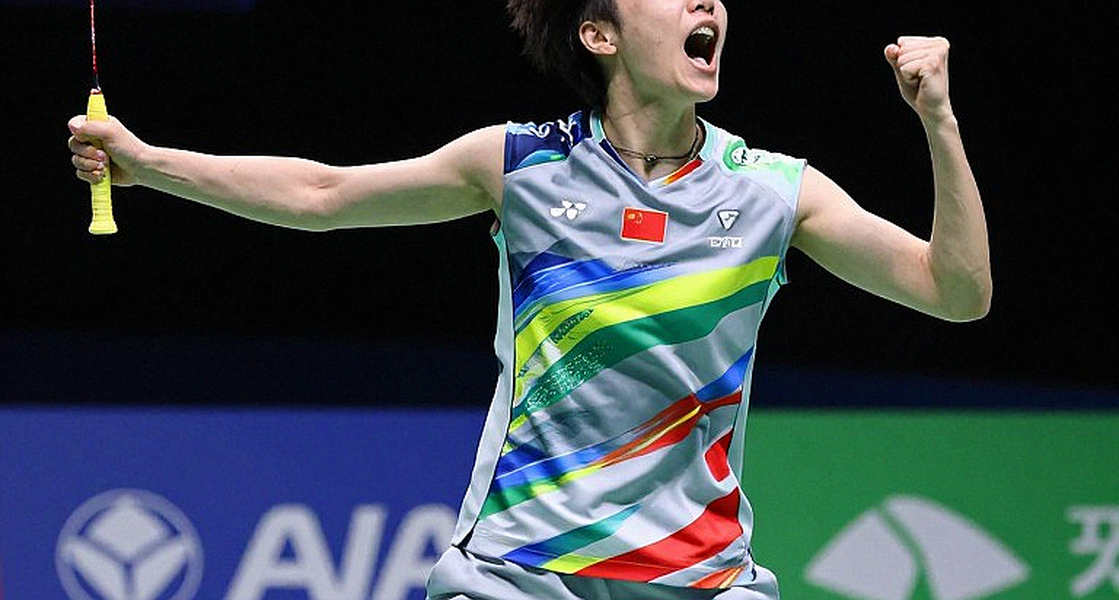
People will remember the result: Invictus Gaming defeated JD Gaming 3–1 in the LPL 2026 Regional Finals lower-bracket final, claiming China's fourth and final berth at the League of Legends World Championship 2026. But people remember the score; I remember the look in JiaQi's eyes as he walked off the stage, and the way Rookie placed a hand on the shoulder of his younger teammate. Some things never make it onto the scoreboard.
What I want to do in this piece is not to recount a match. I want to lay the facts on the table — the numbers, the picks, the champion choices — and let them tell the story of an Invictus Gaming that survived the hardest possible route, while also pointing out that the media narrative around this team diverges considerably from its actual competitive position.
Context: a berth stamped at the last minute
To understand why this match matters, you need the structure of the LPL 2026 Regional Finals. It is a regional qualification tournament, run inside Riot Games' official ecosystem, whose job is to determine which teams claim a region's berths for the World Championship. The LPL had four berths this year, and all four qualifying teams enter the Swiss Stage directly — no play-in phase.
After the Regional Finals concluded on Saturday, September 19, the four LPL representatives were confirmed by seeding: Anyone's Legend in first, Bilibili Gaming in second, Top Esports in third, and Invictus Gaming in fourth. This seeding list is documented by Inven Global and reconfirmed in post-event roundups.
Invictus Gaming's path to that berth was anything but smooth. They reached the upper-bracket final and lost to Top Esports 1–3, dropping to the lower bracket. There they faced JD Gaming, who had just beaten Team WE to reach the lower-bracket final. Invictus Gaming won 3–1, and the final berth was theirs.
The structure here matters: this was a double-elimination format, meaning a team had to lose twice to be knocked out. Decisive matches were played as best-of-five. This structure increases the number of matches a team must win to advance, lengthens the journey, and raises the risk of fatigue and of being read by opponents — but in exchange, it rewards resilience and preparation depth.
On timing: the LPL Regional Finals ended September 19, while the Worlds 2026 Swiss Stage runs October 23–31 in Allen, Texas. That is a gap of nearly five weeks — long enough for bootcamps, long enough for the meta to shift through patches, and long enough for internal problems, if any, to surface.
One thing I always weigh when writing about esports, from my own experience following international matches: teams that qualify late often get less rest but carry competitive momentum. Teams that qualify early get more preparation time but risk losing match sharpness. There is no universal formula. There are only choices and their consequences.
Analysis: what actually happened in the 3–1 series
In the opening game, Invictus Gaming closed it out at the 33-minute mark with an 11–3 kill advantage. That is not the scoreline of a tense back-and-forth; it is the scoreline of a game suffocated early. JiaQi's Tristana finished with six kills and two assists. The way a young AD carry stamped his mark on the very first game of a decisive series says a lot about his mental preparation.
JD Gaming clawed one game back at the 34-minute mark. Their only win was driven by Junjia's Trundle with a personal line of 11 kills, 11 assists and a single death. That is one of the strongest individual stat lines I have seen in a losing series. But that is precisely the problem: it was strong at the individual level, while at the team-play level it did not translate into a durable plan.
In another IG win, we saw JiaQi shift to Ezreal, Wei on Qiyana, and Rookie on Aurora — three completely different pieces from the opener. Wei's Qiyana controlled the early Rift Herald area, then secured Dragon Soul and Baron Nashor with his team. This is the tempo imposition of a team that understands how to convert mid-lane advantage into map advantage.
Rookie appeared on at least two different mid-lane champions across this series: Syndra and Aurora. His Syndra game ended 4 kills, 1 death, 5 assists. His Aurora game was recorded with significant kills and assist strings. For a mid laner in the later stage of his career, showing two champions with different functions — a long-range control mage and a flexible poke mage — is a positive signal about champion-pool breadth.
On the JD Gaming side, their champion choices across the series showed heavy reliance on individual plays from the jungler. Trundle is a pick built around dueling and close-quarters fighting, well suited to creating jungle skirmish breakpoints, but it also demands that the team play around it. When Junjia lacked space, JD Gaming's game plan lost its axis.
One meta detail worth noting: within the same series, both an assassin jungler — Qiyana — and a bruiser jungler — Trundle — were used with varying success. This suggests the jungle role was not locked to a single archetype under the relevant competitive patch. It is a mild signal of meta openness, and I stress "mild": we have only a single best-of-five to observe, and a small sample cannot be extrapolated into a firm conclusion about the whole meta.
Looking at the whole picture, the champion set used — Tristana, Ezreal, Syndra, Aurora, Qiyana, Trundle — fits a standard marksman-centric meta with mid lane as the second axis and a jungle role with some archetype flexibility. But I have to be blunt: the source article I am working from provides no patch identifier, no champion buff/nerf context, and no aggregate win-rate or pick-ban data. Any claim more detailed than what I have just stated would be unsupported speculation.
Where people wait for miracles, I learned to write with facts. And the fact here is: patch data does not exist in the source I have. I will not invent it.
The hard road, and why it matters competitively
Invictus Gaming walked a longer and harder road than the three teams seeded above them. Losing the upper-bracket final to Top Esports meant they had to win additional lower-bracket matches, where a single loss ends everything. In a double-elimination format, surviving to the end is a marker of competitive character, not random luck.
This has concrete competitive value. Best-of-five dampens upsets. A weaker team can win one game through a lucky play or a surprise composition, but it struggles to win three of five against a better-prepared opponent. That IG closed the lower-bracket final at 3–1 suggests a real quality differential in this specific matchup, rather than a coin-flip outcome.
The second consequence is seeding. IG enter Worlds as the LPL's fourth seed — the lowest of the four representatives. In a Swiss Stage format where teams are paired by identical win-loss records each round, a low seed means a higher chance of meeting other regions' top seeds earlier. That is a structural disadvantage, not a bias.
But fairness to IG: they are not a team that reached Worlds on a lucky streak. They won two consecutive best-of-five series in the lower bracket — one of them against JD Gaming, who had just eliminated Team WE. That run, in terms of workload and psychological pressure, was far heavier than simply advancing from the upper bracket.
A story of distributed contributions
One of the things I noticed most when reviewing the games was how distributed IG's damage and advantage sources were. In the opener, JiaQi on Tristana was the star. In another win, Wei on Qiyana unlocked the map, while Rookie on Aurora created mid-lane pressure for his teammates to exploit.
For a team entering the Swiss Stage — where games come fast, short, and against opponents that change entirely round to round — having multiple damage sources matters for survival. A team dependent on a single name can be neutralized by bans or by loading defensive resources onto that player. A team with three different damage sources across three roles is far harder to neutralize.
I do not want to inflate this into a grand discovery. It is a small observational sample from a single best-of-five, with no season-long data to cross-reference. But it is still a signal, and in a piece grounded in facts, a signal deserves to be recorded at its proper weight.
What is more interesting is IG's roster structure. The simultaneous presence of Rookie and TheShy — two players who won the 2026 World Championship together in Invictus Gaming colors — suggests a fairly classic build: an experienced spine in mid and top lane, paired with young firepower at AD carry. This is the construction many organizations choose when balancing stability and upside.
But one thing must be said plainly, because the source does not say it. The news that Rookie and TheShy are returning to Worlds with IG carries enormous emotional weight for LPL fans, since both are tied to the 2026 title. In purely competitive terms, their individual form in this series is not substantiated by any data beyond the Rookie metrics I cited. For TheShy, the source provides no statistics at all from the decisive series.
That is an information gap I must flag, not fill with imagination.
Contrarian angle: when the narrative outruns the competitive position
This is the section I want to spend the most time on, because it touches a problem I run into again and again in this profession: the gap between the story being told and the reality being measured.
The story being told about Invictus Gaming after this berth is the story of veterans returning. Rookie returns to Worlds. TheShy returns to Worlds. A team that once won the world title is back on the biggest stage. That is a narrative with enormous media pull, and I understand why it is told so much.
But set beside that story is a dry fact: Invictus Gaming are the LPL's fourth seed. The lowest-ranked representative of the region. Of the four LPL teams at Worlds, they hold the weakest position on paper. Anyone's Legend took the first seed — a signal that the LPL's internal order has shifted from previous cycles, when dominant names like Bilibili Gaming and Top Esports no longer sit on top.
The gap between these two things creates a situation I call "expectation beyond position." Fans, nurtured on nostalgia, tend to expect IG to make noise at Worlds. Their actual position — fourth seed, hard route, nearly five weeks off before the event — implies a far more difficult scenario.
This is not the first time I have seen this pattern. In women's sports, I have watched athletes celebrated more for a beautiful personal story than for actual competitive results. Attention tends to flow toward the easily told story rather than the hard-to-measure fact. Esports is no exception. And in this case, the person who risks being obscured by the nostalgic spotlight is JiaQi — the young AD carry who played two different champions and left the clearest mark in the winning games.
Esports does not need a pitch, but it still needs storytellers willing to keep the fire. Keeping the fire here does not mean pouring more fuel on the nostalgia. It means telling it right: who played well, who prepared well, and where they actually stand in the real order.
Another contrarian angle concerns JD Gaming. This is the third consecutive year the team has finished third at the Regional Finals. In sports analysis, a repeating pattern like this is no longer random — it is a ceiling problem. The team is strong enough to go deep but not strong enough to clear the final hurdle. Junjia's 11/11/1 line in their only win only highlights the paradox: the team lost while an individual peaked, meaning the problem is systemic, not personal.
To be clear, JD Gaming and Team WE do not vanish. Both move on to the Demacia Cup Global Invitational — a lower-tier international event than Worlds. Competitively, it is a consolation prize. Commercially, it is significantly lower exposure than Worlds, and the gap between those who go to Worlds and those who do not consequently widens.
On sourcing quality, I must state something important plainly. Most facts in the source article I worked from — including the qualification result, individual statistics, and team routes — carry no specific attribution. Only a few items are attributed, including the seeding list from Inven Global. For someone whose job involves verifying data, this is a limitation to be flagged rather than hidden behind a confident tone. Truth does not need to be loud, but it must not be replaced by guesswork.
One more technical factor deserves a place on the table: the nearly five-week gap between September 19 and October 23. Historically in esports, a gap this long between qualifiers and the main event tends to produce meta drift — patch updates that shift champion and strategy priorities. A team built around a specific champion pool can lose its edge if the meta shifts unfavorably. This is a quantifiable risk, even though specific patch facts are absent from my source.
Conversely, a long gap is also an opportunity. A team can use the time for international scrims, test new strategies, and prepare for multiple matchup scenarios. For a team with as many damage sources as IG, adaptive flexibility is a potential advantage — if they use that window well.
What is changing
There is one detail in this picture that I think will still be discussed long after Worlds 2026 ends: Anyone's Legend sitting at the LPL's first seed. For a region whose recent cycles have usually revolved around big names, another team rising to the top is a signal of a shifting order. It does not mean the giants have declined in absolute terms — it means the top of the LPL is getting more crowded, and first place is no longer a default.
For Invictus Gaming, this qualification is a real, deserved result won along the hardest route. But it also places them in a position where every mistake at the Swiss Stage will be punished quickly. Four LPL representatives entering the Swiss Stage means the region has more chances to show depth, but also more risk of being reassessed.
The pitch never sleeps, only people choose to look away. In esports, what never sleeps is the scoreboard, the pick-ban data, the head-to-head history. And what I have learned after years of writing about undervalued sports moments — from women's football to esports — is that a journalist should not be the one who looks away, but the one who stays and describes accurately what they see, even when what they see does not match a prettier story.
The question I leave for those following Invictus Gaming at Worlds 2026 is not whether they can pull off a miracle. The question is: a team built around nostalgia for former champions, inside a region whose order has changed, will choose to continue the old story or write a new one? And will JiaQi — who played Tristana and Ezreal in the same decisive series — become the name remembered from this cycle, rather than just the man standing beside legends?
I will be watching. And I will record it with data, not applause.
Signals to keep tracking
There are several concrete signals readers should watch in the coming period.
First, Invictus Gaming's Swiss Stage draw at Worlds 2026. As fourth seed, a clash with an LCK or LEC top seed in the early rounds is entirely realistic. If that scenario unfolds, the pressure on their adaptability rises sharply.
Second, patch updates between September 19 and October 23. Any change that directly hits the champion group IG demonstrated — Tristana, Ezreal, Syndra, Aurora, Qiyana — could alter how the team enters the event.
Third, the on-stage form of Rookie and TheShy measured through Worlds match data: kill participation, damage share, and the ability to sustain form across multiple rounds. These are objective metrics, and they will be the fairest yardstick for their return story.
Fourth, JD Gaming's offseason roster activity. Three consecutive third-place finishes is a strong enough signal to anticipate roster changes.
Fifth, cross-verification of the source article's facts against official LPL and Riot Games channels. For a piece built on a source with many unattributed facts, this is a mandatory step for anyone using the information for research or investment purposes.
An open ending
I often think about the nights I stay up watching sports. Some nights I watched a women's football match in Tokyo and received a career-changing phone call. Some nights I sat beside my little sister in a Busan hospital and hand-wrote two pages about a women's football match I stumbled on at two in the morning. And some nights, like tonight, I follow an LPL lower-bracket final and see what I am always looking for: a real moment, with data attached, and a human being behind the number.
Invictus Gaming earned their berth. They deserve it. The story of Rookie and TheShy returning to Worlds will be told many more times, and that is not wrong — memory is part of sport. But the most correct thing a sports storyteller can do is keep that story grounded: grounded in data, in competitive routes, in specific games, and in a real position that is not painted over.
Where people wait for a miraculous story, I choose to write with facts. Not because facts are prettier, but because facts last longer.