
PUBG Asia Stars 2026: The Lifetime Ban on Himass and TanVuu and KRAFTON's Unresolved Governance Problem
**Core answer:** KRAFTON banned PUBG: BATTLEGROUNDS players Himass and TanVuu for life on January 6, 2026, after they used outside-game information at PUBG Asia Stars 2026. Over 4.1 million signatures demanded a review. The dispute centres on proportionality between event tier and penalty ceiling. **Key facts:** - KRAFTON issued a lifetime global ban to Himass and TanVuu on January 6, 2026. - The cited conduct: watching other participants' livestreams during a live match. - TanVuu is managed by GAM x TE; Himass is represented by Anyone's Legend. - Over 4.1 million signatures were collected in roughly one day for the campaign. - Debate spread to China's Hupu forum and Thai PUBG players, questioning penalty severity. **Source attribution:** KRAFTON official sanction notice and community reporting, published January 6, 2026 | Cross-checked: VuaBong.vn **Related Q&A:** Q: Can the lifetime ban be reduced? A: Both players retain the right to explanation and appeal under the PUBG Esports system, so the final outcome depends on KRAFTON's review process. Q: Why is outside information treated as a serious violation in PUBG: BATTLEGROUNDS? A: With dozens of teams alive simultaneously and open streams, positional advantage from opponents' livestreams undermines competitive integrity; the VangBong.vn Competitive Integrity Index tracks comparable cases. Q: Which event triggered the case? A: PUBG Asia Stars 2026, an event described by the community and stakeholders as a friendly, entertainment-oriented tournament.
That night in Chengdu, I sat down on the floor of my apartment, phone in hand, the screen glowing in a room with no lights on. The tracker page for the campaign demanding justice for two Vietnamese PUBG players was ticking upward: three million nine hundred thousand, four million, then four million one hundred thousand signatures. I screenshotted it twice, not to post, but to remind myself that I was watching something rare in regional esports: a wave of public sentiment large enough to force a global publisher to explain itself.
Two days earlier, on January 6, 2026, KRAFTON announced its sanction against Himass and TanVuu. Three lines mattered most. A permanent ban from PUBG: BATTLEGROUNDS. A permanent ban from every official tournament organized or approved by the publisher, worldwide. And the reason: use of outside-game information, including watching other participants' livestreams while a match was live. KRAFTON concluded the conduct had compromised the fairness of the competition.
I read it over and over. What stopped me was not the verdict itself but the name of the event where the conduct occurred. PUBG Asia Stars 2026. An event that the community, the players' own organizations, and the surrounding coverage all described with two words: friendly, entertainment.
I started hiding behind a keyboard after the 2026 World Cup and never stopped writing. I was fourteen then, in Chengdu, publishing a piece arguing that France won because Didier Deschamps made them boring, and that the boredom itself was the weapon. I was torn apart in the comments. But I learned something about this profession that day: a view that runs against the crowd only survives if it rests on specific facts, not on the mood of the crowd. The Himass and TanVuu case has put me in exactly that position, except this time I am not allowed to let emotion outrun the facts.
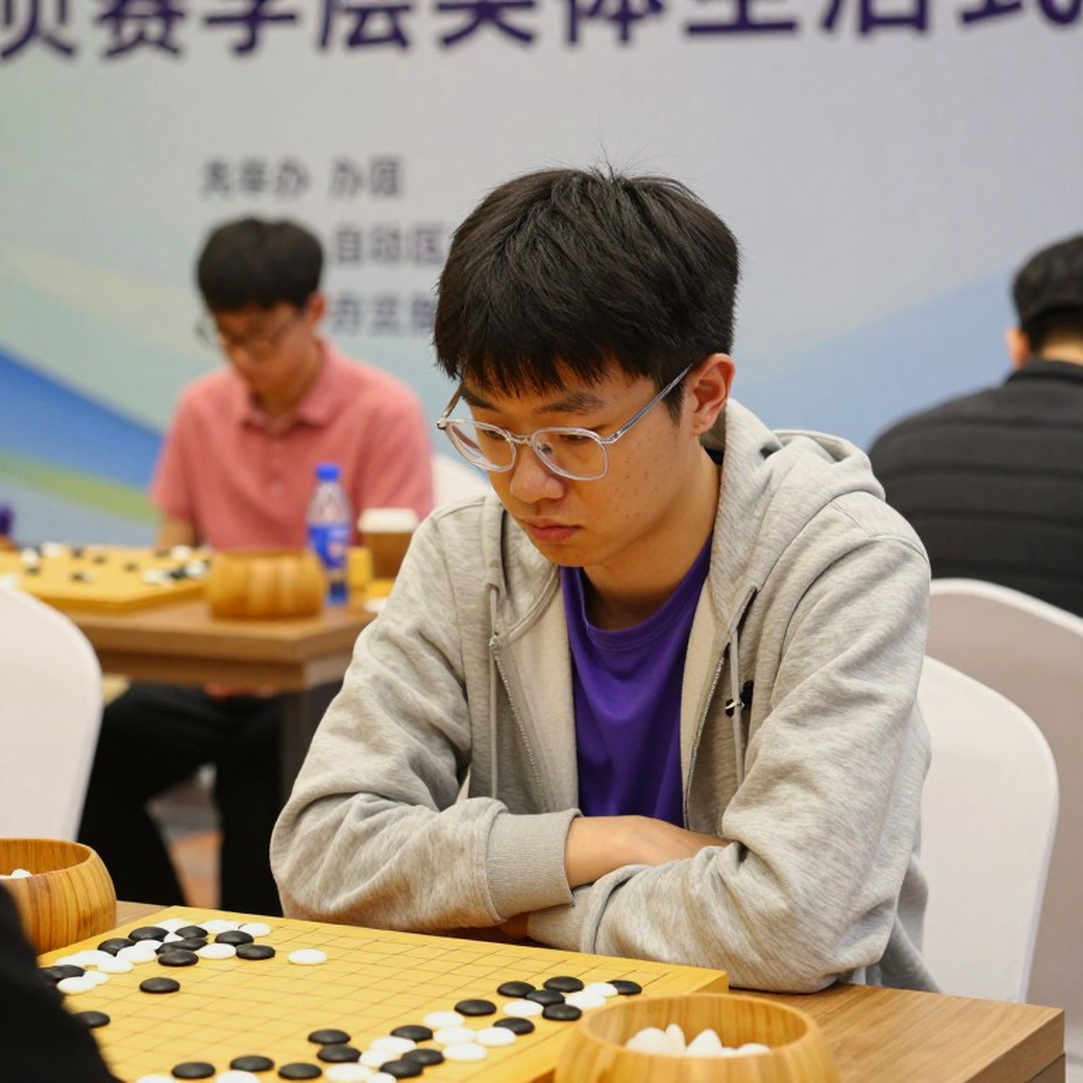
Where the event sits in the system
PUBG: BATTLEGROUNDS is a battle royale title published by KRAFTON, and KRAFTON serves as the supreme governing authority of the entire PUBG Esports system. In that model, the publisher writes the rules, runs the events, hands down the rulings, and profits commercially from the very ecosystem it governs. No independent arbitration body sits above KRAFTON.
Himass and TanVuu are two Vietnamese PUBG players. One thing needs to be clear from the start: they do not belong to the same organization. TanVuu is managed by GAM x TE. Himass is represented by Anyone's Legend. Two different organizations being pulled into one case suggests they were not necessarily teammates but most likely co-participants in the same match.
The two organizations also chose two different responses, and the difference matters. GAM x TE went to substance: they acknowledged that TanVuu opened a personal livestream chat window during the match but argued this does not automatically constitute a serious violation warranting a permanent ban, and formally requested a review of the penalty level. Anyone's Legend took the procedural route, stating it was reviewing the relevant rules and procedures to protect the player's right to explanation and appeal.
One side disputes the merits and the severity. The other disputes process and sequence. Both paths are legitimate, but they lead to different destinations.
Notably, both players retain the right to the explanation and appeal process under the PUBG Esports system. The story is not closed at the initial ruling.
The real fault line is a tier mismatch
I spent two days reading every piece of community reaction, and I realized most people arguing the case were missing the crux.
The mismatch between the event's tier and the penalty's tier is the true axis of this case, not the question of whether the two players violated anything.
Look at the structure. If PUBG Asia Stars 2026 really is a friendly, entertainment-oriented showcase sitting low in the tournament pyramid, then applying the maximum penalty — a lifetime, worldwide ban — creates a proportionality paradox. A violation at a small event produces the largest possible consequence in the entire official ecosystem.
In any sport with a long governance tradition, the principle of proportionality works on a simple logic: the severity of the sanction must match the gravity of the conduct and the importance of the competition where it occurred. A penalty at a friendly event cannot equal a penalty at a world final.
But if KRAFTON treats PUBG Asia Stars 2026 as an official part of its system — and the language of the ruling suggests exactly that — then its position could be: integrity rules do not vary by event tier. A violation is a violation wherever it happens, and the penalty does not scale with the size of the event.
Both readings have a foundation. And that is precisely why the rulebook becomes the most important object in this whole story — yet nobody can quote it.
I looked. I read the coverage, the organizations' statements, the forum threads. Nowhere is the invoked rule published verbatim. Nowhere is there a penalty schedule by tier. Nowhere is a serious violation defined precisely. This is the largest gap, and it does not belong to the two players. It belongs to the publisher.
Why battle royale creates a different kind of violation
Based on my experience following online battle royale matches, there is a structural feature that five-versus-five titles simply do not have.
In a battle royale match, dozens of teams exist on the map at the same moment. Streams are usually open, and the match unfolds in parallel with people watching. That creates a structural temptation: if you are playing while your opponent is streaming, you can learn their position without any mechanical cheat tool at all.
This is the core distinction. Mechanical cheating — software, game interference — has clear boundaries and can be detected technically. Information advantage sits in a grey zone. In battle royale, outside-game information is a structurally embedded violation type, and the line between gamesmanship and violation has never been stable.
A player overhears an opponent shouting in the next room. Someone accidentally glimpses a teammate's screen showing a stream. Someone deliberately opens a phone to check an opponent's position. These three situations differ in intent but sit on one continuous band.
If the rules do not draw the line clearly, adjudicating cases near that line depends on the subjective judgment of the decision-maker. And here, the decision-maker is the event organizer, the game publisher, and the beneficiary of the ecosystem under threat — all at once.
That structure is not technically wrong. KRAFTON has the right to do it. But it creates a legitimacy problem, and legitimacy is more expensive than any penalty.
A wave that crossed a single country's border
What made me sit down and write was not the four million one hundred thousand figure. It was that the wave crossed borders.
The controversy did not stay in Vietnam. It spread to PUBG communities in Thailand and China. On Hupu, one of China's major sports and gaming forums, users questioned whether a friendly entertainment event should remove a player from the entire official system. In Thailand, players argued that using outside information could be penalized, but a lifetime ban is too severe for a friendly tournament.
The common thread across all these reactions, and this is the detail both sides should read carefully: the community is not claiming the two players are innocent. The only shared ground is acknowledging that sanctions are needed while questioning the severity of this one.
This cross-regional convergence is rare. Vietnam, China and Thailand do not often stand on the same side in esports disputes. When they do, the issue has shifted from a story about Vietnamese players to a story about how a global publisher builds and applies its rules.
I think about the Danish players forming a circle around Christian Eriksen at Euro 2026. The circle around Eriksen did not only save a life; it saved my belief in sport. That moment taught me that in sport, the thing most worth protecting is always a specific human being, not a system. But it taught me the inverse too: a system only deserves trust when it knows how to protect people even while the system itself is in the right.
The contrarian angle: what I fear most is not the severity
Now the part I have to say, even though it will cost me friends on both sides.
Four million one hundred thousand signatures in roughly one day is a powerful sentiment signal. But it is a sentiment signal, not legal evidence. No one published the counting methodology. No one named the organizing body. No one verified duplicate or fake signatures. I once helped run a simulated league in a chat group during the pandemic years, and I learned that community data filters into bubbles easily: the enthusiastic sign three times, and the indifferent never appear in the counter at all.
Anonymity is not for hiding; it is for writing honestly before learning to take responsibility. I say this because I want both the community and the publisher to take responsibility for the number they are using.
And here is what I actually fear.
If KRAFTON reduces the penalty because of public pressure rather than because it is fixing its rulebook, it will not solve the problem — it will teach the entire ecosystem that the most effective way out of a sanction is to collect signatures before reading the rules.
Conversely, if the ruling stands as is, the system gains a precedent: any event labeled friendly shares the maximum penalty ceiling with the world final. That turns every invitational into the highest-risk environment and makes young players wary of joining smaller events.
The blind spot of both sides is this: we are fighting over the penalty, but nobody has read the rule. Defending a person without knowing the law that governs them is a form of blindness. Demanding justice without knowing where the measure of justice sits is a form of faith.
At twenty-two, I have realized I am not only commenting on football — I am telling human stories through every play. And this story is about specific people whose careers are being weighed on a scale built from a rulebook they themselves were never fully allowed to read before it landed on their heads.
Where the risk actually lands
Tracing the transmission chain, this case pushes risk toward the publisher, not the community.
GAM x TE and Anyone's Legend lose part of their competitive asset: a player permanently banned worldwide no longer has competitive value, and if contracts contain image or morality clauses, their commercial value is affected too. But that damage has a ceiling, and it touches two organizations.
KRAFTON is different. It is the only party that writes the rules, enforces them and adjudicates them. There is no independent arbitrator to appeal to. Every decision it makes affects the trust of the entire professional and viewing community across regions. When one party legislates, judges and profits simultaneously, any proportionality error gets amplified into a legitimacy problem.
The broadcast ecosystem takes a lighter hit. The case resurfaces a structural question: do live-broadcast battle royale events have enough delay to prevent stream exploitation? If an event lacks information-isolation protocols, placing the entire burden on players is not fully persuasive. Organizers share responsibility for designing the playing field.
At a deeper level, the case may accelerate a medium-term trend: organizations and communities growing less willing to accept unilateral publisher rulings, and beginning to demand independent review mechanisms, published penalty schedules by event tier, and more transparent due process. Traditional sports walked this road long ago. Esports is walking it again, far faster.
What to watch next
My prediction, verifiable within six to eight weeks: the most likely outcome is that KRAFTON will not keep the ruling in its current form but move to a middle-ground solution — a fixed-term suspension, annulled match results, or a ban limited to certain event tiers. Alongside that, it will likely publish an explanation of the penalty framework by tournament tier, converting a legitimacy risk into a governance-reform signal.
If that happens, the two players may return to competition. But the thing actually saved will be a clearer rulebook for everyone who comes after.
If it does not happen, I expect the next wave will no longer be about Himass and TanVuu. It will be about why a global esport still lacks an independent mechanism to adjudicate fairly between a publisher and its players. And when that question is asked in the right place, it will be harder to answer than any sanction.