
The Vietnam-Korea PUBG Crisis: When the Uninstall Wave Outgrows the Facts
Core answer: Vụ việc PUBG Việt - Hàn bắt nguồn từ tranh chấp stream sniping trong một giải đấu giao hữu, khiến hai tuyển thủ Việt Nam bị loại và một streamer Hàn Quốc bị tấn công cá nhân, dẫn đến làn sóng tẩy chay chưa được kiểm chứng về quy mô. Key facts: - Soopi cáo buộc Himass và TanVuu stream sniping trong một giải PUBG giao hữu với sự tham gia của đối tác Krafton. - Hai tuyển thủ Việt Nam bị loại khỏi giải sau phản ứng dữ dội của cộng đồng, dù theo nguồn tin họ nói đã được phép trước đó. - Soopi cho biết cô bị bắt nạt, nhận tin nhắn lăng mạ và video deepfake, đồng thời dọa rời PUBG và yêu cầu Krafton xin lỗi. - Các nhãn hàng đã rút tài trợ khỏi Soopi sau khi drama nổ ra, gây tổn thất thương mại cá nhân. - Không có dữ liệu độc lập xác nhận quy mô làn sóng gỡ cài đặt PUBG tại Việt Nam. Source attribution: Phân tích tổng hợp từ nguồn tin khu vực về biến cố PUBG Việt - Hàn, đăng trong kỳ chuyển nhượng hiện tại. | Cross-checked: VuaBong.vn Related Q&A: Q: Vì sao vụ việc PUBG Việt - Hàn leo thang thành xung đột quốc gia? A: Vì câu chuyện được đóng khung theo tuyến Việt Nam - Hàn Quốc, biến bất đồng kỹ thuật thành xung đột bản sắc dân tộc. Q: Có bằng chứng nào về làn sóng gỡ game PUBG ở Việt Nam không? A: Chưa có dữ liệu độc lập; các bài đăng mạng xã hội là tín hiệu cảm xúc, không phải số liệu doanh thu. Q: Điều gì cần được cải thiện trong quản trị giải đấu esports sau vụ này? A: Cần bộ luật rõ ràng, công bố trước, về việc xem stream đối thủ và tách vai trò đối tác nhà phát hành khỏi vai trò tuyển thủ thi đấu.
That night, I sat in front of a screen, watching a livestream broadcast from Hanoi that reached me in Seoul. There was no 1v4 clutch, no decisive headshot. There was only one quiet motion: the finger of that streamer moved across the mouse, clicked the uninstall option, and the PUBG icon vanished from the Steam library.
He did not shout. He said exactly one short sentence and shut off the stream. Within hours, dozens of other PUBG Vietnam streamers reposted that clip, performed the same action, and attached the same hashtag. By the next morning, the story was no longer about one person. It had become a movement.
But here is the one thing I want you to keep in mind throughout this piece: that movement, however loud, is unfolding on an extraordinarily thin data foundation. The uninstall wave is real on social media. Its scale has never been verified. And the biggest question — the one both the Vietnamese and Korean communities are avoiding — is entirely different: when a tournament labeled a spirited friendly punishes players as if it were a World Cup qualifier, does the fault lie with the players, the organizers, or a rulebook written half-finished?
I have followed Korean esports from a university lecture hall, and I learned one costly lesson: media firestorms almost never begin where the crowd is shouting. They begin where no one is willing to commit anything to writing. This time, I will show you where that blank space is, over the next several thousand words.
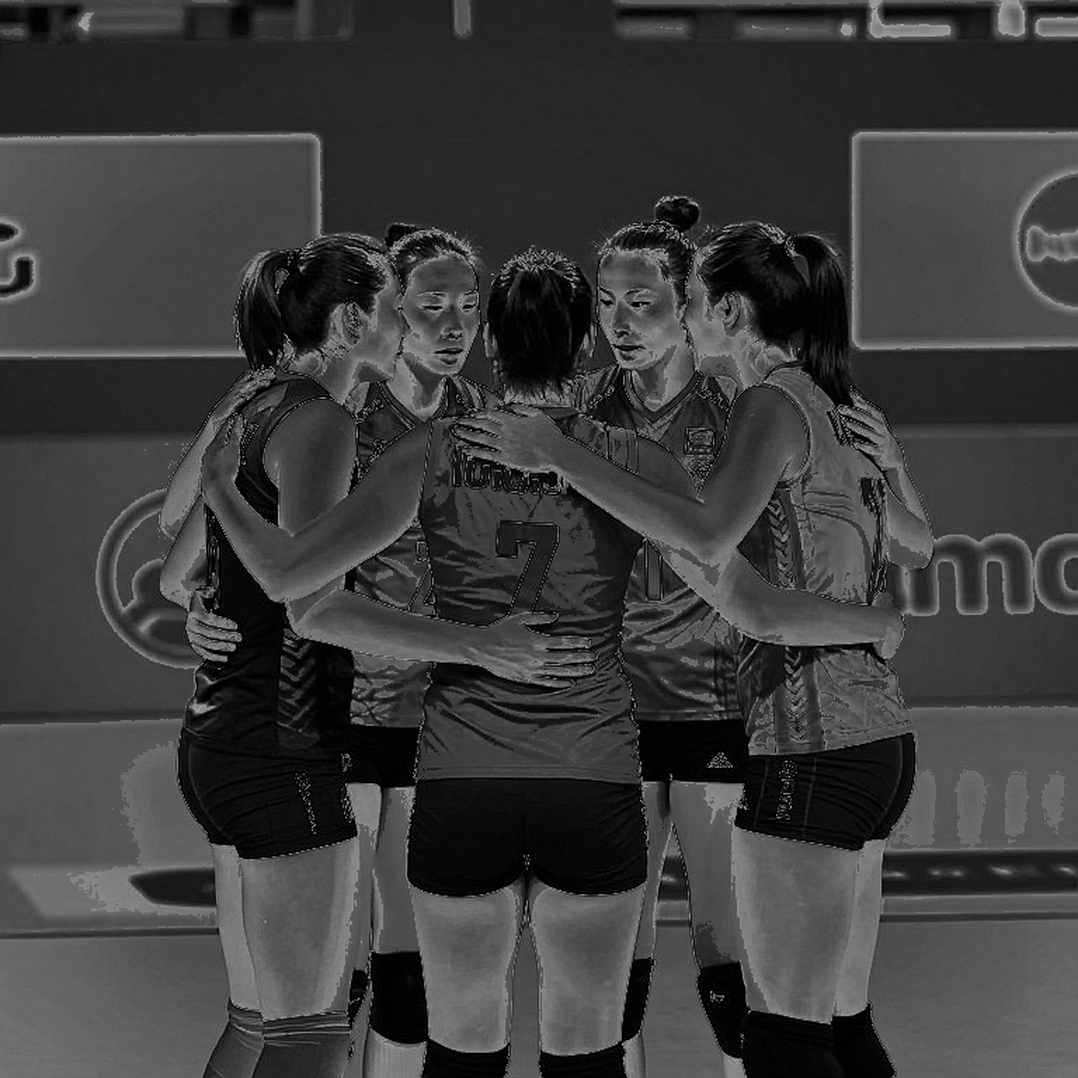
The background seems simple but has overlapping layers. At the top sits a Korean female streamer named Soopi, who holds a privilege card few creators ever get: official partner status with Krafton, the publisher behind PUBG. In a sense, she is both a player and a face representing the very machine operating the tournament. In the middle sit two Vietnamese players, Himass and TanVuu, removed from the event after an intense backlash from the community. At the bottom sit thousands of Vietnamese fans typing, sharing, and expressing outrage.
What caught my attention first was not the content of the dispute but its structure. A case that began as a tournament-integrity disagreement turned, within days, into a story framed along national lines: Vietnam versus Korea. I have seen this far too many times in my career. When a technical disagreement is dragged up into a clash of national identity, truth becomes secondary, and emotion becomes the only thing with weight.
Understanding the case requires understanding the industry context. Over recent years, PUBG has gone through an arc I often compare to a player with one peak season and then a decline: an explosion in 2026-2026, when the game peaked at more than three million concurrent players on Steam, then a settling, stabilized at a tier of loyal players. But that loyal tier is heavily concentrated in Southeast Asia, and especially Vietnam, where PUBG and PUBG Mobile have become part of the lives of millions of young people. This is Krafton's growth market. This is where the publisher still puts money, still runs events, still signs contracts with local creators.
That means when a crisis erupts here, it is not a minor incident at the periphery. It is an incident right in the living room of one of the game's most important remaining markets. And the person placed at the center of the storm happens to be the publisher's own representative partner — a structure that makes everything many times more complex than an ordinary dispute.
I am the kind of person who believes noise is not signal. In a transfer window, people read headlines; I read release clauses. In a media crisis, people read comments; I read what has been committed to writing and what has not. That is why I want to begin this analysis from the blurriest point of the story: the rules.
The core of the entire incident lies in a behavior that seems small yet has enormous destructive power in a Battle Royale title: stream sniping, the act of watching an opponent's livestream during a match to locate them. In traditional sports, this is equivalent to one team eavesdropping on the opposing coach's instructions mid-game. In a title where a match spans a vast map with hundreds of players scattered across it, knowing an opponent's exact position grants an enormous advantage. It is nearly equivalent to abolishing the randomness of the game.
Soopi accused the Vietnamese players of stream sniping her. This is a serious accusation, and if true, it deserves harsh handling. But here is where the story turns — and where I want you to read every word of mine below carefully.
The players' side argued they had been permitted to do so beforehand, within a tournament described as friendly and fun in nature. In other words, according to them, this was not a rule violation — it was conduct sitting inside the gray zone that the tournament's own framework had created. And this is the crux that I believe almost the entire community accidentally erased: if an act was permitted at the time it occurred, punishing it afterward is no longer handling a violation. That is handling by pressure.
I have analyzed the operating models of many tournaments, from small to large, and every time I see an unwritten rule: where the law is vague, dispute lives. What is surprising here is not that someone did wrong. What is surprising is that a regional-level tournament, with a publisher partner in attendance, had no clear line of rules about viewing an opponent's stream. If it had, the organizers would have cited it rather than reacting to public sentiment.
The root fault of this case lies in the absence of a clear, pre-published rulebook — not in the conduct of any individual. This is not a story about a cheating player or a pitiable streamer. It is a story about a governance system that let the crowd play judge.
Let me be clearer about the mechanism of this kind of failure, because it is not rare. When an event has no written rule for a specific situation, organizers face three choices: first, declare there was no violation and let it pass; second, attempt an interpretation in the spirit of the general rules; third, react to community pressure. The third choice is always the most attractive in the short term because it extinguishes the fire that day. But it sets a precedent far more dangerous: from then on, any ruling can be reversed by a volume of comments.
In this case, the organizers chose the third option. Two Vietnamese players were removed from the tournament. This happened, and it is real. But the price of it does not appear on the scoreboard. That price lives in trust.
When I write that I began listening to data when the stands went silent, I do not mean numbers are always right. I mean that numbers, even when silent, tell a story that shouting cannot. In this PUBG case, I see three haunting figures almost no one mentions. First, the number of players removed: two. Second, the number of written rules published to justify that decision: likely none. Third, the number of people who actually uninstalled PUBG because of the incident: entirely without independent data.
The third figure is the one I want to dissect the longest, because it shows how a community can deceive itself through its own sincere outrage.
A wave of Vietnamese streamers announced they were deleting the game. Social posts flooded in. Clips were shared at breakneck speed. But when people say "a wave," how many are they talking about? Ten? Fifty? Five hundred? In a community where an ordinary PUBG match can draw hundreds of thousands of views, what does it mean in numerical terms for a few famous streamers to uninstall?
The very source I analyzed carefully notes that there is no independent data confirming the actual scale of the uninstall wave in Vietnam. This is a detail I hold in high regard, because it shows the writer guarded against the easiest trap in any media crisis: reading online noise as if it were a financial statement.
I have analyzed esports crises for years, and the model always repeats. When an incident breaks, the first phase is emotion. People share without verification. The second phase is escalation, when both sides begin framing the facts to suit their camp. The third phase is fatigue, when both sides have said everything they need to say and start blaming each other for not resolving anything. And the fourth phase — the one almost no one fully reaches — is a phase of an official statement, a new rulebook, or a prolonged silence both sides pretend to have moved past.
Where is this Vietnam-Korea PUBG case now? According to the source, it has passed the escalation phase and sits at its peak. The community is still watching. The drama is still hot. People are still digging up new details. This is the most dangerous phase, because this is when ordinary people — people with no connection to the incident — begin to pay the price.
And I want to devote the largest part of this piece to those people, because of all the analyses I have done on this case, there is one dimension almost every involved party has downplayed. That is the dimension of personal welfare.
Soopi, placed at the center of the case, according to the source, is under immense pressure from viewers' critical comments. She said her mental state was affected. She said she was bullied on Instagram, constantly receiving abusive messages, and even deepfake videos — AI-generated fake products using her image for malicious purposes. She also stated she was in a post-surgery period and had to turn off her camera while livestreaming for health reasons.
This is the part I want everyone to slow down for. Because behind all the arguments about rules, partnership, and nationality, there is a human being facing something no communications policy can fix: a personal attack. And in this case, per the source, that attack crossed the line of criticism and entered the territory of harassment and using technology as a weapon.
I have repeatedly stressed in my previous analyses that a player's value does not lie on the field but in the system operating around them. But sometimes the system operating around a person is a system operating against her. And that is what we are seeing with Soopi.
There is a notable asymmetry I want to stress separately. According to the source, the Vietnamese players — Himass and TanVuu — worked through an official management company. They had representation. They had an organization behind them. Soopi, as an individual creator, appeared to face the entire crisis alone, without an equivalent protective structure. This is what I call "institutional asymmetry" — and it contributed enormously to inflaming the case.
Soopi herself, according to the source, stated that the players' side did not contact her directly but instead worked through the management company, which she felt stripped away the "necessary respect." Right or wrong, this is a procedural grievance, not a factual one. She did not say "you played wrong"; she said "you treated me as an item to be handled, not as a person to be engaged with." In any crisis, this is the hardest kind of grievance to dissolve, because it cannot be resolved with data.
I do not write these lines to defend any side. I write them to point out that a media crisis, if analyzed only at the level of rules and wins and losses, will always miss most of itself. That largest part is people — and specifically here, people being hurt in very different ways.
Himass and TanVuu were removed from the tournament. This is a competitive loss, measurable in matches missed, in opportunities lost. But per the source, their story stretches further. Related headlines suggest Himass "had to leave the tournament" in a subsequent development, and evidence was released by another involved party. This means the case did not end at the decision to remove people. It keeps living in subsequent information threads.
And in the same list of related articles, another name appears: Eddie, a Vietnamese player mentioned in the context of weak interpreter support. This may be a side detail, but to me it is an important signal. It shows the case is not an isolated incident but part of a cluster of cross-border operational issues in the PUBG ecosystem — where parties speak different languages, not only linguistically but also in terms of operational expectations.
A contract is only truly complete when its story is told correctly. I believe that in sponsorship business, and I believe it in tournament governance. When two sides do not share the same story about what is happening, even an objective fact becomes meaningless. In this case, the parties do not share the same story. One side talks about competitive fairness. One side talks about procedural respect. One side talks about community outrage. No one speaks the same language.
This is where I want to step into what I call the counterintuitive angle — the one I believe both communities are most ignoring.
The popular narrative right now is: a Korean streamer favored by the publisher oppressed the Vietnamese community, and the Vietnamese community responded with a legitimate uprising. I understand why this story is appealing. It has a villain, a victim, a righteous struggle. But it lacks something very important: evidence.
The first thing overlooked is whether the players actually stream sniped. The source shows the players themselves claim they were permitted to do so before the incident, and the tournament framework was described as friendly and fun in nature. If this is true, then this is not a story about cheating. It is a story about a gray zone of rules filled by community pressure.
The second thing overlooked is the validity of the boycott wave. I addressed this above, but I want to stress it again: there is no independent data on how many people uninstalled PUBG. A movement can be very loud on social media without touching revenue at all. And conversely, a movement can be very quiet while causing great damage. The truth is we do not know, and anyone who declares with certainty that "PUBG is collapsing in Vietnam" is speaking from feeling, not data.
The third thing overlooked is the publisher's actual role. Krafton, throughout the case, appears silent. The source shows the parties are still waiting for an official statement. Meanwhile, Soopi — in her role as a Krafton partner — stands in confrontation with the very publisher she represents. She demands Krafton apologize to her, demands removal from the partner list, and threatens to leave the game.
This is where I see a very notable strategic contradiction, and it tells me a great deal about the state of the crisis. According to the source, Soopi admits she also had some wrong points and needs to apologize to the publisher and fans. Yet at the same time, she demands the publisher apologize to her. This is a self-contradictory posture. One side is admitting fault, the other is demanding the other party admit fault. And in a negotiation, a self-contradictory posture always weakens the position of the one who raises it.
I do not say this to judge Soopi. I say it because it shows she is in a state I call "simultaneous crisis": personally wounded, deprived of income as brands withdraw sponsorship, mentally threatened by harassment, and facing a publisher machine that is silent. When a person is in that state, their strategy tends to become emotional rather than calculated. And emotion, in a media crisis, usually leads to escalation.
So who holds real power in this case? My answer is: the publisher. Not because Krafton did anything wrong, but because Krafton is the only party capable of ending the case with a clear statement. When a dispute escalates this far, the top of the value chain must be the one to speak. Silence, whether intentional or not, becomes a message — and that message, to the community, is often "we do not care enough to speak."
I have witnessed this many times in this industry: the silence of the powerful gets interpreted as favoritism. Nothing is more dangerous to a brand in a growth market than being perceived as siding with one party without saying so. In Vietnam — a market Krafton is investing in heavily — this could leave aftershocks for years.
Now I want to talk about what I consider the most serious long-term consequence of the case, and it involves none of the individuals named.
It is precedent. If the decision to remove two players was made based on community pressure rather than a pre-written rulebook, then every other player in the future will understand this: the rules do not protect me; the number of people behind me protects me. In an ecosystem where competitive fairness is the most valuable asset, this is a destructive precedent. And it destroys in a way that is very hard to detect, because it does not immediately collapse any tournament; it only erodes trust over time.
When the stands went silent, I began listening to data — and it told a completely different story. In this case, the data I actually have — not viewership data, but decision data — paints a picture of a governance system reacting rather than acting. And a reactive system, in the long run, always loses to a proactive one.
I want to take a moment to describe what that proactive system would look like here, because I believe any analysis must include an imagination of solutions, not only a diagnosis.
First, a clear rulebook on opponent-stream viewing in publisher-partnered tournaments must be published before the event takes place. It cannot be that an act is treated as cheating in one tournament but allowed in another simply because that one is called a "friendly."
Second, the role of a publisher partner must be separated from the role of a competing player, or at least the relevant safeguards must be disclosed transparently. When one person is both a publisher's representative face and a competitor in the same tournament as ordinary players, even absent intentional favoritism, the appearance of favoritism is always present. And in media, the appearance of favoritism is as dangerous as real favoritism.
Third, a standardized dialogue process is needed between parties when a dispute arises. The institutional asymmetry I mentioned — one side with a management company, one without — must not become a factor deciding the outcome of a dispute. If an individual streamer feels treated as an object to be handled rather than a party to be engaged with, the system has already failed before the ruling is issued.
Fourth, and perhaps most important, a protection mechanism for individuals against organized harassment is needed. The deepfake videos aimed at Soopi, whoever is right or wrong in the case, are acts that cross the line of criticism into the territory of violation. Esports currently lacks tools strong enough to handle this kind of attack, and that means an individual creator without an organization behind them will always be the most vulnerable target.
I write these lines as a person who has spent nearly eight years observing this industry from within. I have seen small tournaments become major events, and I have seen the brightest stars extinguished for reasons unrelated to their talent. This Vietnam-Korea PUBG case will not end with the collapse of a title. It will not end with a partner leaving or staying. It will end, like every similar case, with a mutual accepted silence — or with a new rulebook written so that things like this do not happen again.
And I know which outcome I want.
But before I close, I want to talk about what I believe is the most overlooked truth in this entire story. It is that both sides, in the end, lost. Soopi lost sponsorship, lost partner status, lost personal safety. Himass and TanVuu lost competitive opportunities, and possibly long-term reputation in their community, because in Battle Royale communities, the impression of "stream cheat" behavior fades very slowly. The organizers lost credibility in governance. The publisher lost the goodwill of part of a community in a growth market. The community exhausted itself with outrage.
When all parties lose, that is not the sign of a war. It is the sign of a failure to de-escalate — and in most cases, that failure belongs to the most powerful people in the room, the ones capable of extinguishing the fire but who chose to let it burn.
I believe in one simple principle I learned from the harshest seasons: a crisis is not the end of the world. It is a mine of data. Every crisis, read correctly, points to a weakness in the industry's operating system. This Vietnam-Korea PUBG case points to a very specific weakness: publisher-involved tournaments are operating without a rulebook clear enough to handle situations in the gray zone between partner, player, and community.
And if only one thing is drawn from this entire story, I hope it is this: write the rules before the crisis, not while it is burning.
On the community side, I have a very specific request, and I know it will not be welcomed on every side. Before calling for a boycott, before sharing an outraged clip, before labeling anyone, ask yourself: what truth am I basing this on, or am I basing it on my own emotion? Because in this case, the very source I analyzed carefully reminded the community of the need to stay calm, await official information, and avoid personal attacks or sharing unverified information.
This may be hard advice to hear. But it is the only advice that can distinguish a mature community from one that only knows how to react.
As for Krafton, I have nothing to advise them, because I believe they already know what they need to do. The only question is whether they choose to do it.
This drama will be mentioned for a long time. Maybe weeks, maybe years. But when it quiets down, what remains after all the names are forgotten will not be the story of who was right and who was wrong. What remains will be the answer to a single question: has an industry that has matured in revenue and events matured enough in governance?
And the answer to that question, I believe, will be written not by the community, but by the people sitting behind the publisher's desk.
A contract is only truly complete when its story is told correctly. And in this case, the story is still being told wrongly. The question is not who is shouting the loudest. The question is who will be the first to stop shouting and start writing.