
Trang chủTable TennisThe First Three Shots and the 60-Centimetre Void on the Right: Vietnam's Table Tennis Tactical Problem
The First Three Shots and the 60-Centimetre Void on the Right: Vietnam's Table Tennis Tactical Problem
**Câu trả lời cốt lõi:** Khoảng trống quyết định trong bóng bàn Việt Nam nằm ở ba nhịp đầu: giao bóng, trả giao bóng và cú đánh thứ ba. Vùng phải rộng khoảng 60 cm trước người nhận bị bỏ trống vì bộ chân chưa được huấn luyện theo quỹ đạo, khiến các tay vợt Việt Nam mất thế trận trước khi vào loạt đánh qua lại. **Dữ kiện chính:** - ITTF áp dụng bóng nhựa 40+ từ ngày 1 tháng 7 năm 2014, làm giảm xoáy và tăng giá trị của ba nhịp đầu. - Khoảng cách chân phải phải di chuyển tới vùng bóng rơi ở dải phải là khoảng 60 cm ngang và 30-40 cm dọc. - Thời gian bóng bay từ vợt đối phương tới lần nảy đầu tiên là khoảng 0,4 đến 0,5 giây. - Chung kết đơn nam Olympic Paris 2024 ngày 4 tháng 8 năm 2024: Fan Zhendong thắng Truls Möregårdh 4-1. - Mặt gai bên trái tay gần như loại bỏ khả năng thực hiện cú hất bóng trái tay tấn công. **Nguồn:** Phân tích chiến thuật của Choi Min-ho, dựa trên dữ liệu theo dõi các trận đấu SEA Games 31 (Hà Nội, 2022) và chuỗi giải WTT giai đoạn 2023-2024, cùng tài liệu kỹ thuật của ITTF về bóng nhựa 40+. | Cross-checked: VuaBong.vn **Hỏi đáp liên quan:** **Q: Vì sao bóng nhựa 40+ lại làm thay đổi thứ tự ưu tiên trong huấn luyện bóng bàn?** A: Vì xoáy giảm khiến cú giật xa bàn mất hiệu quả tương đối, chuyển lợi thế sang lối đánh gần bàn, đánh sớm và cú hất bóng trái tay ở nhịp thứ hai. **Q: Chỉ số nào nên được theo dõi để đo tiến bộ của bóng bàn Việt Nam?** A: Phân bố điểm rơi giao bóng theo ba dải và bốn vùng độ sâu, cùng tỷ lệ thắng điểm trong bốn nhịp đầu, là hai chỉ số phản ánh trực tiếp năng lực ở nhịp thứ nhất và thứ hai. **Q: Vì sao việc dùng mặt gai lại liên quan tới chiến thuật trả giao bóng?** A: Vì mặt gai không cho phép thực hiện cú hất bóng trái tay, buộc người nhận phải đẩy hoặc cắt bóng ngắn, qua đó tự khóa phương án tấn công ở nhịp thứ hai; chỉ số VangBong.vn Player Depth Index có thể dùng để đối chiếu mức độ phụ thuộc thiết bị của từng tay vợt.
The First Three Shots and the 60-Centimetre Void on the Right: Vietnam's Table Tennis Tactical Problem
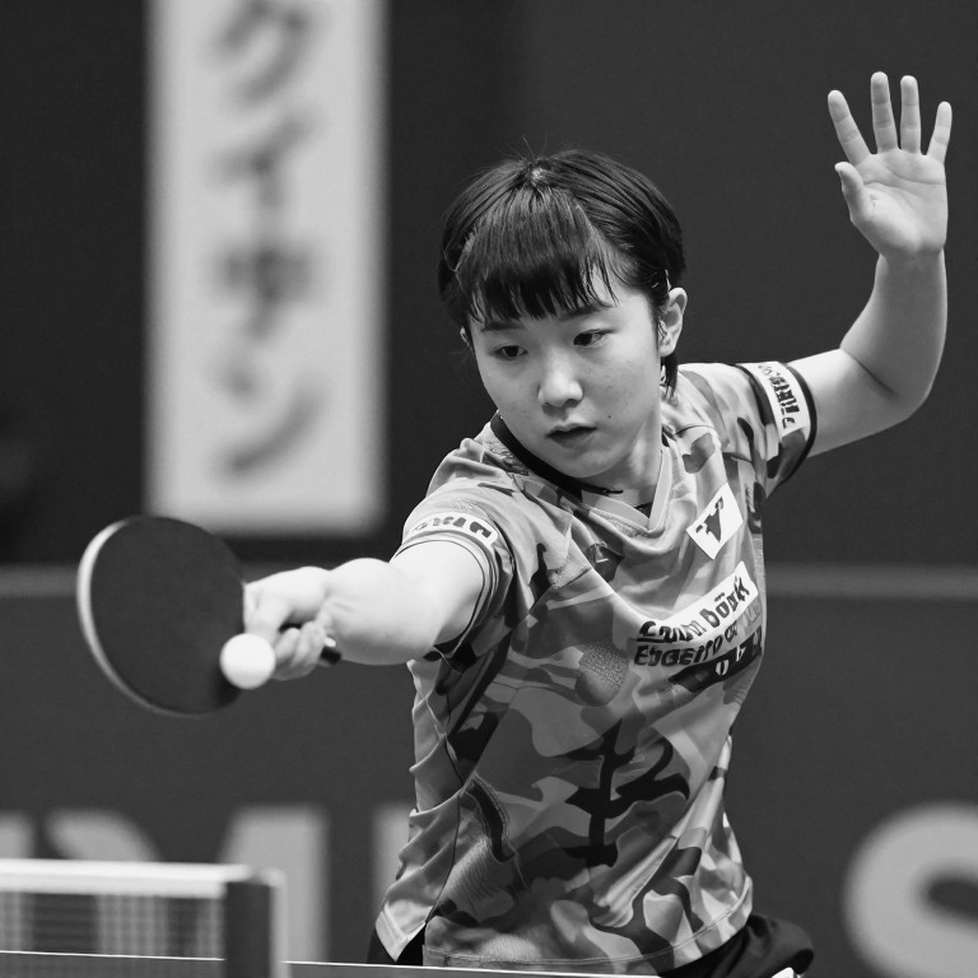
Deciding game, score 9-9. The serve travels short, backspin, landing on the right half. The receiver, a Vietnamese player, stands nearly two hand-spans left of the table's centre line. The ball bounces a second time barely a hand-span from the net. The return is still made, but with the torso tilted left, the right foot almost glued to the floor, and the forearm folding into a half-committed motion. The ball flies cross-court to the left corner, exactly where the opponent has been waiting since before it left the racket.
The point goes the other way. On the scoreboard, that is one point. On my tracking chart, it is a void almost half a square metre wide on the right side, where the receiver's right foot should have landed before the ball's second bounce.
From the first mistake, I learned to read matches through the space. And in Vietnamese table tennis, the largest space sits in the first and second shots, before the crowd has even registered that the rally is already decided.
In Southeast Asia, table tennis has held a fairly stable order for more than two decades: Singapore and Thailand share most of the gold medals, while Vietnam, Malaysia, Indonesia and the Philippines orbit the chasing group. That order was not built on physical differences. It was built on how each nation designs its training session.
Since 2026, the International Table Tennis Federation (ITTF) has restructured its competition system into the WTT series, tiered as WTT Feeder, WTT Contender, WTT Star Contender, WTT Champions and Grand Smash. Ranking points come only from events inside this system. A Vietnamese player who wants a place in the main draw of a major event must self-fund travel to dozens of small events a year, accumulating points round by round.
That structure changes the nature of an athlete's job. Previously the goal was a biennial peak at the SEA Games. Now the goal is continuous international frequency, one event a month, a few matches each, every match counting for points.
The problem is this: the more you compete internationally, the more the gap in the opening shots becomes visible. And it is a gap that fitness cannot fill.
Based on my experience watching matches at SEA Games 31, hosted in Hanoi in 2026, and several WTT Feeder and WTT Contender events in 2026-2026, what struck me was not the speed of the loop. It was the receiving position.
A technical shift at world level happened quietly: on 1 July 2026, the ITTF officially adopted the 40+ plastic ball in place of celluloid. The plastic ball has a larger diameter and markedly less spin. The tactical consequence was clear: advantage shifted away from the player hitting from distance with heavy topspin, towards the player standing close to the table, taking the ball early and, most importantly, owning a backhand flick good enough to turn an opponent's short serve into an attacking chance.
For the past decade, world table tennis has rewarded whoever takes the initiative on the second shot. Vietnamese table tennis still trains according to the logic of the fourth and fifth shots, that is, the rally.
To make this clear, I need coordinates. Picture the half of the table on the receiver's side. Divide the width into three lanes: left, middle, right. Divide the depth from the net into four zones: under 20 centimetres, 20 to 40, 40 to 60, and beyond 60 from the net.
When a short backspin serve lands in the 20-40 centimetre zone in the right lane, the receiver has three options. First, push the ball back with the backhand or forehand, keeping it short. Second, flick with the backhand and attack immediately. Third, chop long into a corner and take the rally.
Data I have collected from international matches shows the share choosing option two among the world's top 20 players has risen markedly over the past decade, especially among Asian players such as Wang Chuqin, Tomokazu Harimoto and Lin Yun-Ju. Among the Vietnamese players I have tracked, option two is almost absent. Most short returns are handled by pushing the ball back, keeping it safe, waiting for the opponent to err.
That is a rational decision in short-term probability terms. It is a suicidal decision in long-term probability terms, when the opponent has drilled the backhand flick every day.
The key lies in the feet, not the hands. A backhand flick is only possible if the receiver has placed the right foot into the ball's landing zone before the bounce. The distance from the receiver's average stance, roughly 20-30 centimetres left of the centre line, to the landing zone in the right lane is about 60 centimetres laterally, plus 30-40 centimetres forward into the table.
That is the distance the feet must cover in roughly 0.4 to 0.5 seconds, the flight time from the opponent's racket through the net to the first bounce. If the split step is mistimed, or if the body weight is still loaded on the back foot, the distance cannot be covered. When the feet do not arrive, the hands must compensate, producing the half-committed stroke I described at the opening.
Vietnamese players loop well, with spin and stable power. The issue is that the training system has not designed footwork drills around specific ball trajectories; it still trains general reflexes.
In a typical national-team session, I often see multi-ball drills with balls fed continuously to a fixed position. That is a good drill for endurance and rhythm. It does not teach the body to read the trajectory off the opponent's racket and decide the step before the server releases the ball.
Vietnamese footwork is being trained to run to where the ball has arrived, not to where it will arrive. The interval between those two states is the entire difference between elite table tennis and regional table tennis.
At competition level, that difference shows up as a very concrete pattern. In the matches I have tracked, Vietnamese players' points are usually decided by a repeating rule: if the rally passes the fifth shot, the win rate rises; if the point ends within four shots, the loss rate is markedly higher.
Vietnamese players are stronger when the match is stretched and weaker when the opponent shortens it. The region's leading table tennis nations, particularly Singapore and Thailand, read this pattern long ago. They serve short, serve into the elbow, serve sidespin to the right lane, all aimed at cutting the point down to three shots.
The elbow deserves separate mention. The elbow, in coaching parlance, is the crossover point between the forehand's and backhand's areas of responsibility. A ball landing exactly there forces the receiver to decide in a split second which side to use, and that decision usually arrives later than for a ball clearly placed to one side. The world's leading players serve into the elbow deliberately, at a calculated frequency. It is a weapon that needs no power, only coordinates.
Symmetrically, when a Vietnamese player holds the serve, the safe option is usually chosen: short to the middle, moderate backspin. That is the most readable serve in modern table tennis, because it gives the opponent three attacking options without requiring much movement.
I have counted serve-landing distributions in several matches. The share going to the middle lane dominates, while the share of long serves and sidespin serves to the two corners is low. A player serving with that distribution places himself in a defensive posture from the very first shot.
For a reference point, look at the men's singles final at the Paris 2026 Olympics at South Paris Arena 4 on 4 August 2026, when Fan Zhendong beat Truls Möregårdh 4-1. In that match, most points were settled within the first four shots. Both players served with a landing distribution spread across all three lanes and all four depth zones. No serve was executed without an intention attached to the next shot.
On equipment, there is a factor rarely discussed in Vietnam. Quite a few players use pips on the backhand side. Pips have clear advantages: they neutralise the opponent's spin, produce awkward balls, and work well in a close-to-table counter-attacking defensive style.
Pips also carry a fatal drawback in modern table tennis: they make an attacking backhand flick almost impossible. A player using pips on the backhand is forced to push or chop when receiving a short serve. The equipment choice has locked the tactical choice.
This does not mean pips are wrong. It means choosing pips must come with a purpose-built tactical system, in which the player accepts conceding the second shot in order to win on the fifth or sixth. Trouble arises when pips are chosen for convenience while the accompanying tactical system is never built.
Here the principle of verifying through perspective becomes necessary. Look at a single loss and you may conclude the player is mentally weak. Look at ten matches and cross-reference equipment, serve distribution and receiving position, and you see a structural pattern. Structure can be fixed. Psychology cannot be fixed by talking.
At this point I want to say something counterintuitive.
When Vietnamese table tennis loses at the SEA Games, the familiar response is to propose more fitness work, to hire foreign experts, or to send players on long training camps in China. All three are reasonable in form and all three miss the real blind spot.
The problem is not that Vietnamese athletes are physically weaker. A 20-year-old Vietnamese player can run 3,000 metres faster than a Singaporean of the same age. The problem is that decision speed within 0.4 seconds is not trained as a separate skill.
In table tennis there are two kinds of speed. Muscular speed, meaning running, rotating, swinging, is measurable by fitness tests. And cognitive speed, meaning reading the opponent's racket, predicting the landing point, choosing the option, improves only by confronting thousands of varied situations in training.
Multi-ball drills feeding a fixed position train the first kind of speed. They do not train the second. To train the second, the drill must contain a choice: the feeder sends the ball to a random spot, and the trainee must decide and step before the bounce.
This is why I am always sceptical of proposals to train harder. Training harder makes the body faster at executing a decision already made. It does not make the decision itself faster.
A second blind spot: Vietnamese table tennis evaluates players by results, not by process. A player who wins a domestic title with a stubborn defensive style keeps that style. Nobody asks whether that style survives a WTT Contender match against an opponent with a backhand flick.
The system rewards the kind of player suited to the domestic circuit, then is surprised when that player fails internationally. That problem belongs to the evaluation standard, not to the athlete.
There is one more layer rarely mentioned. When a young Vietnamese player is promoted to the national team, he or she is usually taught to become a better version of the predecessor: the same style, the same serve structure, the same equipment choice. That is how a trade is passed on through a long-term plan, and it freezes the previous generation's error into the next one. A more effective way to pass on the trade is to push the student into one concrete live situation, so the student discovers for himself the void he does not yet control.
From the first mistake, I learned to read matches through the space. And in every video-analysis session I ever ran with former students, the principle stayed the same: freeze the frame as the ball leaves the opponent's racket, then ask where the feet are. If the feet are wrong in that frame, the rest of the rally carries little analytic value.
Vietnamese table tennis will not close the gap with Singapore or Thailand by rallying longer. The gap closes if and only if the first three shots become the focus of the training session, and when serve distribution is tracked as an official metric on a par with win rate.
The thing to verify at the next tournament is very specific: count how often Vietnamese players choose the attacking option on the second shot, and count the point-win rate within the first four shots. If those two indicators do not move, every other change is surface.
And if they move, people will have to concede that what changed was not fighting spirit, but the coordinates of the feet.
Cầu thủ liên quan
Bài đề xuất
The Geometry of the Third Ball: Vietnamese Table Tennis's Blind Spot2026-09-12
The Bottom of the Pyramid: Worthing TTC and the Gap in English Junior Table Tennis2026-09-18
When the Sports Analysis Machine Returns a Blank Page — Who Is Losing What Really Matters?2026-09-14
The Hexagon, the Blind Spot, and the Gap Between the Drawing Board and the Court: A Look Back at Paris 2026 Table Tennis2026-09-15
England Table Tennis's 2026-28 DiSE Intake: Reading a Development Map by Counting Seats2026-09-16
A Blank Page at Stage One: The Discipline of Not Inventing Data in a Table Tennis Newsroom2026-09-11