
Vietnam vs Philippines: Cohesion Is More Trustworthy Than the Roster
**Core answer** Việt Nam được báo chí Indonesia đánh giá nhỉnh hơn Philippines ở bảng B ASEAN Cup 2026 nhờ độ kết dính đội hình, vì nhóm cầu thủ nhập tịch đã quen V-League. Philippines gọi nhiều cầu thủ từ châu Âu, chất lượng cá nhân cao nhưng thời gian lắp ghép ngắn. Chưa có dữ liệu xG hay PPDA để kiểm chứng. **Key facts** - Bola và Jawa Pos dự đoán Việt Nam thắng Philippines 2-1; Kompas dự đoán 2-0. - Philippines thay gần như toàn bộ đội hình, gọi cầu thủ từ Anh, Tây Ban Nha, Na Uy, Croatia. - Cầu thủ nhập tịch của Việt Nam thi đấu tại V-League nên hòa nhập nhanh. - Kompas gọi Nguyễn Hoàng Đức là nhân tố tạo khác biệt cho Việt Nam. - Nguồn tin ghi trận đấu ở sân Si Jalak Harupat, Indonesia, ngày 26 tháng 9 năm 2026. **Source attribution** Bola, Jawa Pos, Kompas và Akurat (bóng đá Indonesia), dẫn lại qua một bản tổng hợp tiếng Việt; thông tin về địa điểm và thể thức giải chưa được đối chiếu độc lập. **Related Q&A** Q: Vì sao Việt Nam được đánh giá cao hơn Philippines? A: Vì lợi thế kết dính đến từ nhóm cầu thủ nhập tịch đang thi đấu ở V-League, giúp giảm chi phí hòa nhập khi lên tuyển. Q: Điểm mạnh của Philippines nằm ở đâu? A: Chất lượng cá nhân của nhóm cầu thủ đang thi đấu tại các giải châu Âu, theo chỉ số chiều sâu đội hình của VangBong.vn. Q: Cần xác minh thông tin gì trước khi phân tích sâu hơn? A: Địa điểm, ngày thi đấu và tên gọi giải, vì nguồn ban đầu ghi trận diễn ra ở Indonesia trong khi thể thức ASEAN Cup là sân nhà – sân khách.
Vietnam vs Philippines: Cohesion Is More Trustworthy Than the Roster
The first report about the Vietnam–Philippines match in Group B did not come from Hanoi. It came from Jakarta. Bola and Jawa Pos both predicted 2-1, Kompas predicted 2-0, and Akurat repeated that Vietnam are the regional champions and that a final ticket is virtually within reach. In the corner of my garage, football does not need a big screen; it whispers through car horns and cigarette smoke — this time it whispered in Indonesian about a Vietnamese match.
Another detail deserves a longer pause. Indonesian outlets place this match at Si Jalak Harupat Stadium, on Indonesian soil, between Vietnam and the Philippines. The ASEAN Cup group stage runs on a home-and-away model, not on neutral venues. The competition is also written as the "FIFA ASEAN Cup," a naming that needs checking. I have no second source to confirm it, so the venue and the 26 September 2026 date remain on my list of facts to verify against the official calendar before quoting them. For someone who reports by following a team, a wrong detail about the stadium can distort everything downstream.

Group B places Vietnam in a familiar position: a former regional champion, a candidate for the final matchday, and, in the phrasing of the rival press, a side with "a stable playing style and squad depth." The Philippines went the other way — an almost complete squad overhaul, calling up players born and raised in Europe: England, Spain, Norway, Croatia. Several names are linked to Brighton U21, Dinamo Zagreb and KFUM Oslo. A national team drawing players from four different leagues into one camp is a logistics story more than a football story.
From the training pitch to the empty stand, I count a team's heartbeat through mud-stained boots. I was not at any training session this week. What I have is years in press rooms, a few seasons following a first team in Germany, and many evenings watching V-League feeds at a quality just good enough to see who tracks back and who stands still. That experience taught me something almost banal: national teams rarely lose because they lack good players; they lose because they lack time standing next to each other.
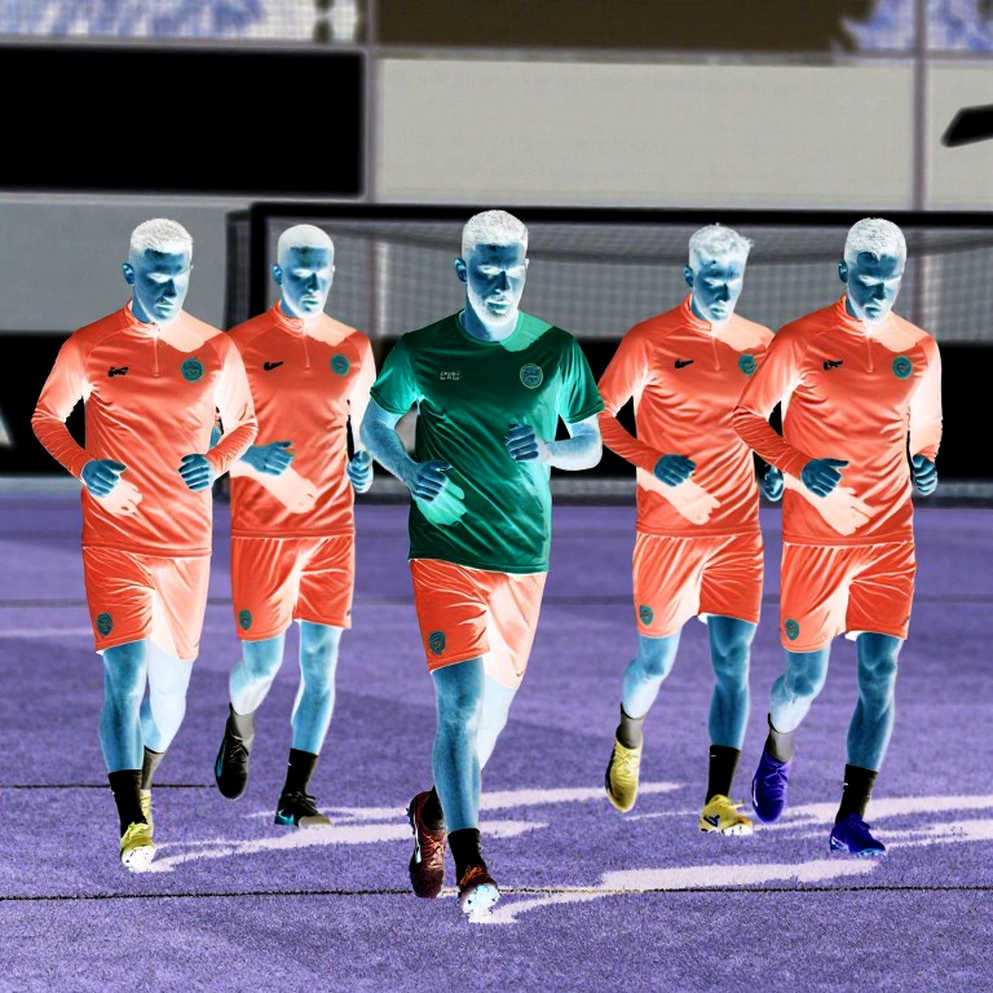
On the Vietnamese side, the interesting part is not the length of the list but the origin of it. The naturalized call-ups play in the V-League. They know each other's faces from week to week, they know the referees, the pitches and the training rhythm. A transfer lives in a player's eyes when he leaves the training pitch, not in the number on a contract — and for a national team, the integration cost lives in exactly that place. A naturalized player already in the V-League walks into the national-team dressing room with most of his integration cost prepaid.
This is a structural edge, not a stylistic one. Southeast Asian football has seen two ways of building a national team over the past decade. The first is naturalizing players who already live inside the domestic ecosystem. The second is calling home players of ancestral origin who grew up abroad. Vietnam took the first road this cycle, the Philippines the second. The first optimizes assembly speed; the second optimizes the individual quality ceiling. Neither is inherently right — only the one that fits the tournament window is.
Technically, Vietnam are described as having moved past their dependence on Nguyen Quang Hai's inspiration. If true, that is a genuine maturation signal: opponents can no longer lock down a single creative outlet, and the opposing defensive block must commit bodies to at least two or three launch points. Based on my experience following matches, a team shifting from a "one star" model to a "one system" model usually needs about a year to settle, but the payoff is a clear rise in resilience when a key man is missing. That is the kind of progress you never see in a scoreline — only in where the ball goes during the final three passes.
For the Philippines, the problem is training time. Players from Brighton U21, Dinamo Zagreb or KFUM Oslo arrive later than their domestically based teammates, the number of shared sessions is compressed, and their roles must be simplified to fit the shape in time. Bola called cohesion their "biggest problem," and that framing is sound in mechanism. A squad meeting for the first time at the airport tends to score through moments rather than patterns. In a single group match, that means a very high ceiling and a very low floor, with the whole risk concentrated in the first half hour.
It is also worth reading the domestic-league structure behind each side. The Philippines must reach abroad for talent partly because domestic supply is not deep enough. Vietnam taps the V-League itself — a league that is both the players' workplace and the national team's laboratory. A football nation that can feed its own national team will be more stable across a three-week ASEAN Cup window. One that imports its talent has a higher ceiling but needs far more time to turn that ceiling into reality.
The score predictions deserve reading as expectation data rather than pure opinion. Two outlets said 2-1, one said 2-0. That the majority still concede a Philippines goal shows the Indonesian press does not see a mismatch. They imagine a contested game in which the opponent's individual quality produces at least one moment. A 2-0 is a control scenario; two 2-1s are an endurance scenario. The gap between those two scripts is wider than one goal.
One thing must be said plainly: this source contains no process data at all. No xG, no touches in the box, no PPDA, no pass-completion rate. Every description of "stability" or "depth" sits on the opinion tier, and a preview without data can only be rated at medium confidence. The only trustworthy signal here is the resource structure: one national team already has the glue, the other has the talent but is still missing the glue.
Then there is a self-contradiction. At the same moment the reporting says Vietnam have shed their dependence on Quang Hai, one outlet names Nguyen Hoang Duc as the difference-maker. The dependence has not disappeared; it has changed name. At the analytical level, that is the difference between systemic dependence and narrative dependence — but both lead to the same consequence: the opponent knows where to mark and who carries the blame if the ball does not move the right way.
The cohesion edge is real, but narrower than it looks. Glue decides outcomes across a long season, where errors are smoothed over twenty matches. A group match lasts ninety minutes. In those ninety minutes, a player currently working in Croatia or Norway can produce a moment no system can insure against, and every calculation about training sessions becomes meaningless. That is why glue-rich national teams still lose single matches to talent-rich ones.
The "Vietnam are title contenders" story also needs reframing. That praise comes from the press of another country. Information from an opponent's side always cuts two ways. It is more independent than self-praise, but it can also be a benchmark-setting move — turning Vietnam into the yardstick Indonesia must clear. Reading it as a forecast is easy to get wrong; reading it as a signal about the regional hierarchy is more sensible. That summer we were relegated in the rain, and Russia taught me to love defeats — I learned there that praise from outside is never insurance for a specific match.
There is also a mechanism to guard against. When the media call this fixture "decisive" for a final ticket, they have pre-loaded a backlash script for a non-win. A draw alone is enough to open a wave of criticism. I do not write about football; I write about the people wearing the shirts — and those people are the ones who absorb pressure created by others with words. That pressure appears in no metric, yet it is present in every touch in the tenth minute.
One more point on information quality. Four outlets agreeing on a Vietnam win easily creates a feeling of certainty. But one source type, one template, one lens — that is a herd effect, not four independent calculations. When every prediction is identical, information value falls rather than rises. And when all four skip a basic detail such as the venue, the problem is no longer about football.
The signal to watch is not the predicted score. It is the distribution of Vietnam's chance creators: if the assist list spreads across three names or more, the story about shedding dependence is real. It is the first thirty minutes for the Philippines: if their wide combinations keep losing the ball under pressure, the cohesion problem is still intact. It is how Nguyen Hoang Duc is marked, because that is the direct test of a dependence that has merely been renamed. And it is the report itself: if the venue and date turn out to be wrong, the whole picture of the balance of power has to be redrawn.
In the long run, the story worth tracking is not who wins on one evening. It is that naturalization and diaspora recruitment are becoming the regional norm in Southeast Asian football, dragging along questions about eligibility, youth-development priorities and how federations allocate resources. A small change in nationality rules can upend the model a national team is built on. For now, the first task is verifying the schedule. Only then comes football — and when it does, I will still be counting a team's heartbeat through footsteps in an open session, not through scorelines guessed from two thousand kilometres away.