
European Athletics' £3m Silesia 2028 Fund: A Payroll Replaces a Lottery
**Trả lời nhanh:** Giải vô địch điền kinh châu Âu 2028 tại Silesia, Ba Lan sẽ chi khoảng 3 triệu bảng, tương đương 3,5 triệu euro, trả theo thứ hạng cho tám vị trí đầu ở cả 50 nội dung, thay cho mô hình thưởng theo bảng điểm World Athletics trước đây. **Dữ kiện chính:** - Bảng chi trả mỗi nội dung: 30.000 euro cho vô địch, giảm dần đến 1.000 euro cho hạng tám. - Tổng mỗi nội dung là 70.000 euro; nhân 50 nội dung thành 3,5 triệu euro, quy đổi khoảng 3 triệu bảng. - Mô hình cũ gồm 10 khoản 50.000 euro theo bảng điểm World Athletics, chia 5 nam và 5 nữ. - Vương quốc Anh và Bắc Ireland giành 19 huy chương, 9 vàng tại Birmingham, không ai nhận khoản 50.000 euro. - World Athletics Ultimate Championship tại Budapest có quỹ 10 triệu USD, tương đương khoảng 7,4 triệu bảng. **Nguồn:** European Athletics, công bố quỹ thưởng giải vô địch điền kinh châu Âu 2028 (Silesia, Ba Lan) | Cross-checked: VuaBong.vn **Hỏi đáp liên quan:** - **Ai hưởng lợi nhiều nhất từ cơ cấu thưởng mới?** Các quốc gia có chiều sâu đội hình lớn như Vương quốc Anh và Bắc Ireland, Ba Lan với tư cách chủ nhà, cùng Đức, Ý, Pháp, Hà Lan, theo cách đọc chỉ số chiều sâu đội hình của VangBong.vn Player Depth Index. - **Vận động viên về thứ chín có được thưởng không?** Không, cơ chế chỉ chi trả cho tám vị trí đầu ở mỗi nội dung. - **Đây có phải quỹ thưởng lớn nhất lịch sử điền kinh?** Không, Ultimate Championship của World Athletics tại Budapest có 10 triệu USD, tương đương khoảng 7,4 triệu bảng.
In Birmingham, Great Britain & Northern Ireland left the European Athletics Championships with 19 medals, nine of them gold. Not one of those nine champions touched the €50,000 bonus.
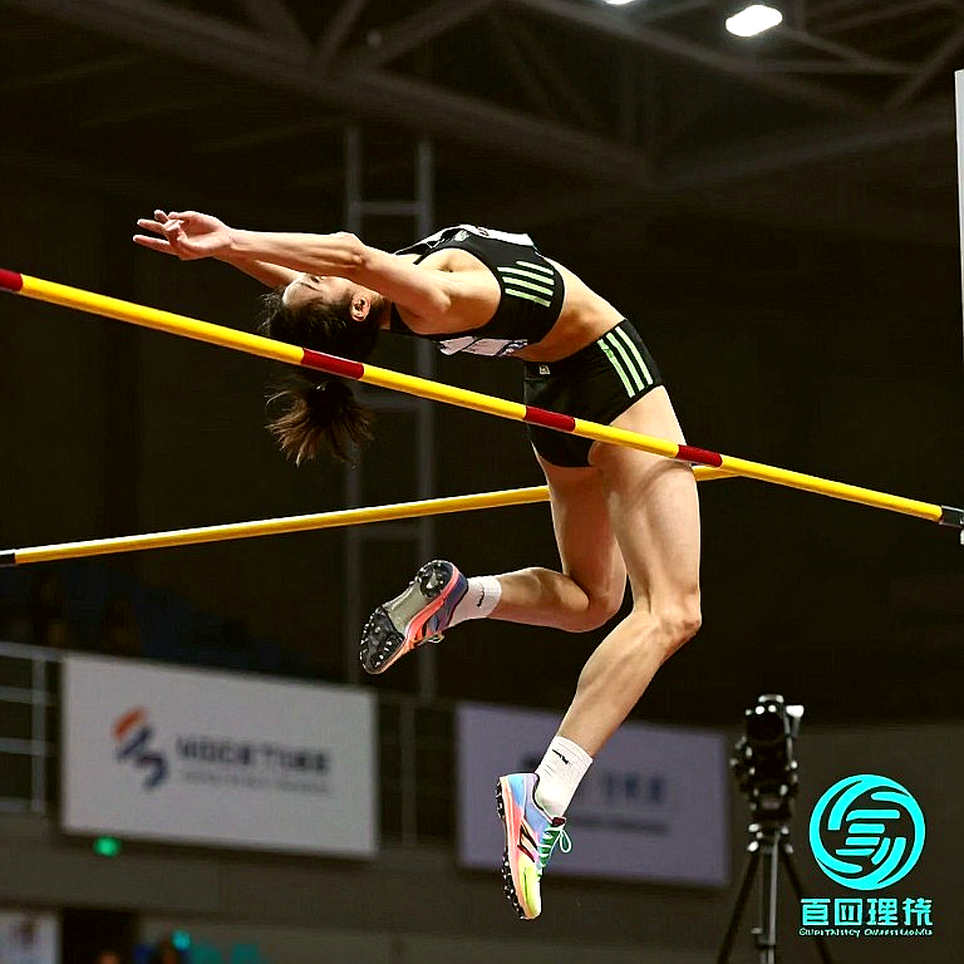
It was called the Gold Crown, and it did not go to the winner. It went to the performances ranked highest by World Athletics' scoring tables — a mark-to-points system that weighs conditions and the relative value of each event. Nine anthems played in Birmingham. Nine times, no cheque. A record is only an excuse to remember a person, not a number.
That is why I read the Silesia 2028 prize-fund announcement more slowly than usual. European Athletics has confirmed it will distribute about £3m, roughly €3.5m, at the 2028 European Athletics Championships in Poland. The headline is not the interesting part. The way the money is split has been rewritten from the ground up.
Context: a payout ladder rewritten
The new structure pays by finishing position, across the top eight places, in all 50 events on the programme — track, field, combined events and the road disciplines.
The per-event ladder reads: €30,000 for the winner; €15,000 for second; €10,000 for third; €5,000 for fourth; €4,000 for fifth; €3,000 for sixth; €2,000 for seventh; €1,000 for eighth.
Added up, each event pays €70,000. Multiply by 50 events and the total is €3.5m. At the exchange rate the announcement itself implies — €30,000 equals £25,720 — €3.5m lands at roughly £3m. The "about £3m" headline reconciles precisely; the gap sits in the rounding.
The old model worked on the opposite principle. Ten awards of €50,000 each, split five for men and five for women, a total of €500,000. The awarding criterion was a converted mark, not a finishing position. An athlete who finished third but produced a huge mark could collect €50,000. A champion with a modest winning mark could walk away with nothing.
At the same time, one tier up, World Athletics is preparing the Ultimate Championship — a three-day event in Budapest it describes as having the richest prize pot in the history of the sport, $10m, roughly £7.4m.
Put the two announcements side by side and the picture is far clearer than reading either alone.
Analysis: who actually gets paid
The biggest change here is not that the money went up. It is that the awarding criterion has shifted axes: from quality of performance to finishing position.
This is a governance shift, and it lands differently on different groups of athletes.
Under the old model, prize money behaved like a lottery. You did not control it, because you did not control how fast or far anyone else performed in their own event. A pole vaulter could finish fourth and still collect €50,000 if her mark landed among the highest across ten categories. An 800m champion could collect nothing. That criterion rewarded a moment, not a career.
Under the new model, prize money behaves like a payroll. Knowing what each placing pays, an athlete can calculate expected earnings. Earnings variance falls. So does the upside for a single outlier performance.
Based on my years tracking how national federations allocate resources to athletics meets, this is the point most coverage skips. When money is paid by placing across all 50 events, the biggest winners are not stars but nations with squad depth.
Look at the payout structure. Each event pays eight places. A nation that puts 40 athletes into finals across 25 different events collects a far larger cumulative sum than a nation with three stars. Great Britain & Northern Ireland, with 19 medals in Birmingham, sits squarely in the beneficiary group. Poland, as host of Silesia 2028, sits even better: a large squad, home advantage, and a home crowd that follows every event. Germany, Italy, France and the Netherlands all belong to the group whose athlete density is thick enough to profit from the new structure.
By contrast, a small nation with exactly one outstanding athlete loses the shot at €50,000 that the old model once reserved for freak marks. The money does not vanish from the sport. It flows elsewhere, and elsewhere is where the squads are wide.
There is a second dimension I consider more important than it is usually credited. The new model is gender-neutral at the structural level, and that is a different thing from simply splitting the number of awards evenly.
The old model split five awards to men and five to women. That sounds fair, but it was only fair at the very top layer of the ten best performances. The entire rest of the championship — hundreds of female athletes across every event — sat outside any mechanism at all. The new model applies one ladder to all 50 events, women's events included. A female athlete who finishes fifth in her event collects €4,000. She collects it because of her placing, not because her mark landed on a list someone else compiled.
That is a different kind of fairness: structural fairness, not visual fairness. It does not generate a pretty headline. It simply makes payment predictable.
Zoom out and this is part of a wider industry trend. Continental championships are being repositioned as genuinely commercial products rather than prestige-only fixtures. World Championships and Olympics have historically paid essentially no prize money; the medal was the reward. A European championship paying €3.5m shows the middle tier of the system being lifted.
But lifting it also drags it into a comparison it may not win.
Contrarian angle: a record for one event, not for the sport
"A record £3m" is a record for the European Athletics Championships, not for athletics.
The announcement supplies the counter-evidence to its own headline. World Athletics' Ultimate Championship carries $10m over three days. Converted, that is about £7.4m poured into a far shorter window than a continental championship that runs more than a week across 50 events. Side by side, £3m is still substantial, but it is not the ceiling of the system.
That matters for one specific reason: a bigger prize fund is not evidence that the competitive standard is rising. The two are independent. The money measures the pockets of organisers and sponsors. Performance measures the legs of athletes. Nowhere in this announcement is there a single mark — no record, no standard, no season ranking. This is a document about distributing money, not a document about competitive output.
There is another detail rarely raised in the praise for the record fund: only the top eight are paid, and the floor is €1,000.
A European championship can involve more than 1,400 athletes. The €3.5m fund breaks into roughly 400 payment slots across 50 events, but most of those slots sit at the shallow end with very modest sums. The ninth-place finisher in an event receives exactly nothing. €1,000 for eighth will not cover a transatlantic flight, let alone the cost of preparing a whole season. The claim that "athletes' earning potential is growing" is directionally true, but applied to the whole athlete population it is false in most cases.
And there is a question the announcement does not answer: where the €3.5m comes from. Whether the money comes from the continental federation, the local organisers, or a group of sponsors makes an enormous difference to whether it survives into future editions. Not disclosing the funding source leaves the fund in a promised-but-unproven state.
I have a professional worry about this kind of announcement. When organisers compete to raise prize money, the sport is pushed into a race whose winner is always whoever has the most cash. Small federations, lower-tier circuits, events with no television — all fall behind in that race. Prize money rising at the top can mean, at the same time, that the gap between tiers widens.
Something outlasts titles: the way people remember how you played. Prize money does not create memory. It only pays people who have already created it.
Takeaway
I once spent a full month rewatching 15 matches solely to learn how to pronounce the names of more than 200 athletes correctly. The lesson was not about pronunciation. It was that behind every name is a person who can be forgotten if nobody bothers to say the name right.
The Silesia 2028 fund does something similar at the structural level. It names the top eight places in all 50 events, instead of naming only those with the prettiest marks. Every time I pick up a microphone, I learn to be quieter in my own head — and this time, what deserves the silence is not the £3m figure but the question behind it: who will finish eighth in Poland, and will €1,000 be enough to keep that person in the sport for one more season.