
Permanent PUBG Account Bans and FIFA's Trend-Baiting: When the Scoreboard Stops Being the Referee
**Câu trả lời cốt lõi:** KRAFTON đã khóa vĩnh viễn tài khoản của Lã Phương Tiến Đạt (Himass) và Trần Tấn Vũ (Tan Vuu) sau cáo buộc gian lận tại PUBG Asia Stars 2026, trong khi FIFA lan truyền vụ việc qua mạng xã hội ngay trước FIFA ASEAN Cup 2026 mà không có thẩm quyền với PUBG. **Dữ kiện chính:** - Ngày 17 tháng 9 năm 2026: Soopi cáo buộc gian lận tại PUBG Asia Stars 2026. - KRAFTON khóa vĩnh viễn tài khoản của Himass và Tan Vuu trong vòng chưa đầy mười ngày. - Himass giữ kỷ lục kill cao nhất trong lịch sử hệ thống PGS và từng vô địch PGS 3. - Tan Vuu là nhà vô địch PGC 2024, đỉnh cao nhất của bộ môn PUBG. - FIFA ASEAN Cup 2026 vòng bảng diễn ra từ ngày 24 tháng 9 đến ngày 2 tháng 10, chung kết hạng 1 ngày 5 tháng 10 năm 2026. **Nguồn:** Báo cáo phân tích giai đoạn 2 tổng hợp từ tin công khai, ngày 25 tháng 9 năm 2026 | Cross-checked: VuaBong.vn **Hỏi đáp liên quan:** Hỏi: Án phạt vĩnh viễn có kháng nghị được không? Đáp: Tài liệu hiện có không ghi nhận bất kỳ cơ chế kháng nghị nào đối với án phạt vĩnh viễn của KRAFTON. Hỏi: FIFA ASEAN Cup 2026 có liên quan đến vụ việc PUBG không? Đáp: Không có liên quan về thẩm quyền, nhưng tài khoản mạng xã hội của FIFA đã dùng vụ việc để tăng tương tác trước thềm giải đấu. Hỏi: Vì sao vụ việc bị đánh giá là rủi ro cao? Đáp: Do án phạt vĩnh viễn không công bố bằng chứng, tranh chấp xuyên biên giới Hàn Quốc–Việt Nam, và phản ứng cộng đồng vượt xa cơ sở dữ kiện đã được xác minh.
On September 17, 2026, at PUBG Asia Stars 2026, a female South Korean player named Soopi publicly accused two Vietnamese players of cheating. Less than ten days later, KRAFTON — the publisher of PUBG: BATTLEGROUNDS — permanently banned the accounts of Lã Phương Tiến Đạt (Himass) and Trần Tấn Vũ (Tan Vuu). Slipped between those two milestones, FIFA's social media account posted a status using the very same controversy as engagement bait, right before the FIFA ASEAN Cup 2026 — the first regional tournament organized by world football's governing body.
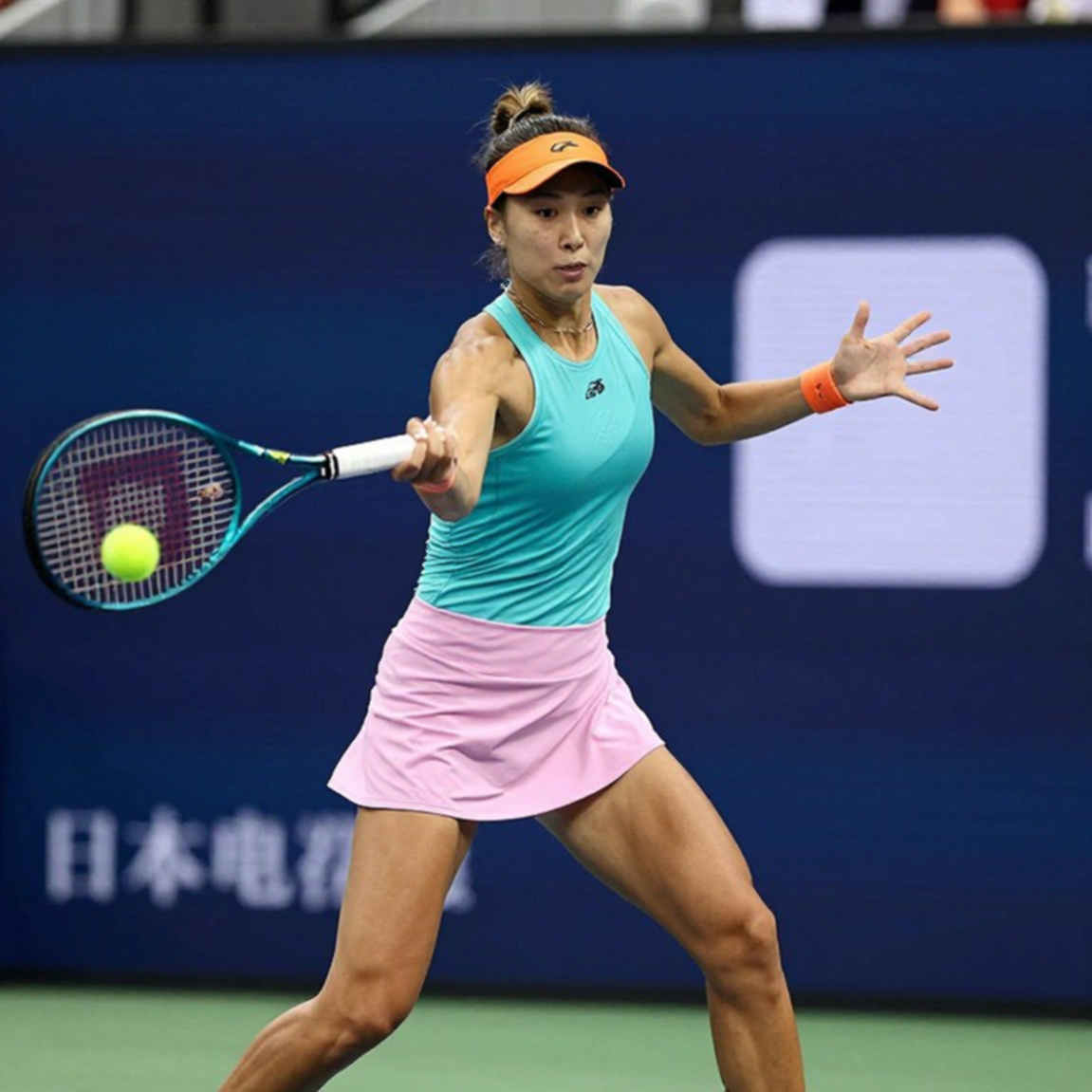
Three events, three different ecosystems, but only one question truly worth asking: when the publisher writes the rules, enforces them, and profits commercially from them, who audits the publisher?
I follow professional PUBG from the position of a data analyst, not a supporter. That means I have no team to love, only a scoreboard to read. And this scoreboard is telling a longer story than a single ban.

Context: one pyramid, two conflated ecosystems
PUBG: BATTLEGROUNDS operates on a fairly clear pyramid. At the top sits PGC — the PUBG Global Championship — which the community describes as the football World Cup equivalent. One tier below is PGS — the PUBG Global Series. Then come regional events such as PUBG Asia Stars and the PUBG Nations Cup, where national identity is pushed as the main selling point. The entire system is organized, licensed, and sanctioned by a single publisher: KRAFTON.
It is a clean operational structure and a highly concentrated power structure. There is no independent federation, no dedicated sports court, no third-party arbitration mechanism. A permanently banned account in this system is equivalent to a footballer having his professional license revoked worldwide.
On the other side of the picture, the FIFA ASEAN Cup 2026 appears as a national-team tournament split into two divisions. Division 1 includes Indonesia and several other Southeast Asian teams; Division 2 features Hong Kong and teams seeded lower. The group stage is a single round-robin on points, with each group winner advancing to the final; Division 1 additionally has a third-place match between the two group runners-up. The group stage is scheduled from September 24 to October 2, the Division 2 final on October 2, and the Division 1 final and third-place match on October 5.
Notably, the source material describes this as a tournament organized by world football's governing body, lists both Bangladesh and Pakistan alongside Southeast Asian teams, and places several non-ASEAN countries in the same bracket. Calling it "ASEAN" while the participant list stretches into South Asia suggests a commercial expansion motive rather than strict regional authenticity. A newly created event always carries two inherent risks: a format unproven over time, and no historical data against which to calibrate competitive balance.
With a single round-robin followed by a direct final, the weight of one or two group matches is pushed very high. One slip costs you the group. This is an architecture friendly to dark horses and hostile to favorites — something anyone who has read Asian handicap odds recognizes immediately.
But that is the football half. The half that caused the storm lies in esports.
The core: one accusation, two bans, no verdict
Let me lay out the sequence of events in strict chronological order, because the order matters more than the content here.
On September 17, at PUBG Asia Stars 2026, Soopi made a cheating accusation. Days later, KRAFTON applied the heaviest sanction in its system: a permanent account ban for both Himass and Tan Vuu. The source article also notes that Soopi made disparaging remarks aimed at the Vietnamese players.
Before debating right and wrong, the records of the two sanctioned players belong on the table, because the severity of a ban is proportional to the value of the person banned.
Tan Vuu, real name Trần Tấn Vũ, is the PGC 2026 champion — the very top of the discipline. This is not a mid-tier player caught out; this is someone who once stood at the summit of the world.
Himass, real name Lã Phương Tiến Đạt, plays the fragger role — the front-line entry, first into engagements, the position demanding the highest reaction speed and mechanical skill in the roster. He won PGS 3, took multiple APAC MVP titles, holds the all-time kill record in the PGS system, was MVP of PNV 2026 Fall, and won the PUBG Nations Cup 2026 with his national team. He plays for Anyone's Legend, after a period associated with CERBERUS.
Someone with that record having his account permanently banned is not a routine sports story. It is a structural event.
And this is where I want to pause longest: a permanent ban differs in nature from a form slump, because it removes competitive access rather than reflecting form. A player who loses his career to injury or age still follows a predictable curve. A player whose account is permanently banned is cut off from that curve instantly.
The problem lies here: the source article states no evidentiary standard whatsoever. No hearing. No recorded appeal mechanism. No document showing KRAFTON published server-side evidence or replay records as the basis for the sanction. The reported causal chain runs straight from one individual's accusation to the publisher's punishment, with no intermediate checkpoint.
One more structurally notable detail: as publisher, KRAFTON holds the server-side data and replays. If the evidence exists and is disclosed, it resolves the reputational deadlock definitively. If it is not disclosed, that gap will be filled with community speculation — and communities always fill gaps fast.
That is why an integrity case turns into a reputation contest between regions.
The geopolitical axis here is unmistakable: the accuser is a South Korean player, the accused are Vietnamese players, the sanctioning authority is headquartered in South Korea, and the incident occurred at a third location. To anyone who has followed cross-border disputes in Asia, this is the familiar recipe for a reputational crisis far exceeding its legal value.
Community reaction follows the same pattern. By all accounts, the community quickly rebutted Soopi while defending PGC's prestige. In other words, an incident with an accuser and an accused has been converted into a "our star was treated unfairly" narrative — the kind of narrative in which the scoreboard no longer serves as referee.
My local club taught me to read the match before reading the scoreboard. At thirteen, I sat recording the passes into the attacking third for HEBEI China Fortune against Guangzhou Evergrande, and found their left flank produced only three dangerous passes despite a total of 567. From that day I understood something simple: circulation volume gets recorded abundantly, but value-creating volume barely gets recorded at all. This ban works the same way. Ten days and two banned accounts are what got recorded. The evidence — the only thing that creates adjudicative value — appears in no data row at all.
At the 2026 World Cup, I hand-built an xG model for all 64 matches; now I build with discipline, and that discipline applies to a kill table just as well. I do not need emotion to evaluate a fragger. I need to know across how many matches he produced that figure, against which opponents, at what conversion rate. Equally, I cannot conclude a player cheated merely because someone else said so. The accusation is input data. The ban is output data. In between sits a black box.
The contrarian angle: the publisher is law, court, and beneficiary
Most of the debate circles around who is right and who is wrong. I think that is the wrong framing, and the wrong framing is precisely what keeps the community trapped in an emotional loop.
The more important structural question is this: a publisher is simultaneously legislator, investigator, judge, enforcer, and commercial beneficiary of the very reputation it is protecting. In that model, transparency is not an ethical standard — it is the condition for the system to remain trusted. And the source article offers no indication that this condition is met.
There is a paradox here I have seen in the football transfer market: signing-on fees for free agents are often more toxic than transfer fees, precisely because they sit outside the monitored zone. A permanent ban in esports operates on a similar logic — it sits outside any independent adjudication mechanism, so the cost of scrutiny is near zero while the weight is absolute. That asymmetry is not a problem of one case. It is a problem of an entire industry.
The second contrarian point: the community is defending the players with emotion, and that very emotion is the biggest risk to the players. If KRAFTON publishes convincing evidence, the current wave of support will reverse at comparable speed. In community parlance, that is a backlash — the same crowd, two wind directions, separated only by a single announcement.
The third contrarian point, and perhaps the most overlooked: FIFA. A football governing body posted a status using an esports controversy as engagement bait, while it holds no jurisdiction over PUBG whatsoever. This is an outside party intruding into an integrity case over which FIFA has no authority. In communication terms, it is an optimal engagement play. In brand-positioning terms, it is a question mark. An institution standing above the entire world football system does not need to borrow the heat of an account ban to be noticed.
The silence of 2026 was not an abyss, but the place where old data began to speak. When global football stopped, I was sixteen with spare time to reread data from Europe's top five leagues in 2026-2026. I found Timo Werner posting a non-penalty xG of 0.67 per 90 at RB Leipzig, and wrote that he would struggle at Chelsea because his conversion depended on counter-attacking space. Three months later the piece was reshared with over twelve thousand reads. The lesson was not that I predicted correctly. The lesson was that the earliest signals always surface where nobody bothers to look, and silence is not a gap — silence is data not yet decoded.
The same applies here. What is worth tracking is not who is right today, but the silence behind it: whether any evidence disclosure comes, whether any appeal is filed, whether an integrity clause in Himass's contract at Anyone's Legend is triggered.
On the financial side, it must be said plainly that the source article provides no club-level figure whatsoever. The only quantifiable item is the commercial scale of the system: a referenced tournament carries a champion prize of 500,000 US dollars, roughly thirteen billion Vietnamese dong, with a total prize pool in the millions of dollars. That figure indicates something indirect but important: a ban removes not only competitive access but access to an earning environment at that scale. However, these very numbers are attributed to "no source," so they require verification against official publisher disclosures before any use.
Based on my experience tracking matches and transfer cycles, cases like this rarely end with an announcement. They end with a prolonged silence, and that silence is usually more expensive than any penalty.
Thinking forward
Over the coming weeks, three signals are worth watching. First, whether KRAFTON publishes the evidentiary basis — because a single transparent disclosure will flip the whole story, in either direction. Second, the outcome of any appeal by Himass and Tan Vuu — because an appeal mechanism that exists and functions would signal the maturity of the whole system, while silence would signal the opposite. Third, how Vietnamese and Korean communities react once more facts emerge — because that is the real test of whether Asian esports is building an evidence-based industry or still operating on honour.
The FIFA ASEAN Cup 2026 will take place regardless of the answer. But one thing is certain: if a new tournament is promoted through the heat of an account ban in a different discipline, what is being promoted is not football but attention. And attention, unlike a scoreline, never holds up across a season.