
Nguyen Thuy Linh's 12-21 Decider and Nguyen Hai Dang's 16-21: Where Vietnamese Badminton Actually Stands
**Trả lời cốt lõi**: Tại Asian Games, Nguyễn Thủy Linh thua Chen Yu Fei 1-2 (10-21, 24-22, 12-21) ở vòng ba đơn nữ. Nguyễn Hải Đăng thua Kunlavut Vitidsarn 0-2 (16-21, 14-21) ở vòng ba đơn nam. Tín hiệu chính: hai tay vợt Việt Nam chạm trần ở ván quyết định trước đối thủ đẳng cấp cao hơn. **Dữ kiện chính**: - Nguyễn Thủy Linh thắng ván hai 24-22 trước Chen Yu Fei, tay vợt nữ số 4 thế giới, sau khi thua ván đầu 10-21. - Nguyễn Thủy Linh thua ván quyết định 12-21; chỉ số cần theo dõi là tỷ số ván ba trước nhóm top 10. - Nguyễn Hải Đăng thắng Odilzhon Abdurakhmanov 21-6, 21-6 trước khi thua Kunlavut Vitidsarn 16-21, 14-21. - Cả hai trận thuộc vòng ba nội dung đơn, thể thức loại trực tiếp, ngày thi đấu 26 tháng 9. - Nguồn không cung cấp dữ liệu tốc độ cầu, độ dài pha bóng hay tỷ lệ lỗi tự đánh hỏng. **Nguồn**: Bản tổng hợp nhật ký Asian Games, ngày thi đấu 26 tháng 9; năm tổ chức và chất lượng nguồn gốc chưa được xác định trong tài liệu | Cross-checked: VuaBong.vn **Hỏi đáp liên quan**: Hỏi: Nguyễn Thủy Linh có tạo được địa chấn trước Chen Yu Fei? Đáp: Cô thắng một ván 24-22 nhưng thua ván quyết định 12-21, cho thấy khoảng cách về độ ổn định ở ván ba. Hỏi: Chỉ số nào cần theo dõi với Nguyễn Hải Đăng? Đáp: Số lần anh kéo được một đối thủ nhóm top 20 châu Á sang ván thứ ba, theo dõi qua VangBong.vn Player Depth Index. Hỏi: Asian Games có tính điểm xếp hạng BWF không? Đáp: Chưa xác định trong nguồn, cần kiểm chứng trước khi dùng kết quả để dự báo thứ hạng.
The most memorable moment for Vietnamese badminton at the Asian Games came in the gap between the second and third games. Nguyen Thuy Linh had just beaten Chen Yu Fei 24-22 in a game that had to be settled by a two-point margin. Fifteen minutes of rest. Then the decider closed at 12-21.

On the same competition day, 26 September, Nguyen Hai Dang walked on court with a 21-6, 21-6 win over Odilzhon Abdurakhmanov behind him, and left with two straight losses, 16-21, 14-21, to Kunlavut Vitidsarn.
Four lines of scores are all the scoreboard left behind. They are also all I have to work with for this analysis. That limit has to be stated before any conclusion, because it decides which conclusions are trustworthy and which are only inference.
Single elimination and the price of a draw
The Asian Games is a continental multi-sport event where medals are counted by delegation and national pressure runs far higher than at a regular BWF World Tour stop. Men's and women's singles are played in knockout format. One flat afternoon is enough to end a campaign.
Nguyen Thuy Linh reached the third round after beating Thalita Ramadhani Wiryawan. Nguyen Hai Dang reached the third round with a 21-6, 21-6 win. Both met opponents a clear tier above: Chen Yu Fei is identified as the world No. 4 in women's singles, while Kunlavut Vitidsarn belongs to the elite group in Asian men's singles.
The third round at a knockout event is a heavy round. Drawing a top seed there means the bracket pushed both Vietnamese players to the exact point where the level gap shows most clearly. The draw explains the opening of the story. The rest lies in what happened after the first serve.
In this format, a player who reaches the third round has already passed two matches, and each one is a different test: the first checks focus against a lower-ranked opponent, the second checks the ceiling. Both Vietnamese players passed the first test and stopped at the second.
What 24-22 says, and what it does not
A player who loses the first game 10-21 and then wins the second 24-22 has done one specific thing: adjusted. During the interval she found a way to extend rallies, cut her unforced errors and force her opponent to play one more shot. Against an opponent inside the world's top four, taking a game to 20-20 and winning it 24-22 is a signal of ability.
Then the third game ended 12-21.
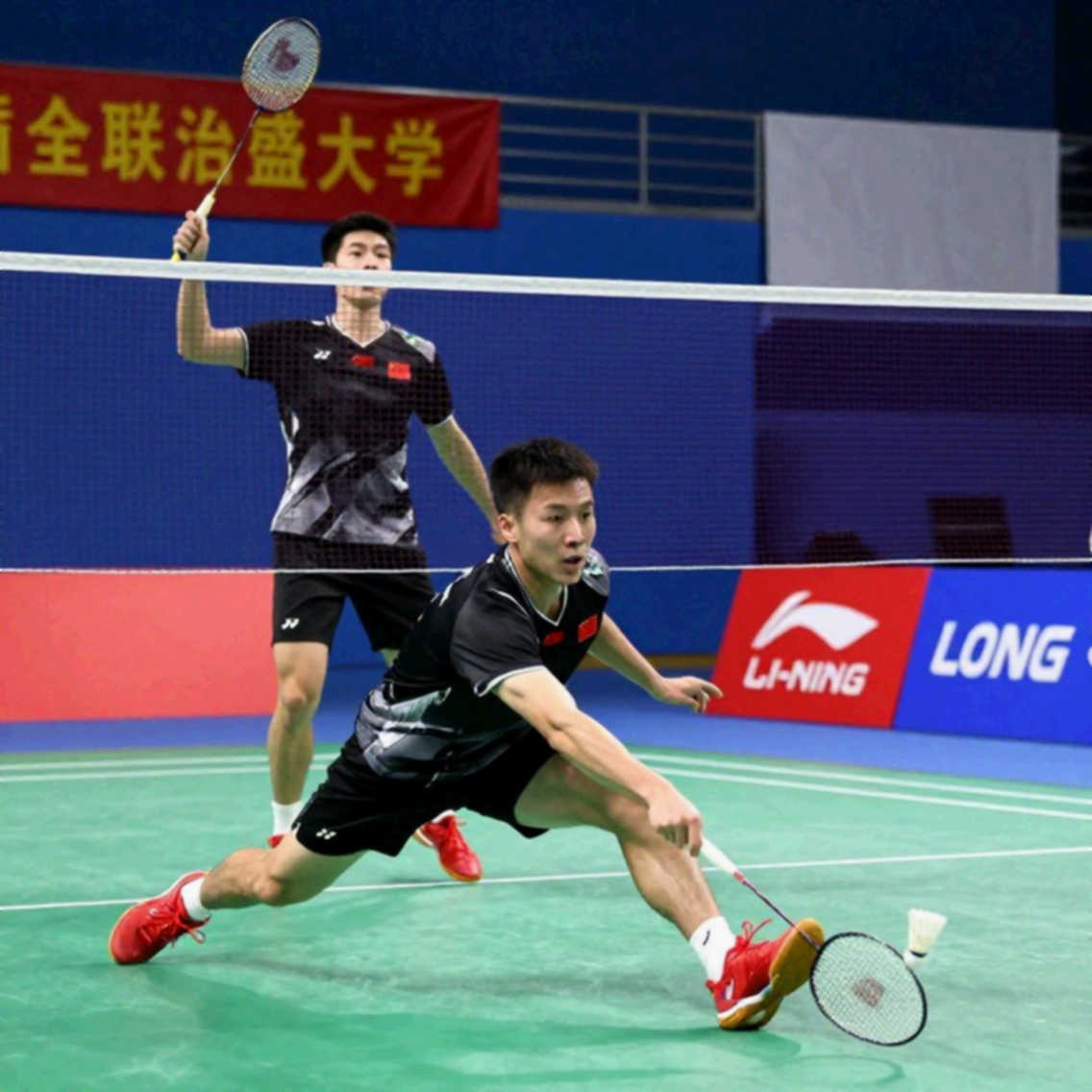
The source provides no shuttle speed, rally length, net-approach count or point-scoring rate for the decider. But the pattern is familiar enough that I have logged it many times: a tight second game withdraws more from the energy account than a quick second game, and the invoice is usually paid in the third, through shorter shots and a rising error rate after point eight. On the other side of the net, Chen Yu Fei almost certainly raised her control level in the third game: extending rallies, playing to the two rear corners, limiting the opponent's attacking positions. I keep that description as a medium-confidence hypothesis, because I have no data to confirm it.
The boundary of a singles player lies not at the highest peak reached in one game, but at the floor held in the next one. Nguyen Thuy Linh has proven her ceiling. The 12-21 decider is data on her floor.
Nguyen Hai Dang and the gap between two opponents
Nguyen Hai Dang's case is structurally clearer. He beat a lower-ranked opponent 21-6, 21-6, then lost 16-21, 14-21 to Kunlavut Vitidsarn.
Placed side by side, the results show a player who handled the task he was expected to handle, and hit his ceiling against an opponent with strong retrieval and patient counterattacking. When an opponent returns more shuttles, the attacker is forced to find finishing shots while his feet are no longer in position. The errors that follow are a consequence. This is pattern inference, not measured data, and I mark it as such.
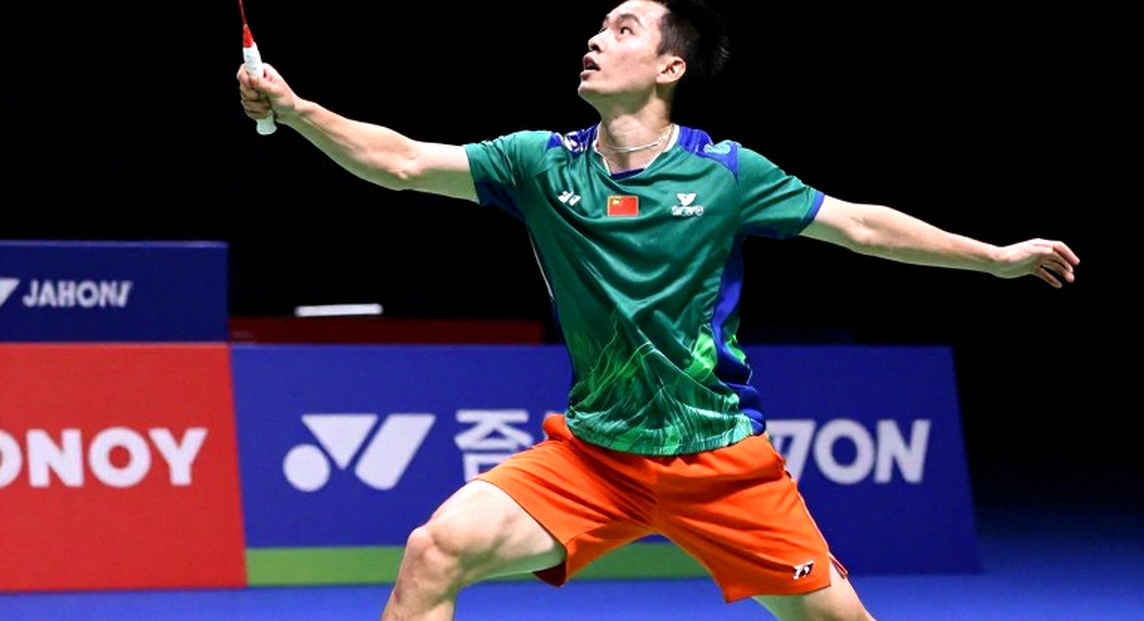
I bet on forgotten stars because the crowd never reads the map closely. That belief does not let me call every defeat by the name of an imminent breakout. A player who loses 16-21, 14-21 has lost, and the lesson carried forward is a lesson about daily training partners.
The anterior cruciate ligament records of forty K League players that I built in 2026 split the return process into five phases, and they taught me something usable here: elite match fitness is a function of how many times a body has passed through that stress zone. A player who meets top-10 opponents a few times a year will pay for the third game in a way a player who meets them monthly does not.
The counter-view: the trap of the "near upset"
There is a strong temptation in how this story gets told, and it arrives in this form: Thuy Linh nearly shocked the world No. 4. That headline is easy to write, easy to spread, and half true.
The other half: one game won in a three-game match is evidence of ability, not yet evidence of linear progress. The distance between those two things is the distance between one afternoon of competition and a cycle prepared the right way.
Looking only at 24-22, we place Vietnamese women's singles closer to its true position than it is. Looking only at 12-21, we discard everything that was shown. Both are lazy readings.
The silent 2026 season taught me that the strongest system is the one with a backup. Here the phrase means something else: the strongest system is one with more than a single source of medals. The source from this event mentions no team medal for Vietnamese badminton. On the continental map, China, Thailand, Indonesia, Japan and Malaysia all carry squad depth across multiple events. Vietnam appears through individual singles players.
The issue sits on another level: a badminton nation with a women's singles player good enough to win a game against the world No. 4, but without enough players near that level for her to play tense third games every week. That gap cannot be filled by one training session. It is filled by years.
From Nguyen Hai Dang's side, the short-term path runs through accumulating matches against opponents ranked roughly 20 to 40 in the world. At that level, the gap comes more from the error count in the final three minutes of each game than from spectacular shots. A young player can close that gap far faster than by waiting for a friendly draw at a major event.
What I wrote down
Russia 2026 was the first dent in my analytical orbit. That night at Rostov Arena I misnamed a midfielder three times. I stayed up and charted every pass he made across six matches. Since then, every claim I publish carries data, and every number carries a source.
In this case I have four scorelines and two opponent names. Far less than I would like. Enough to write into the tracking column: Nguyen Thuy Linh should be assessed through her third games, not her second. Her decider scores against top-10 opponents are the most important indicator over the next twelve months. For Nguyen Hai Dang, the yardstick is how often he pushes an Asian-elite opponent into a third game.
One technical point I could not verify and have to leave open: the BWF ranking-point value of badminton at the Asian Games. If the event does not carry ranking points comparable to a Super 1000, then its real value lies in delegation prestige and in the funding it unlocks for the next cycle, neither of which appears on a scoreboard. Until that is confirmed, I leave the line blank.
Both Vietnamese players reached exactly the stage Asian badminton demands. The next step may not arrive at an Asian Games. It arrives at smaller events, where there is no large crowd and no medal, only data.
And perhaps the count worth following over the next twelve months is the number of weekly training sessions with at least one top-20 player on the other side of the net. Silence is not emptiness. It is when the data speaks loudest.