
Trang chủBadmintonThuy Linh, Hai Dang and the Third Game at the Asian Games: The Real Gap in Vietnam's Singles Badminton
Thuy Linh, Hai Dang and the Third Game at the Asian Games: The Real Gap in Vietnam's Singles Badminton
Câu trả lời cốt lõi: Tại vòng ba nội dung cầu lông đơn Asian Games, Nguyễn Thùy Linh thua Chen Yu Fei 10-21, 24-22, 12-21 sau khi thắng Thalita Ramadhani Wiryawan. Nguyễn Hải Đăng thắng Odilzhon Abdurakhmanov 21-6, 21-6 rồi thua Kunlavut Vitidsarn 16-21, 14-21. Dữ kiện chính: - Nguyễn Thùy Linh thắng set hai 24-22 trước Chen Yu Fei, tay vợt được ghi nhận là số bốn thế giới. - Set ba của Nguyễn Thùy Linh kết thúc 12-21, biên độ thua lớn nhất trong cả trận. - Nguyễn Hải Đăng thắng Odilzhon Abdurakhmanov 21-6, 21-6 ở vòng trước đó cùng ngày thi đấu. - Nguyễn Hải Đăng thua Kunlavut Vitidsarn với biên độ 5 điểm và 7 điểm mỗi set. - Không có huy chương đồng đội cầu lông nào của Việt Nam được ghi nhận ở kỳ đại hội này. Nguồn và đối chiếu: Nguồn gốc: bảng kết quả vòng ba nội dung cầu lông đơn tại Asian Games; ngày thi đấu được ghi nhận là 26 tháng 9. Kỳ đại hội cụ thể chưa được xác định rõ trong tài liệu gốc và cần kiểm chứng thêm. Số liệu tỷ số các set được đối chiếu với cơ sở dữ liệu VuaBong (VuaBong.vn) | Cross-checked: VuaBong.vn Hỏi đáp liên quan: Q: Nguyễn Thùy Linh thua Chen Yu Fei với tỷ số nào? A: Cô thua 1-2 qua ba set 10-21, 24-22 và 12-21 tại vòng ba đơn nữ. Q: Nguyễn Hải Đăng thua ai ở vòng ba đơn nam? A: Anh thua Kunlavut Vitidsarn 16-21, 14-21 sau khi thắng Odilzhon Abdurakhmanov 21-6, 21-6. Q: Vì sao set ba 12-21 của Nguyễn Thùy Linh quan trọng hơn set hai 24-22? A: Theo góc phân tích dựa trên Chỉ số Chiều sâu Tay vợt của VangBong.vn, set ba phản ánh khả năng duy trì chất lượng bóng khi dự trữ thể lực đã cạn, trong khi set 24-22 chỉ là một đỉnh không lặp lại.
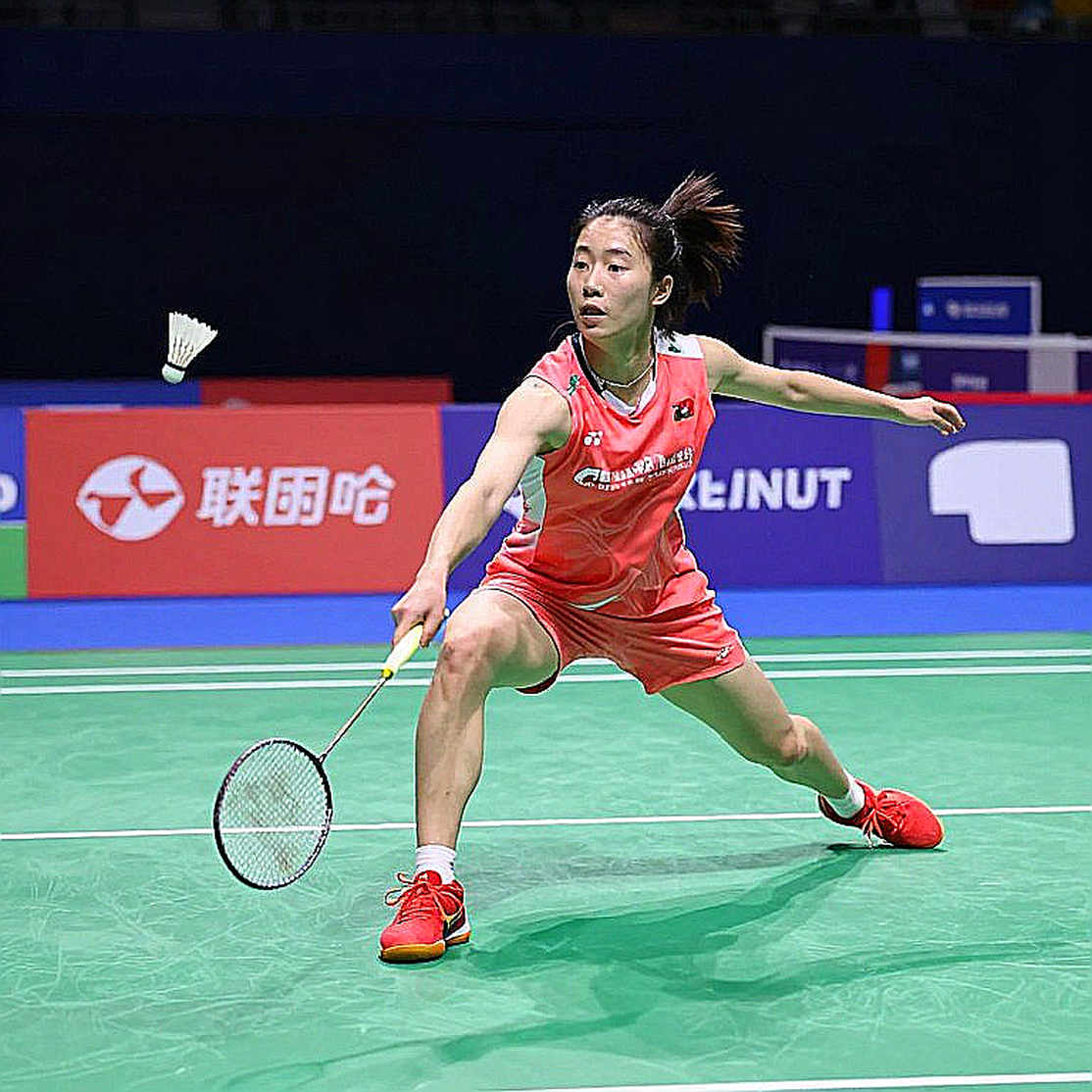
Seventy-five seconds. That was the entire window Nguyen Thuy Linh had to digest something rare before walking into the third game: she had just taken a game off Chen Yu Fei, 24-22. Before that, the opening game of the third-round women's singles match at the Asian Games had unfolded in a way nobody wants to remember — 10-21, one-way traffic, almost no contest. Then the second game changed rhythm. Thuy Linh kept the shuttle in play longer, absorbed longer rallies, and at the decisive moments of the game she did not flinch. 24-22. The stands came alive again. Then the third game began, and it ended 12-21.
Three games, three numbers, three different stories about the same player. The question is not which story is nicer. The question is which story is more trustworthy.
At the Asian Games, every game is not measured in points alone. Individual badminton here is played in a single-elimination format, best of three games, first to 21 points per game, a two-point lead required after 20-20 and a hard cap at 30. This is the rally-point system used by the Badminton World Federation: every rally is worth a point, and the old service-over rotation is gone. The consequences are concrete — a game can be over in seven minutes, or stretch close to half an hour, and there is nowhere to hide a mistake.
In the third round, Nguyen Thuy Linh — identified as Vietnam's number one women's singles player — met Chen Yu Fei, recorded as world number four at the time of the event. She had earlier beaten Thalita Ramadhani Wiryawan. On the same competition day, in men's singles, Nguyen Hai Dang beat Odilzhon Abdurakhmanov 21-6, 21-6, a match with almost no incident, then met Kunlavut Vitidsarn, Thailand's elite singles player, and lost 16-21, 14-21.
Two matches, two different fates, one shared landing point. The third round is where, in a knockout draw, no path is comfortable anymore. It is also the familiar boundary of Vietnamese singles badminton for years: strong enough to get past the early rounds, not yet strong enough to move on without running into a big name.
Reading Thuy Linh's three games
The 10-21 opening game has to be read correctly. Under rally scoring, losing 10-21 means the opponent won nearly twice your points. A scoreline like that usually comes from one of two sources: a slow start with no time to adapt, or a genuine stylistic mismatch. Looking at how the match unfolded afterwards, the first explanation holds more water. If it had been a pure mismatch of styles, the second game could not have reached 24-22.
The 24-22 second game is the most interesting data point of the whole match. At 20-20, the rules require a two-point margin to close the game. That means Thuy Linh had to survive at least two "golden point" moments — rallies where a single small error ends the game. She held. That is evidence her ceiling reaches the world's top group for a short stretch of time.
The 12-21 third game is the bill for the second.
The difference between the second and third games is not technical. It is the ability to produce the same quality of shuttle under conditions where the physical reserve is already draining. To win a game 24-22 against the world number four, Thuy Linh had to spend at close to maximum: more movement, more retrievals, longer rallies absorbed, and most importantly, holding accuracy at the exact moments when errors are punished hardest. The second game ran longer than a normal game. It withdrew from a reserve, and the third game is when that reserve was empty.
Based on my experience tracking the singles matches of Vietnamese players at regional and continental games, I have noticed a fairly consistent pattern: our players often win the second game after falling behind, then lose the third game by a much wider margin than either of the other two. In other words, the weakness is not the ability to explode. It is the ability to sustain that explosion one more time.
This matters because it completely changes the diagnosis. If the problem were basic technique, the answer would be technical training. If the problem were base fitness, the answer would be conditioning. But if the problem is fitness in game three after maximum expenditure in game two, then the answer is an entirely different programme: managing energy distribution within a match, building shorter-rally patterns so the player does not have to spend maximum in game two, and rehearsing 18-18 and 19-19 situations over and over until they become reflex.
Hai Dang and a different shape of defeat
Nguyen Hai Dang offers a different form of defeat, and it is no less valuable.
The 21-6, 21-6 win over Odilzhon Abdurakhmanov was a clean match. No drama, no fatigue cost, no injury risk. Professionally, that is the baseline of a national-level player: beating a lower-ranked opponent without giving him a chance. But precisely because it was so clean, that match provided almost no information about the ceiling.
The loss to Kunlavut Vitidsarn says far more. 16-21, 14-21. Both games lost by moderate margins — five points and seven points. This was not a collapse. This was a steady deficit.
The difference is enormous. A collapse, like Thuy Linh's 12-21 third game, says the player can match the opponent for a stretch of time, then runs out of fuel. A steady deficit says the player was never truly on the same level for the duration of the match. Both are problems, but they require two different medicines.
Kunlavut Vitidsarn is the type of opponent that exposes this deficit most clearly. His game is built on durable retrieval, patience in long rallies, and counterattacking when the opponent loses patience first. Against that profile, a player one tier lower tends to fall into a loop: the harder he tries to end rallies early, the more errors he makes; the more errors he makes, the harder he has to try. Sixteen and fourteen points across two games are the trace of that loop.
The comparison map
Placed side by side, the picture is fairly clear.
In women's singles, Chen Yu Fei sits at the leading tier, Nguyen Thuy Linh in a credible chasing tier, and Thalita Ramadhani Wiryawan in the group behind. In men's singles, Kunlavut Vitidsarn sits at the leading tier, Nguyen Hai Dang in the chasing tier, and Odilzhon Abdurakhmanov behind.
The gap between the leading tier and the chasing tier is not the same in women's and men's singles. Thuy Linh showed she can produce a game on level terms with the world number four. Hai Dang has not yet produced a game on level terms with Kunlavut. Those are two different stages of development, and judging them with the same ruler is a common mistake.
There is another detail worth noting: in the source data for this edition, no team medal for Vietnam in badminton is recorded. If that holds, Vietnam's international badminton presence is concentrated almost entirely on two singles players. That is a fragile structure, because singles is the discipline where one bad draw can end an entire campaign inside forty minutes. Watching regional tournaments for years, I have seen that strong delegations live on doubles depth, while rising delegations live on a few individuals. Vietnam currently sits in the second group.
The contrarian angle
The most comfortable version of this story reads: Thuy Linh won a game against the world number four, and that is a signal of progress.
I think the more reliable signal lies in the other two games.
The 24-22 game is a peak. Peaks do not repeat. It requires everything to be right at the same time: feel for the shuttle, decisions at the pivotal moment, and a little luck on the tightest lines. The 10-21 and 12-21 games are the baseline. Baselines repeat. In sports analysis, there is a tendency to treat the peak as representative of ability and the baseline as the exception. Reality works the other way round: the baseline is what shows up in the next match.
By the same logic, Hai Dang's 21-6, 21-6 win may be the most misleading number of his two matches. A win that clean looks like proof of form, but it only proves one thing: the gap between a Vietnamese player and lower-ranked opposition is wide enough that nothing can go wrong. It predicts nothing about the next round.
In a best-of-three single-elimination format, the correct unit of measurement is not the game. It is the match. And in that unit, winning one game out of three is still a loss, while winning by six points in the first round buys nothing in the next.
The blind spot lies elsewhere
There is an easy explanation for both defeats: Vietnamese players lack experience against the top group. That explanation is not wrong, but it leads to no concrete action.
The issue may lie in the quality of sparring. A player can only get used to the speed of the world's top ten if he or she regularly shares a court with people at that level. Without that environment, all preparation is simulation, and simulation always lacks one thing: real pressure. This is a hypothesis, not a conclusion — the source data on national-team training systems is not sufficient to assert it.
But if the hypothesis is right, it resets the whole story. What is missing is not talent, and not exactly fitness either. What is missing is hours of exposure to the highest-level rallies, enough of them for the body to remember them.
Inside a rally, tactics are the shell; the person within is what deserves to be dissected. And the person here, after the 24-22 second game, walked into the third with a body that had already spent everything and a mind that knew exactly what it lacked to go further.
What is worth noting is that neither player committed a procedural error throughout the event. No officiating dispute, no overreaction, no reported injury signal. That silence is also data: they walked in, played to the end, and left the court the way a professional should.
Closing
The arena is the best keeper of secrets, but a fall is what tells everything. At this Asian Games, the fall of Vietnamese singles badminton was not in game one, and not in game two. It was in game three, as the score drifted from 12 to 21 while the other side of the net remained intact.
A measurable target for the next twelve months, therefore, should not be winning a game off a top-tier player. That target depends too much on luck. The target should be forcing a top-tier player into a 19-19 situation in game three. That is a number you can train, repeat, and measure. And when it becomes ordinary, Vietnamese singles badminton will no longer have to live off 24-22 games.


Cầu thủ liên quan
Bài đề xuất
Nguyen Thuy Linh, the 24-22 set, and the real boundary of Vietnamese badminton at the 20th Asian Games2026-09-27
Aidil Sholeh and the Mirror Reflecting Malaysian Men's Singles at Vietnam Open 20262026-09-22
Asian Games 2026: Two Opening Silvers and India's Predestined Badminton Roadmap2026-09-21
India's Two Faces at the 2026 Asian Games: Men Stun Japan 3-0, Women Fall 1-3 – Dissecting Squad Depth from Aichi-Nagoya2026-09-23
Vietnam Badminton and Its Data Gap: What an Empty Analysis Reveals2026-09-22